



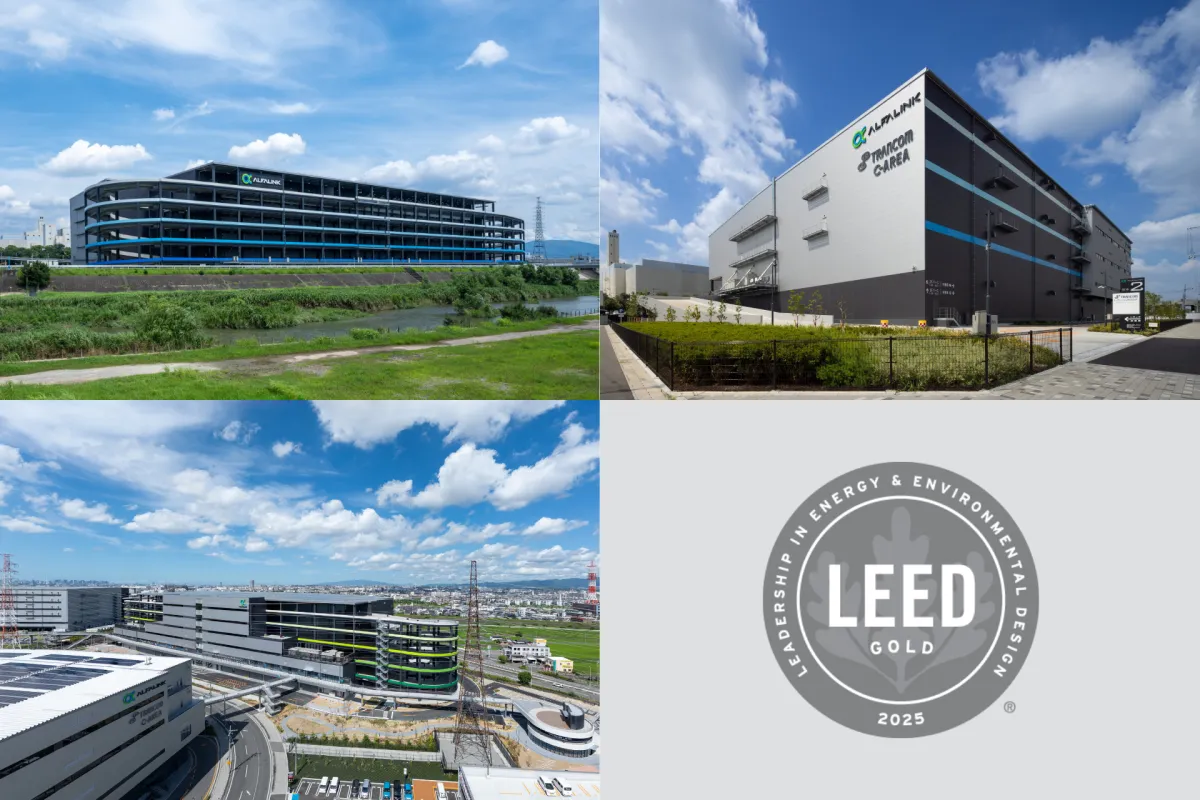
ALFALINK Ibaraki: A Sustainable Logistics Hub Secures Gold LEED Certification
ALFALINK Ibaraki: A New Era of Sustainable Logistics
The modern logistics hub known as ALFALINK Ibaraki, developed by GLP Japan under ARES Management Corporation, has recently secured a prestigious Gold LEED certification for all three of its buildings. This facility, located in Ibaraki City, Osaka Prefecture, boasts a total floor area of approximately 320,000 square meters. Notably, this achievement positions it as one of the few large-scale developments in Japan to have multiple buildings certified under the LEED® BD+C: Warehouses and Distribution Centers v4 standard.
Understanding LEED Certification
LEED, standing for Leadership in Energy and Environmental Design, is a certification program established by the U.S. Green Building Council (USGBC) and administered by Green Business Certification Inc. (GBCI). It's one of the most widely recognized systems for evaluating environmentally responsible buildings. This certification is divided into several categories:
- - LEED for Building Design and Construction (BD+C): Assesses new builds and major renovations.
- - LEED for Interior Design and Construction (ID+C): Evaluates design and construction of interiors.
- - LEED for Building Operations and Maintenance (O+M): Focuses on existing building management and minor renovations.
Overview of ALFALINK Ibaraki
The ALFALINK Ibaraki project consists of three interconnected logistics buildings, with the last one set to be completed in July 2025. Strategically located near a major commercial facility, it aims to merge logistics and retail to boost the local economy and foster a vibrant community. This complex boasts cutting-edge technology, integrating features that promote sustainability and worker health.
Key Features
1. Location Advantages: Located near transportation hubs
- Surrounded by major truck terminals, wholesale markets, and freight railway stations.
- Easy access to multiple expressways.
2. Structural and Safety Innovations:
- Buildings are designed with fire-resistant and seismic isolation structures that significantly reduce earthquake forces (up to 1/3 - 1/5 lower).
- Equipped with a 72-hour emergency power system that uses specialized delivery vehicles for fuel supply.
- The facility includes on-site well water systems, ensuring operations even during water supply disruptions.
3. Well-Being Initiatives: Enhancing employee environments
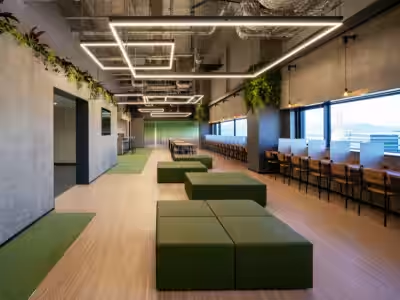
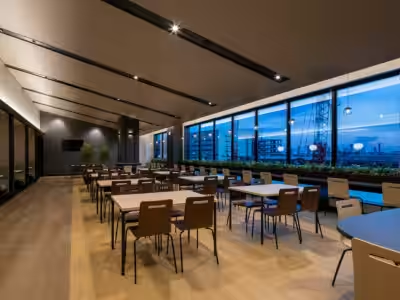
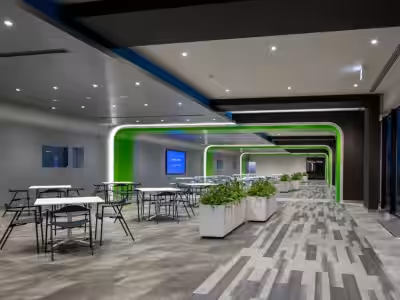
- Cafeterias and lounges exclusively for tenant employees, promoting social interaction and well-being.
- Thoughtfully designed interiors featuring natural materials to create a comfortable work-life atmosphere.
4. Community Integration:
- A gallery and convenience store located on the second floor promote public engagement with the logistical operations.
- A pedestrian bridge separates the flow of foot traffic and vehicles, enhancing safety.
The firm Von Elf, headquartered in Chiyoda, Tokyo, played a crucial role in helping achieve the LEED Gold certification, providing expert consultation across various domains, including energy efficiency, environmental impact minimization, and indoor environmental quality improvement. Their dedicated efforts ensured not only environmental value maximization but also enhanced comfort and operational efficiency for the tenants.
Future Prospects
Looking ahead, Von Elf continues to support large-scale developments, particularly in the logistics sector, to promote sustainable building and operations. Their vision emphasizes comprehensive support for businesses aiming for carbon neutrality and effective ESG management.
Conclusion
The successful certification of ALFALINK Ibaraki marks a significant milestone in Japan’s logistics industry. This project stands as a beacon of sustainable development, demonstrating the potential of innovative design and technology in modern logistics practices. With an eye toward the future, it sets a standard for upcoming developments, inspiring companies to prioritize environmental responsibility and community engagement in their operations.
Topics Consumer Products & Retail)
【About Using Articles】
You can freely use the title and article content by linking to the page where the article is posted.
※ Images cannot be used.
【About Links】
Links are free to use.