



The Challenges Faced by Senior Job Seekers: Insights from Recent Survey Results
Understanding the Job Market for Seniors in Japan
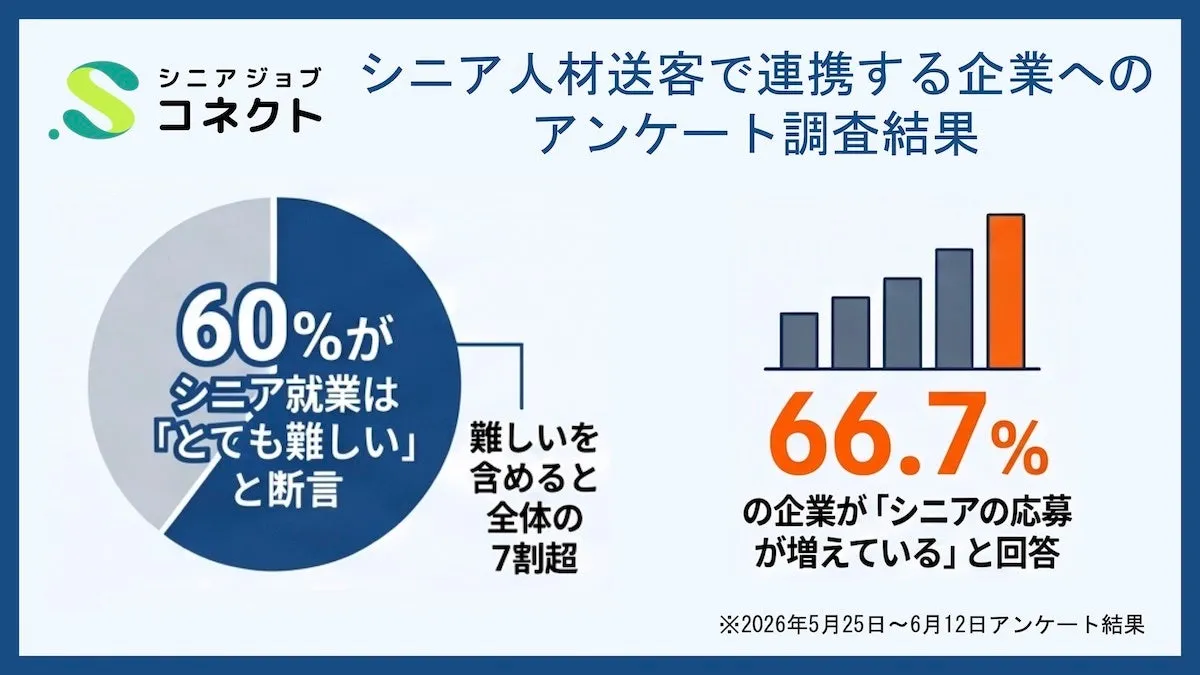
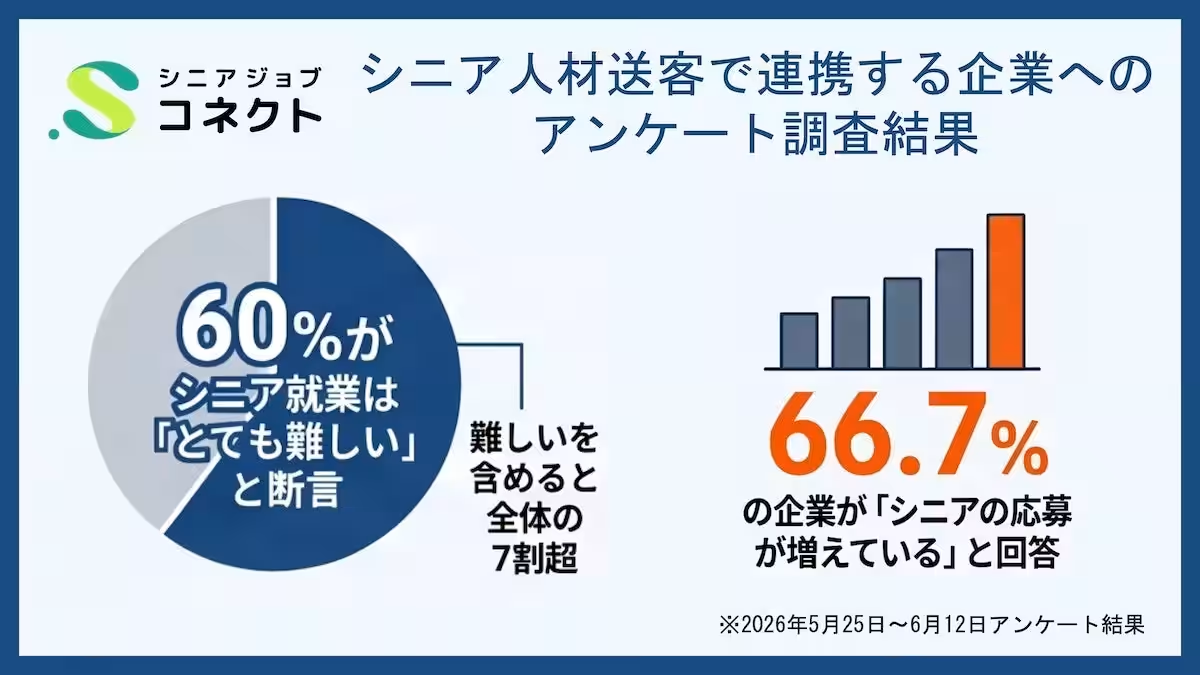
Recently, the company Senior Job, based in Shinjuku, Tokyo, conducted a survey targeting businesses that collaborate in directing senior talents to job placements. The findings highlighted the significant challenges faced by senior job seekers, revealing that 60% of participating companies perceive the employability of seniors as "very difficult."
In total, responses were gathered from 15 companies in the Senior Job Connect network, showcasing a landscape where an increasing number of job applicants are aged 50 and above, yet face substantial hurdles in securing employment.
Key Findings from the Survey
1. An Increase in Senior Applications
Among the surveyed companies, over 60% reported a rise in senior job applications. Notably, over 70% anticipate this trend to continue, with the expectation of further increases by 2026. This surge highlights a growing recognition of the potential in senior talent, yet the paradox remains that application success remains elusive.
2. High Difficulty Level for Employment
Though applications are increasing, the survey revealed that 60% of companies classified the difficulty of employment for seniors as "very difficult." A comprehensive 73.3% of respondents acknowledged the perceived challenges in hiring seniors, indicating a critical need to address the discrepancies in the employment landscape for aged candidates.
3. The Age Factor
Interestingly, the age threshold where job acquisition becomes notably challenging is designated as 50 years old for 46.7% of respondents. This reflects a cultural narrative where companies often skew towards hiring younger employees, thereby inadvertently sidelining skilled senior professionals.
Insights into the Senior Job Market
The research illustrates a broader concern regarding the dynamics of ageism in the job market. Many seniors are increasingly finding themselves at a disadvantage during the hiring process. Factors identified as barriers include:
- - Age bias within hiring practices, with companies consistently favoring younger candidates despite claims of a labor shortage.
- - Job market conditions that leave seniors struggling to find suitable positions, particularly if they possess high salary expectations based on previous roles.
- - Pride and adaptability issues among senior applicants, as many carry significant experience and history in their professions, making it challenging to adjust to the current market demands which may undervalue their skills.
As we look towards 2026, 73.3% of companies predict that the difficulties in hiring seniors will persist. Among these, 20% anticipate that the challenges will further increase. The facts allude to a grim reality where seniors are not only facing obstacles in securing employment but are also at risk of remaining in a volatile job situation as economic conditions change.
Conclusion: The Need for Specialized Services
The insights gathered from the survey reinforce the growing necessity for focused employment services aimed at senior professionals. As the demographic landscape continues to evolve, innovative solutions are required to ensure that senior candidates are not left behind in the job market.
The establishment of Senior Job Connect aims to bridge this gap, creating pathways for companies to easily recruit and empower senior talent, ensuring that experience and wisdom are duly recognized and valued in today’s workforce.
In light of these findings, the senior job market stands at a crossroads, and proactive efforts must be undertaken to dismantle the barriers currently in place. The challenge remains, but with continued advocacy and strategic initiatives, there is hope for a more inclusive employment framework for seniors in Japan.

Topics Consumer Products & Retail)


【About Using Articles】
You can freely use the title and article content by linking to the page where the article is posted.
※ Images cannot be used.
【About Links】
Links are free to use.