



Implementing Preventive Healthcare: The Launch of the Health Management Coalition in Japan
In a proactive step towards enhancing public health, Eli Lilly Japan, along with M3 Inc., M3 Research Institute, and Minacare Co., has launched the Health Management Coalition aimed at promoting the implementation of preventive healthcare within companies and health insurance organizations. This initiative, dubbed the "Health Management Coalition - Starting with Preventive Medicine and Obesity Measures," marks a significant effort to tackle obesity, a chronic condition that has been linked to various negative health outcomes, decreased quality of life (QOL), and increased healthcare costs.
The coalition recognizes obesity as a pressing public health issue that requires immediate attention. It seeks to enhance societal understanding of obesity and encourage timely medical consultations for employees suffering from this condition. Through collaborative efforts, the coalition aims to gather and analyze real-world data pertaining to these initiatives, providing insights that can inform future strategies.
Obesity is not merely a physical condition but a risk factor for serious health complications. It can lead to chronic diseases such as hypertension, type 2 diabetes, and cardiovascular diseases. As such, addressing obesity is essential not only for improving individual health outcomes but also for alleviating the burden of rising healthcare costs, projected to reach a staggering ¥48.09 trillion in Japan (a record high for 2023).
The Health Management Coalition comprises several organizations, including the Lotte Health Insurance Society, Uchida Yoko Health Insurance Society, and Kyushu Electric Health Insurance Society. By partnering with these stakeholders, the coalition aims to broaden its reach and influence, with plans to eventually disseminate knowledge and best practices across Japan, promoting a culture of preventive healthcare.
As the healthcare landscape shifts from a treatment-focused model to one prioritizing preventative measures, initiatives like the Health Management Coalition are crucial. While companies have increasingly adopted health management strategies, there is still a gap in implementing effective interventions for those who need them. Identifying individuals at risk of obesity, recommending appropriate medical care, and continuously validating these initiatives are necessary steps for successful preventive healthcare implementation.
The coalition has identified obesity as the initial focal point for action, acknowledging the urgency to mitigate its progression and alleviate its effects on public health. Recognizing obesity as a precursor to many metabolic diseases, it's essential for companies and health insurers to position themselves as champions of preventive medicine in this area. These measures aim to enhance employee wellness while also addressing the financial implications of rising medical costs.
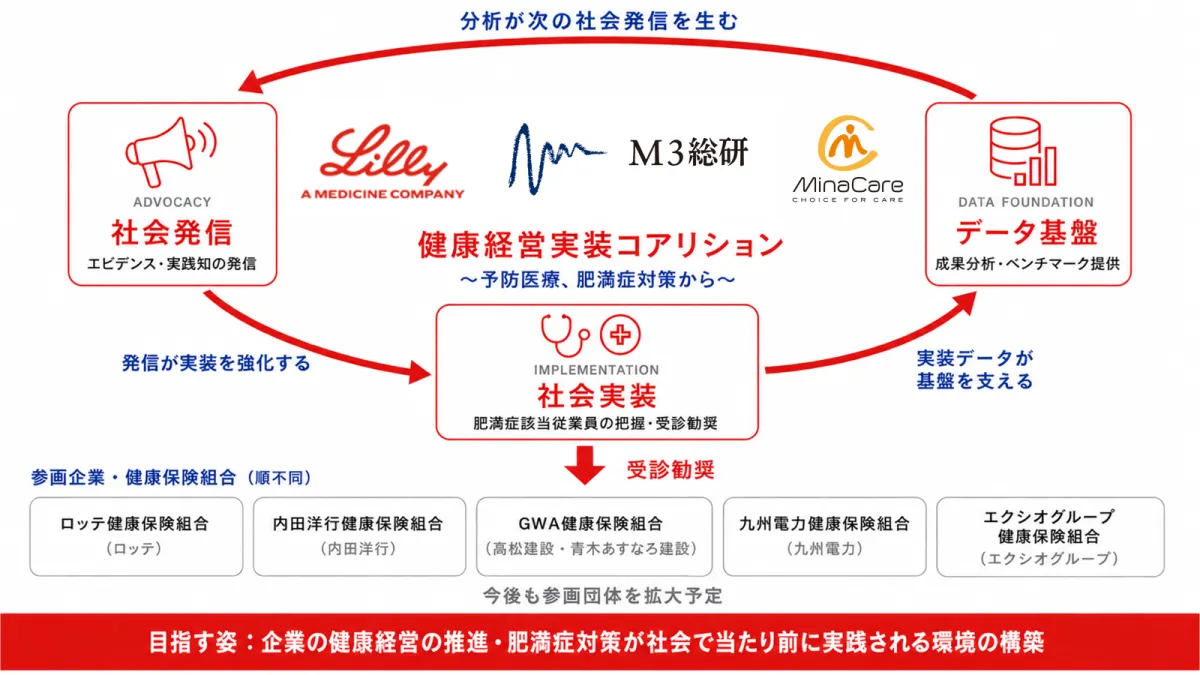
To accomplish its objectives, the coalition will focus on three main areas:
1. Social Communication: Sharing evidence-based knowledge and practical solutions regarding obesity and preventive medicine to promote accurate societal understanding.
2. Implementation: Collaborating with health insurance bodies to encourage medical consultations for around 10,000 employees identified as at risk for obesity. From identification to recommendation, the coalition will provide a continuous loop of intervention and assessment, aiming to refine and optimize preventive healthcare models.
3. Data Development: Utilizing intervention data obtained through consultations to analyze health outcomes and the economic impact of obesity measures. The coalition will also provide benchmark data to participating health insurance associations, fostering a cross-industry approach to tackle this common challenge.
Obesity-related healthcare costs not only impose a fiscal burden on individual health insurers but also directly affect corporate health management. For companies that self-fund their health insurance plans, the health of their workforce is intrinsically linked to their financial health. Investments in obesity prevention can yield dividends by extending healthy lifespans and enhancing QOL, while also potentially curbing future healthcare expenses.
The coalition's member organizations, which include major health insurance societies, echo this sentiment. By participating, they hope to engage a demographic that has been under-addressed in previous health management strategies. There is an increasing recognition of the need for raising awareness about obesity, which, if successfully tackled, could mean fewer individuals requiring future interventions.
The Health Management Coalition, while newly formed, is positioned to leave a significant mark on Japan's health landscape. It aims not only to implement preventive healthcare strategies but also to establish a sustainable model that can be replicated nationwide. As it broadens its coalition and gathers valuable data, it is poised to drive essential change in how society views and addresses obesity. This initiative not only emphasizes the importance of early intervention but also sets the stage for a healthier future where preventive healthcare becomes a norm rather than an exception.
The coalition recognizes obesity as a pressing public health issue that requires immediate attention. It seeks to enhance societal understanding of obesity and encourage timely medical consultations for employees suffering from this condition. Through collaborative efforts, the coalition aims to gather and analyze real-world data pertaining to these initiatives, providing insights that can inform future strategies.
Obesity is not merely a physical condition but a risk factor for serious health complications. It can lead to chronic diseases such as hypertension, type 2 diabetes, and cardiovascular diseases. As such, addressing obesity is essential not only for improving individual health outcomes but also for alleviating the burden of rising healthcare costs, projected to reach a staggering ¥48.09 trillion in Japan (a record high for 2023).
The Health Management Coalition comprises several organizations, including the Lotte Health Insurance Society, Uchida Yoko Health Insurance Society, and Kyushu Electric Health Insurance Society. By partnering with these stakeholders, the coalition aims to broaden its reach and influence, with plans to eventually disseminate knowledge and best practices across Japan, promoting a culture of preventive healthcare.
Background and Importance
As the healthcare landscape shifts from a treatment-focused model to one prioritizing preventative measures, initiatives like the Health Management Coalition are crucial. While companies have increasingly adopted health management strategies, there is still a gap in implementing effective interventions for those who need them. Identifying individuals at risk of obesity, recommending appropriate medical care, and continuously validating these initiatives are necessary steps for successful preventive healthcare implementation.
The coalition has identified obesity as the initial focal point for action, acknowledging the urgency to mitigate its progression and alleviate its effects on public health. Recognizing obesity as a precursor to many metabolic diseases, it's essential for companies and health insurers to position themselves as champions of preventive medicine in this area. These measures aim to enhance employee wellness while also addressing the financial implications of rising medical costs.
Key Initiatives
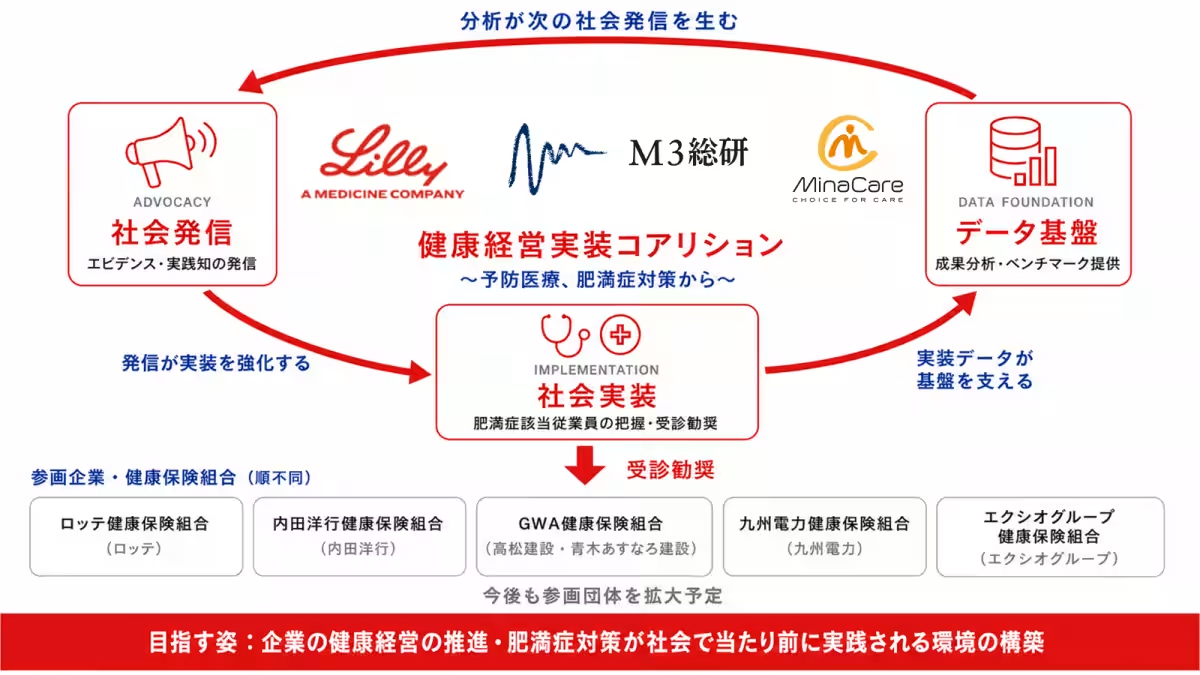
To accomplish its objectives, the coalition will focus on three main areas:
1. Social Communication: Sharing evidence-based knowledge and practical solutions regarding obesity and preventive medicine to promote accurate societal understanding.
2. Implementation: Collaborating with health insurance bodies to encourage medical consultations for around 10,000 employees identified as at risk for obesity. From identification to recommendation, the coalition will provide a continuous loop of intervention and assessment, aiming to refine and optimize preventive healthcare models.
3. Data Development: Utilizing intervention data obtained through consultations to analyze health outcomes and the economic impact of obesity measures. The coalition will also provide benchmark data to participating health insurance associations, fostering a cross-industry approach to tackle this common challenge.
Broader Implications for Companies and Insurers
Obesity-related healthcare costs not only impose a fiscal burden on individual health insurers but also directly affect corporate health management. For companies that self-fund their health insurance plans, the health of their workforce is intrinsically linked to their financial health. Investments in obesity prevention can yield dividends by extending healthy lifespans and enhancing QOL, while also potentially curbing future healthcare expenses.
The coalition's member organizations, which include major health insurance societies, echo this sentiment. By participating, they hope to engage a demographic that has been under-addressed in previous health management strategies. There is an increasing recognition of the need for raising awareness about obesity, which, if successfully tackled, could mean fewer individuals requiring future interventions.
Future Prospects
The Health Management Coalition, while newly formed, is positioned to leave a significant mark on Japan's health landscape. It aims not only to implement preventive healthcare strategies but also to establish a sustainable model that can be replicated nationwide. As it broadens its coalition and gathers valuable data, it is poised to drive essential change in how society views and addresses obesity. This initiative not only emphasizes the importance of early intervention but also sets the stage for a healthier future where preventive healthcare becomes a norm rather than an exception.
Topics Health)
【About Using Articles】
You can freely use the title and article content by linking to the page where the article is posted.
※ Images cannot be used.
【About Links】
Links are free to use.