



Dress Code Launches GA Force Fleet Management Solution for Comprehensive Asset Oversight
Introduction
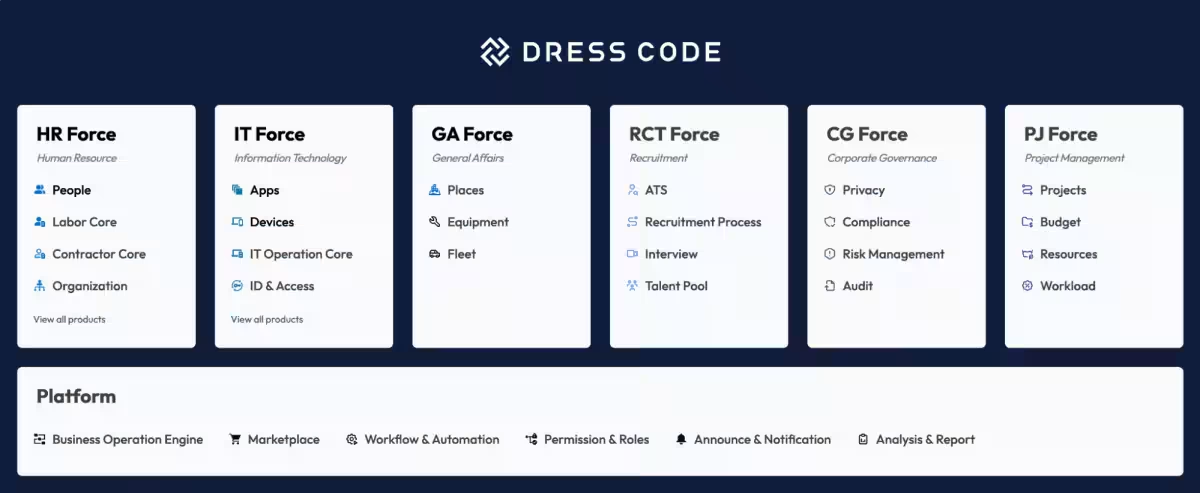
Dress Code Inc., headquartered in Chuo-ku, Tokyo, has recently unveiled a cutting-edge product as part of its GA Force series: the Fleet Management solution. Designed to streamline operations within company fleets, this new offering enables users to manage a variety of assets, including vehicles, ships, and aircraft, all from a unified platform.
Addressing Operational Challenges
Traditionally, fleet management has posed significant challenges for many businesses. Often, vehicle data is siloed from personnel information, making it difficult to obtain an accurate view of asset utilization. Additionally, when dealing with different asset types, such as ships and aircraft, companies typically rely on specialized systems designed for each category, complicating their ability to monitor overall operational status.
This fragmentation can also create issues related to compliance and accountability in managing legal inspections, insurance renewals, and certificate validity. Responsibilities often fall on individual employees, increasing the risk of oversight during personnel changes, such as transfers or departures. Furthermore, without a comprehensive view of asset usage and operational rates, companies may fail to identify idle resources or excess ownership, leading to inefficiencies and increased costs.
Companies also face hurdles in tracking maintenance, repair, and accident histories, resulting in ambiguous records for users or operators. These problems are primarily due to the absence of appropriate management tools. The GA Force Fleet Management solution aims to tackle these issues by offering an integrated product that oversees vehicles, ships, and aircraft seamlessly.
Product Overview
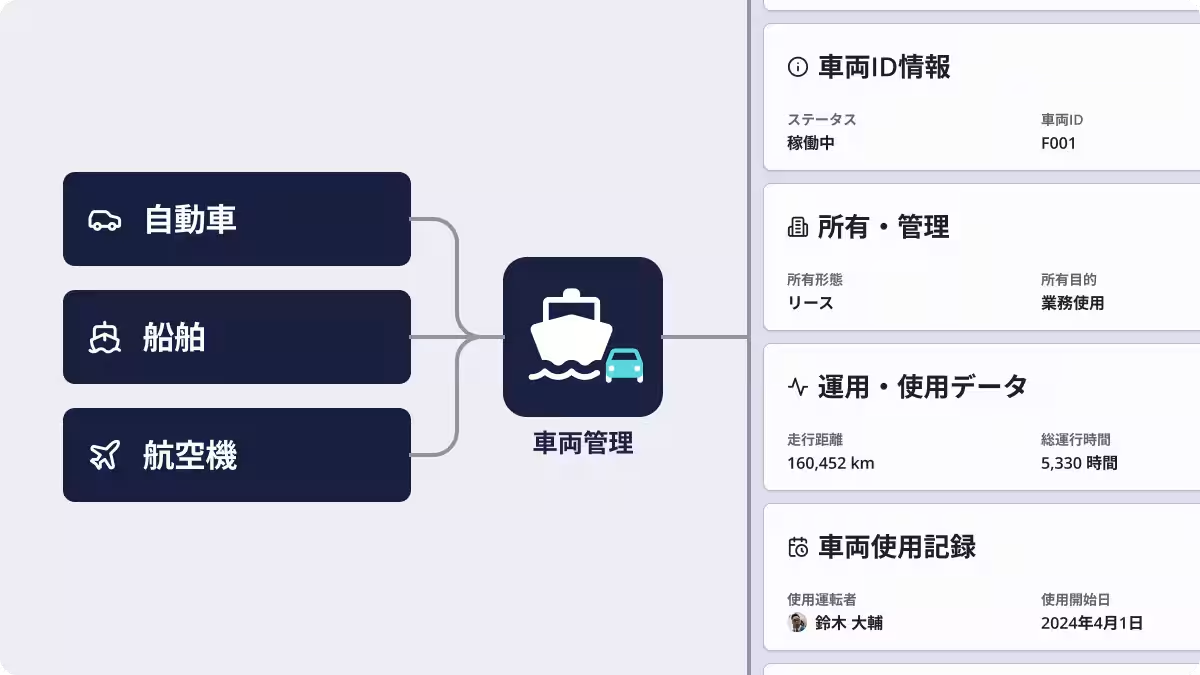
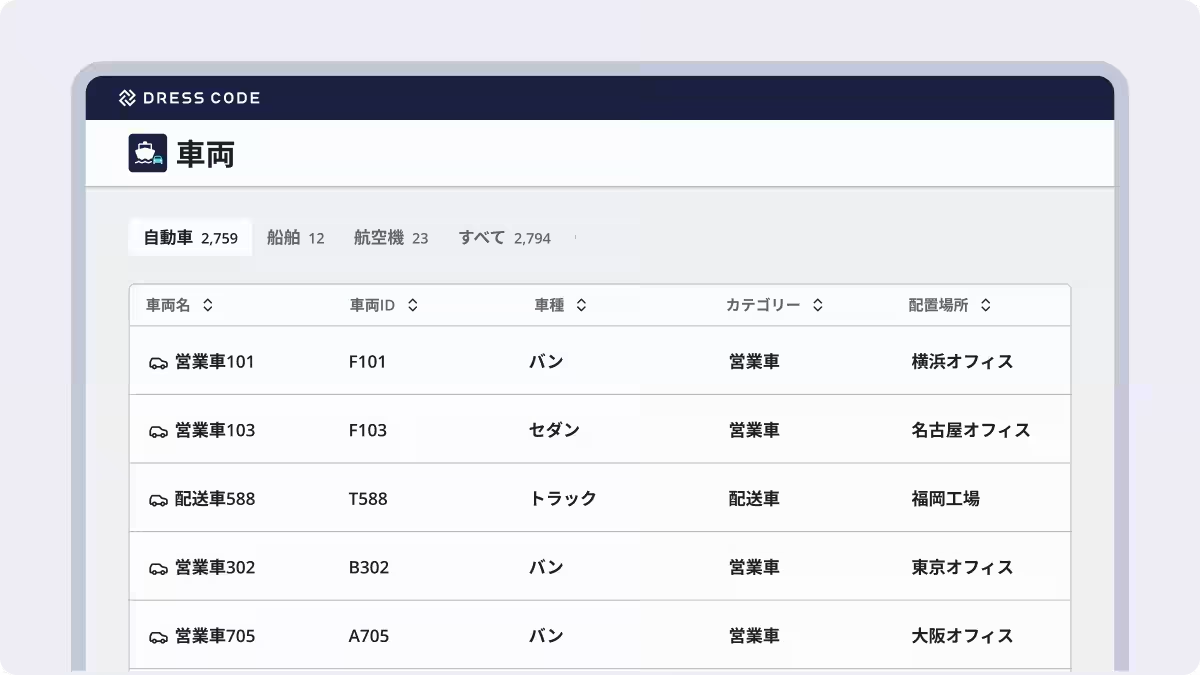
The GA Force Fleet Management solution is designed to facilitate integrated oversight of diverse assets, including vehicles, ships, and aircraft. Users can manage different types of vehicles within the same registry, utilizing a consistent interface and operational methodology. This product not only consolidates common elements related to ownership, operation, and maintenance but also integrates specific regulatory management and technical information categories. As a result, users can gain insights across locations, departments, uses, and asset types.
Among its innovative features is the ability to sort and manage regulatory inspections and various certificates by vehicle. Future enhancements will include an alert system for automatic notifications. By accumulating data on usage history, mileage, and operational time for each asset, businesses can monitor operational conditions and identify underutilized resources or reconsider leasing agreements.
Key Features
1. Centralized Fleet Registry
The solution provides a unified format for managing all vehicles. Users can view assets across ownership types, users, locations, and purposes, ensuring comprehensive oversight of the entire fleet. This centralized approach reduces the risk of missing information due to fragmented management and allows for immediate access to needed data.
2. Regulatory and Inspection Deadline Management
The product offers management of vehicle inspections, insurance, and certificate expiration dates, providing insights into upcoming deadlines. Future iterations will include an alert feature to notify users before expiration to lower risks and minimize the workload associated with audits.
3. Visibility into Usage History and Operational Status
The platform enables management of usage records, mileage, and operational times for individual vehicles. By tracking utilization rates and the last operational dates, businesses can better visualize idle resources and excess ownership.
4. Management of Maintenance, Repair, and Accident Histories
Users can manage maintenance records, repair details, and accident histories chronologically. This feature allows for quick access to past issues, providing essential documentation for decisions about updates or replacements.
5. Linking Users and Authorizations
The platform records information on users, usage purposes, and durations. By associating user and driver license information, along with special permissions, businesses can quickly identify responsibility in case of incidents, enhancing accountability and fact verification.
Conclusion
The GA Force Fleet Management solution is now available in its beta version, and Dress Code encourages users to provide feedback to refine the product further. This launch exemplifies the company’s commitment to optimizing business operations by resolving structural friction among workforce management, ultimately providing value-added services for users in Japan and across Southeast Asia.
About Dress Code Inc.
Dress Code Inc. is a company dedicated to designing, developing, and selling the DRESS CODE platform. Established in September 2024 and led by CEO Yuki Ejiri, the firm aims to eliminate operational frictions surrounding workforce management through innovative solutions. More information can be found at Dress Code's website.
Topics Business Technology)
【About Using Articles】
You can freely use the title and article content by linking to the page where the article is posted.
※ Images cannot be used.
【About Links】
Links are free to use.