



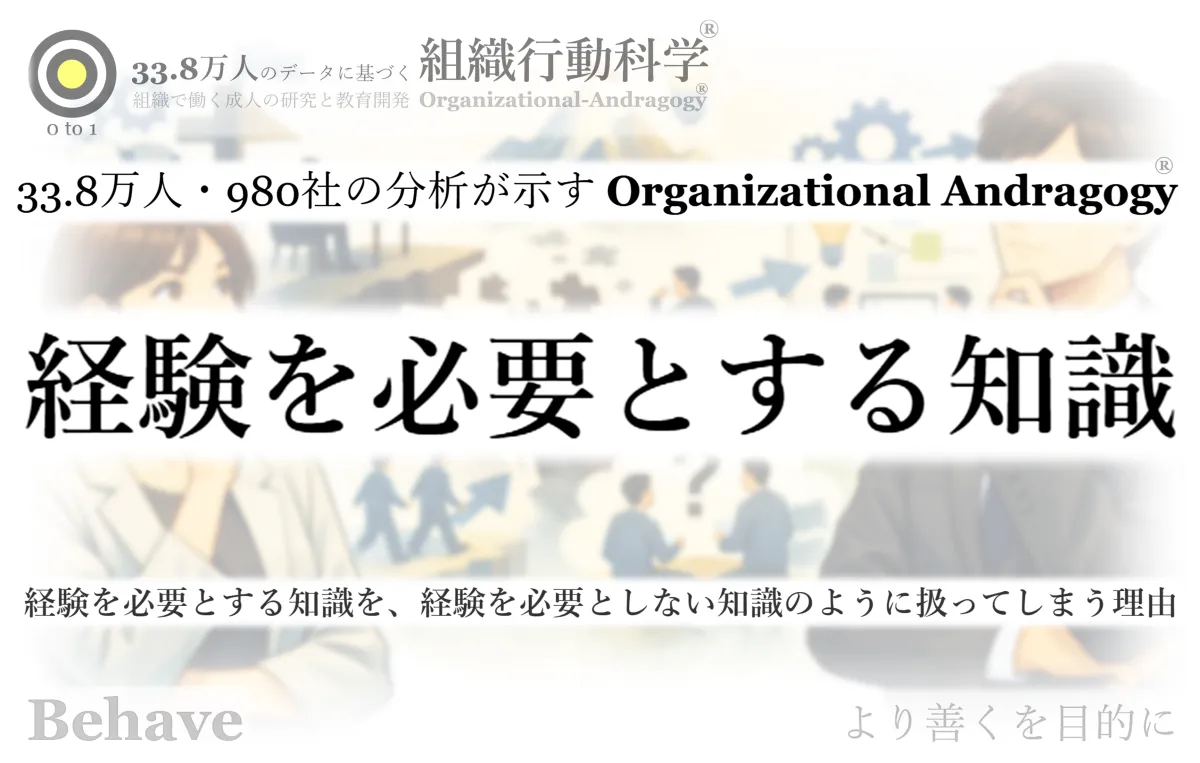
Unraveling the Disconnect Between Knowledge and Experience in Organizations
Understanding Knowledge Types in Organizations
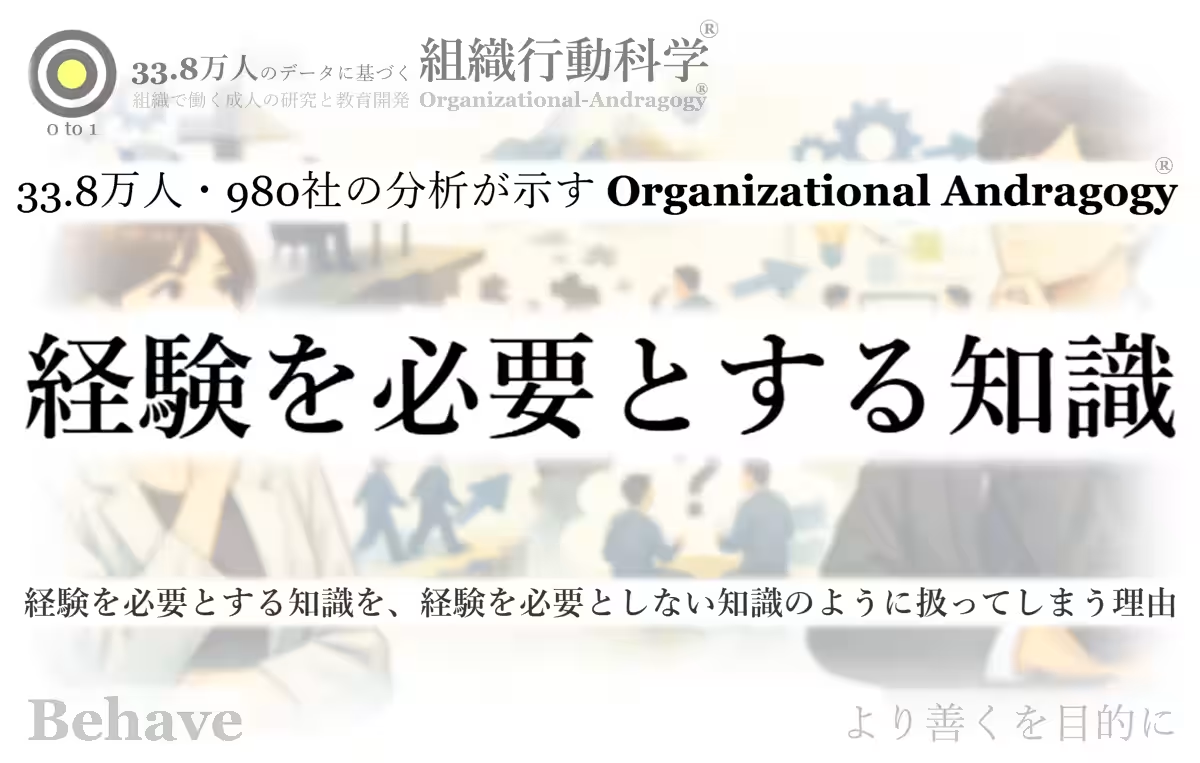
Request Inc., based in Shinjuku, Tokyo, has highlighted a pressing issue faced by many organizations in their latest report titled "Knowledge that Requires Experience vs Knowledge that Doesn’t Require Experience." This report stems from an in-depth analysis of organizational behavior data from 338,000 individuals across 980 companies in Japan.
The focus is on the disparity between two types of knowledge: knowledge that requires experience and that which doesn't. The report elucidates how mankind's extensive training and development efforts often falter due to a fundamental misunderstanding of the nature of knowledge itself.
The Nature of Knowledge
The report distinguishes two categories of knowledge based on how they can be processed in a work context:
1. Knowledge that Doesn’t Require Experience: This encompasses procedures, criteria, and completion conditions, all of which can be defined upfront. If followed correctly, the job can be successfully executed.
2. Knowledge that Requires Experience: This refers to knowledge that involves judgment where decisions impact outcomes. The validity of this knowledge can only be confirmed through real-world application and learning from results.
Failing to differentiate between these two can lead to a misallocation of tasks. Jobs that inherently require judgment may be reduced to mere procedural followings, a situation the report labels as "misplacement of knowledge."
The Challenges with Training and Resources
Despite an increase in learning opportunities, many firms face persistent problems such as:
- - Employees understand concepts but don’t utilize them in decision-making.
- - Clear explanations are provided, yet behaviors remain unchanged.
- - Repetitive conclusions are reached without progression.
This report posits that the root cause of these issues is not individuals' capabilities or motivations but rather the mismatch between the nature of knowledge and how it is utilized in organizational practices.
Training programs and resources attempt to simplify experience-requiring knowledge, leading to unintended consequences:
- - Frames become regarded as 'correct answers.'
- - Case studies serve as 'model solutions.'
- - Principles become mere 'rules to follow.'
Such phenomena hinder growth, as understanding may broaden, but the ability to judge and apply said knowledge often stagnates.
Rethinking Job Design Over Increasing Training
The report recommends that the solution is not to enhance educational programs, but rather to re-imagine how work itself is designed. It advocates for a redesign wherein:
- - Decision points and their responsible parties are clearly identified.
- - The reasons behind decisions and their outcomes are documented.
- - Success should be evaluated in terms of 'updating standards' rather than mere 'completion.'
Through this lens, organizations can rectify the prevalent disconnection between learning and application in practical settings.
Addressing Fundamental Issues in Human Capital Investment
This report also confronts the systematic challenges in human capital investment—why training fails to yield results, why frameworks become obsolete, and why there’s a lack of individuals being entrusted with responsibilities. Instead of analyzing these issues through the lens of individual capabilities, the report categorizes them as structural problems tied to job design.
For all organizations assessing training, talent development, HR systems, or AI utilization, this report serves as a foundational reference to reflect on how best to reintegrate judgment back into specific job roles rather than just focusing on what needs to be taught.
Download the Report
The comprehensive report titled "Knowledge that Requires Experience vs Knowledge that Doesn’t Require Experience" is available for download here.
About Request Inc.
Request Inc., led by CEO Tomoyasu Kohata, aims to enhance organizational performance drawing from its extensive database of 338,000 workers. With the backbone of Organizational Behavior Science, it assists 980 companies through research and practical implementations aimed at improving individual and group growth without reducing it to individual challenges. Learn more about Request Inc. here.

Topics People & Culture)


【About Using Articles】
You can freely use the title and article content by linking to the page where the article is posted.
※ Images cannot be used.
【About Links】
Links are free to use.