



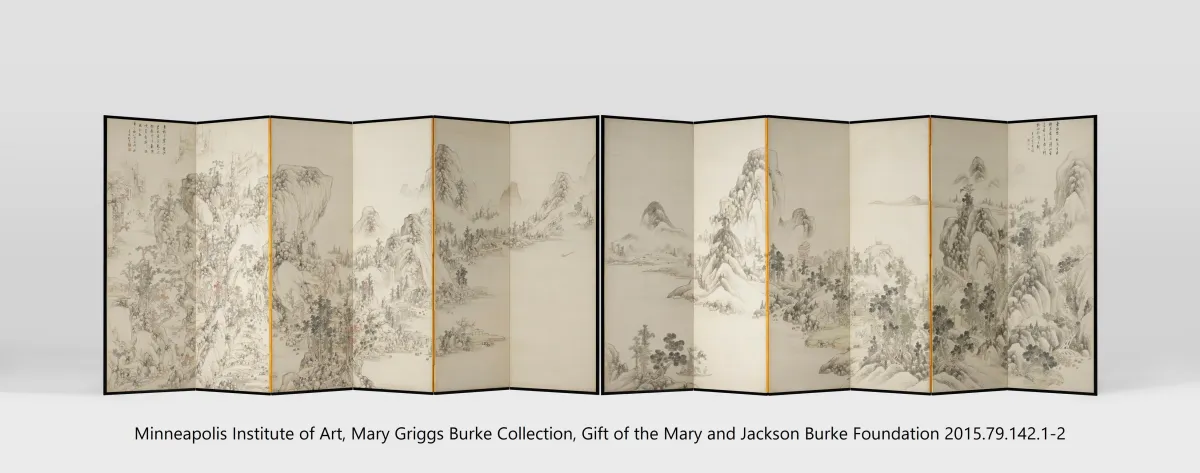
High-Quality Reproduction of Harukane Shunkin's Screen Now at Okayama Museum
A Remarkable Art Donation to Okayama Prefectural Museum
In a notable initiative, Canon Inc. and the Kyoto Cultural Association are collaborating to preserve Japan's rich cultural heritage through the Tsuzuri Project. Recently, they announced the donation of a high-quality reproduction of the famous screen painting, "Shunju Sansui-zu Byobu" (Spring and Autumn Landscape Screen), created by the artist Harukane Shunkin. This masterpiece will be displayed at the Okayama Prefectural Museum, located in the region closely tied to the artist, until July 5, 2026.
The Artistic Significance of the Screen
"Shunju Sansui-zu Byobu" is an elaborate screen that beautifully captures the landscapes of spring and autumn across its two panels. The right panel depicts the vibrant scenes of spring, while the left showcases the serene views of autumn. This artistic piece blends ink and light colors on silk and is further complemented by poetry that encapsulates the essence of each season. Harukane Shunkin, a distinguished literati painter of the late Edo period, hails from Bizen Province, now known as Okayama Prefecture. His work is considered one of his most celebrated achievements.
Despite its historical importance, the original artwork resides in the Minneapolis Institute of Art, limiting opportunities for audiences in Japan to appreciate its beauty. Thanks to the collaboration with the Minneapolis museum, a high-quality reproduction has been crafted under the auspices of the Tsuzuri Project, representing a significant step toward rejuvenating Shunkin's legacy in the area of his origins.
The Making of the High-Quality Replica
Canon used advanced imaging technology to create the replica. The original screen was photographed using a full-frame mirrorless camera, followed by an innovative color-matching system for post-processing. The final output was executed using a large-format inkjet printer that uses a 12-color pigment ink system, ensuring a remarkable degree of fidelity to the original artwork. Additionally, Kyoto's traditional artisans meticulously crafted the screen to provide an authentic representation of Shunkin's original work.
Exhibition at Okayama Prefectural Museum
The reproduced art piece will be exhibited at the Okayama Prefectural Museum from June 10 to July 5, 2026. This exhibition promises a unique viewing experience, as it allows visitors to appreciate the artwork without the barrier of glass, encouraging closer inspection and photography. Beyond this initial showcase, the museum plans to integrate the piece into future exhibitions, events, and educational initiatives designed to promote the arts and culture of Okayama.
For more details about the exhibition hours and specific information, interested parties can visit the Okayama Prefectural Museum's official website at Okayama Kenbi.
About the Tsuzuri Project
Founded in 2007, the Tsuzuri Project is a collaborative effort between Canon and the Kyoto Cultural Association aimed at social contribution. It addresses the challenges surrounding the accessibility of Japan's invaluable cultural artifacts, many of which have been relocated abroad or remain in limited viewing capacity due to their historical significance. The project aims to create high-quality replicas of these treasures, merging Canon's cutting-edge imaging technology with the craftsmanship of Kyoto artisans. Thus far, more than sixty replicated works have been created, including pieces by renowned artists such as Katsushika Hokusai and Ogata Korin. Through the Tsuzuri Project, Canon and the Kyoto Cultural Association endeavor to engage a broader audience with Japan's cultural heritage, offering unique experiences that foster an appreciation for traditional art forms.
For further information about the Tsuzuri Project, including details about past productions, you can visit the project's official website at Tsuzuri Project.
Topics Entertainment & Media)
【About Using Articles】
You can freely use the title and article content by linking to the page where the article is posted.
※ Images cannot be used.
【About Links】
Links are free to use.