



Breaking Through the Communication Barrier for SMEs: 1 Year Report by Connect
Breaking Through the Communication Barrier for SMEs: Insights from Connect's 1st Anniversary Report
As the digital landscape continues to evolve, small and medium-sized enterprises (SMEs) often find themselves struggling with a critical issue: communication. At this juncture, Connect, a web media platform operated by Kokopelli, reflects on the challenges faced by SMEs in Japan through their latest report celebrating their first anniversary. After conducting interviews with 118 companies across the nation, the report delves into the pressing need for effective communication, which has emerged as a significant barrier among SMEs.
Overview of the Research
The report, titled The Realities of Regional SMEs - Vol. 3, was conducted between March 2025 and March 2026. It primarily targeted SMEs, focusing on company owners and responsible personnel mainly from Big Advance member companies. The various sectors represented include food manufacturing, manufacturing, retail, nursing care, food service, IT, and shipbuilding, demonstrating the diversity of industries confronting these challenges.
Identified Challenges
Lack of Visibility
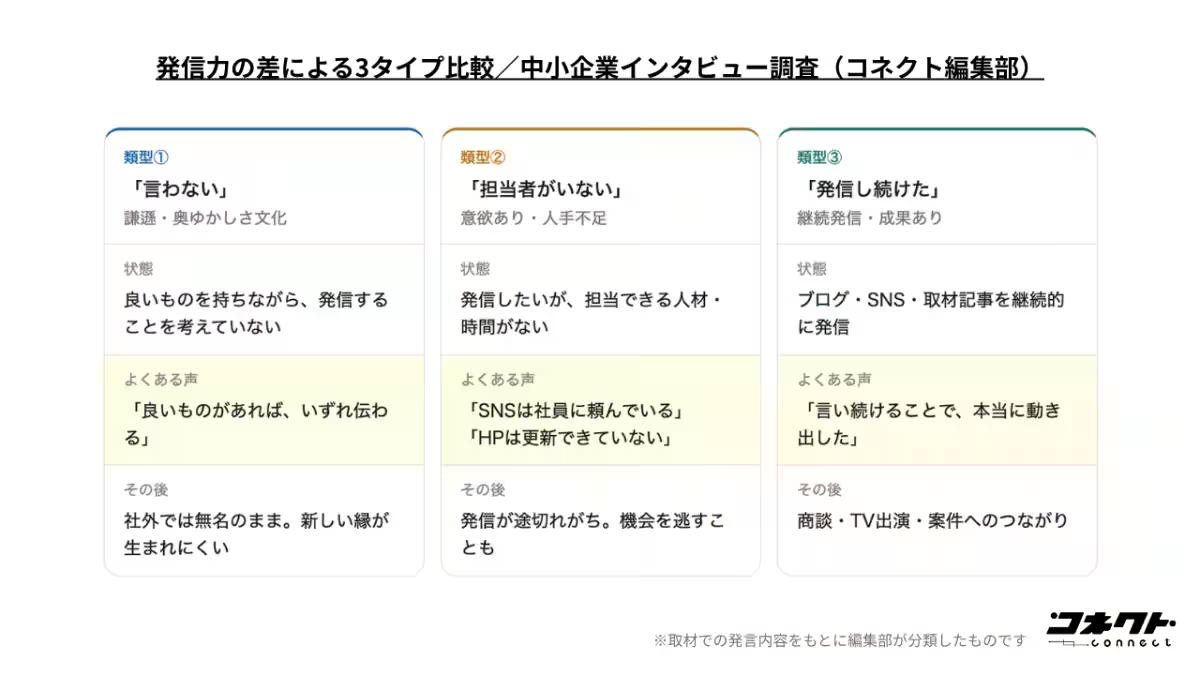
One of the most recurrent themes discovered throughout the interviews relates to the lack of visibility for companies, even when they possess exceptional products and services. This report identifies three distinct types of communication barriers that SMEs frequently encounter:
1. The Modesty Barrier
Many business leaders highlighted an intrinsic Japanese cultural trait — modesty — which often leads to a reluctance to promote their offerings. One interviewee, a leader in the food manufacturing sector from Mie Prefecture, expressed, “Value exists inherently. If you don’t communicate it, it won't be recognized. Japanese culture often emphasizes humility, leading many to quietly work behind the scenes.” Despite being responsible for producing over 15,000 meals a day with a commitment to quality, this leader struggled to share their story. However, with initiatives such as newsletters detailing their efforts, they have begun breaking through this modesty barrier, enhancing understanding of their true value and subsequently increasing pricing.
2. Lack of Resources
Another barrier faced by SMEs is the absence of dedicated personnel for effective communication. While many have the desire to share their narrative, the lack of human resources presents a significant hurdle. For example, a representative managing a after-school program in Chiba Prefecture mentioned that their social media accounts were primarily managed by their daughter due to her proficiency in digital tools. Other businesses resonated with similar experiences, wherein family members often took on the role of communicators to leverage their social channels effectively. Some small businesses entrust younger employees with these responsibilities, allowing for creative campaigns and increased engagement.
3. Real-World Impact
Conversely, examples also illustrate that companies that choose to communicate have witnessed substantial growth and opportunities. One manufacturing firm in Aichi has maintained a blog since the 2000s, focusing on their ambition to collaborate with NASA. This persistent communication eventually caught the attention of JAXA, leading to partnership opportunities, including projects involving Google and the University of Tokyo. Such stories highlight how communication can open doors and influence future prospects.
The Birth and Progress of Connect
Reflecting on the creation of Connect, CEO Shigeru Kondo shared, “Even companies with the world’s No. 1 market share have stories that remain untold. We aimed to create a platform to spotlight these businesses.” Since its inception in March 2025, Connect has interviewed numerous SMEs, helping them to broadcast their capabilities and receive recognition.
Since the publication of articles, many companies have reported receiving inquiries and partnership offers. A notable instance from a springtime interview resulted in a recommendation to appear on a television program after being featured on Connect, dramatically enhancing their visibility.
Conclusion: Moving Forward
The consensus among interviewed leaders is clear: simply producing a superior product does not guarantee sales. The vital step is raising awareness about their existence and capabilities. As many noted during interviews, “It’s not enough to be good at what you do. You must articulate it.” In the current climate, effective communication should be viewed not just as a strategy for acquisition but as essential for sustaining valuable business relationships.
Over the past year, the Connect team has aimed to foster connections and broaden visibility for SMEs, ensuring that their stories are not overshadowed or overlooked. Continuing into the second year, Connect remains committed to amplifying the voices of regional SMEs, aiding them in breaking through communication barriers to reach their full potential.

Topics Consumer Products & Retail)






【About Using Articles】
You can freely use the title and article content by linking to the page where the article is posted.
※ Images cannot be used.
【About Links】
Links are free to use.