



Exploring the Correlation Between Personal Time and Job Satisfaction
Exploring the Correlation Between Personal Time and Job Satisfaction
In today's rapidly evolving work environment, the perception of time—specifically personal time—has undergone a substantial transformation. This shift is primarily influenced by the diversification of work styles and the prevalence of communication tools. A growing number of individuals emphasize the importance of 'personal time', reflecting a deep-seated need to connect with oneself. Recent advertising trends have increasingly highlighted 'personal time', echoing this societal focus.
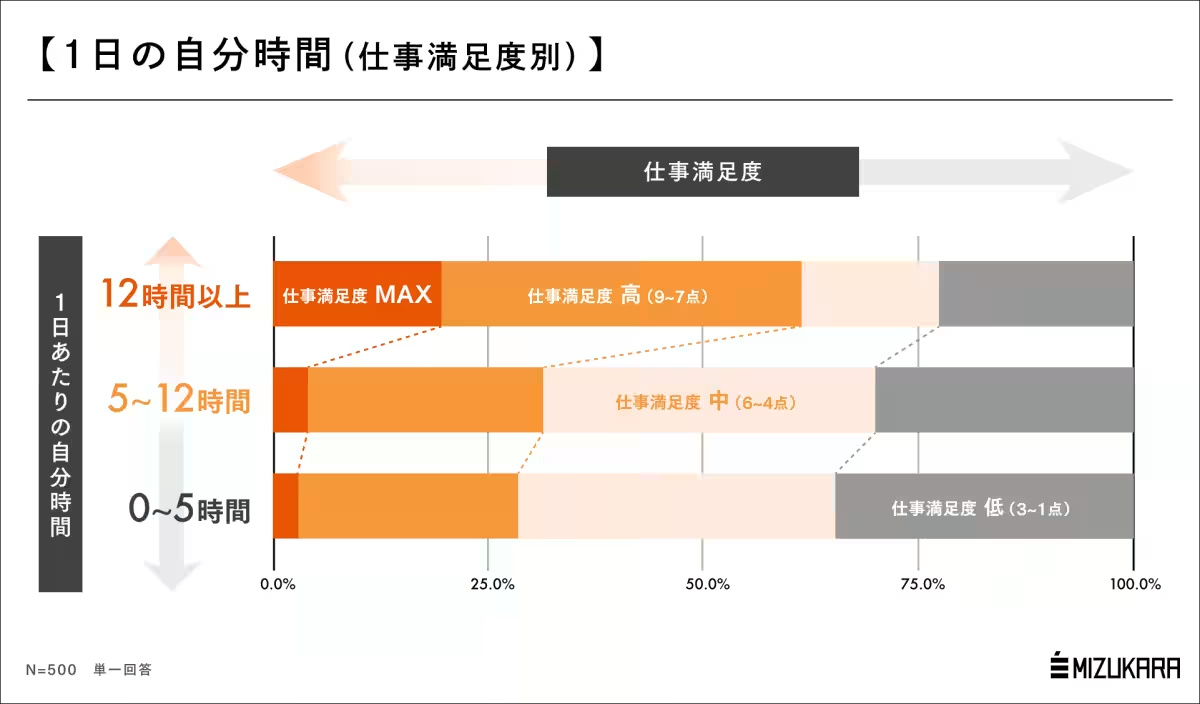
A study conducted by Mizukara, a Tokyo-based company specializing in career coaching, investigated this phenomenon among 500 working men and women aged 20 to 59. The focus was on determining the correlation between the amount of personal time individuals perceive they have and their job satisfaction.
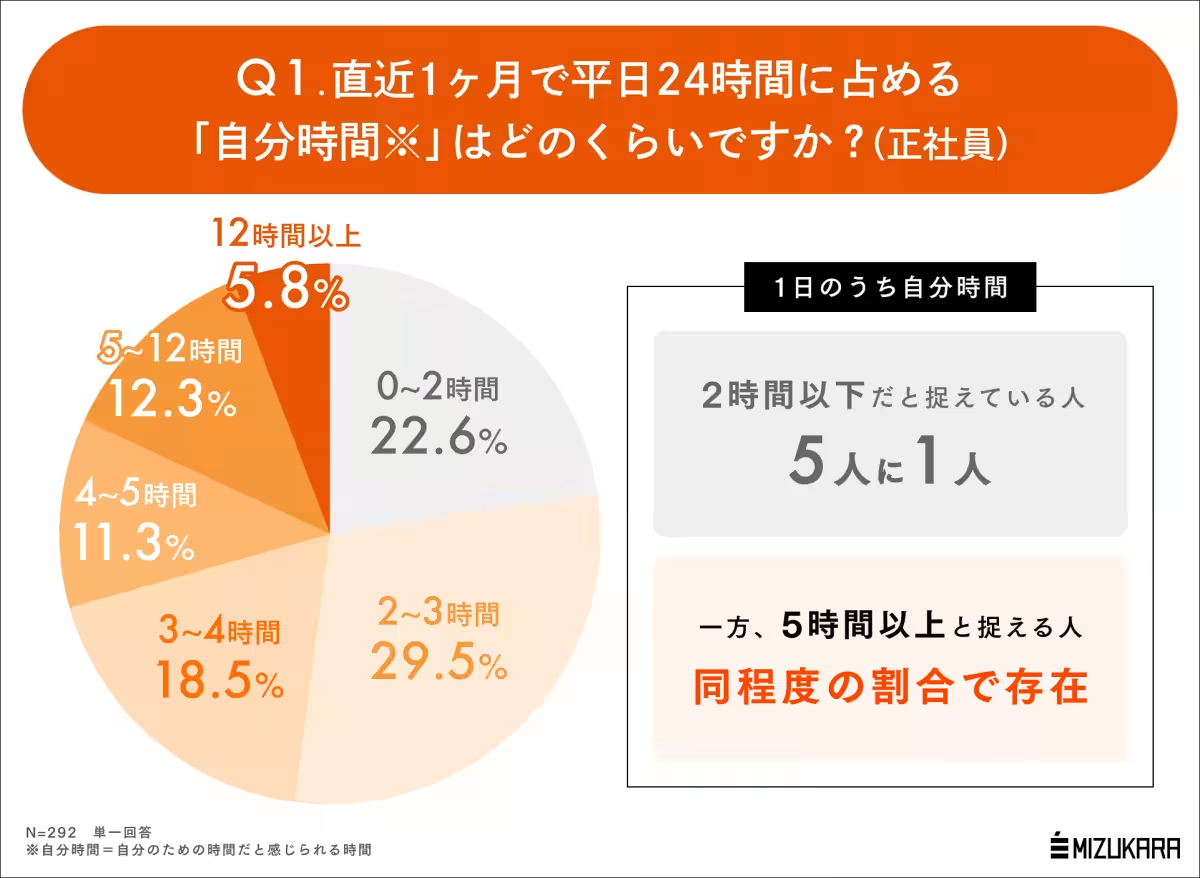
In examining the results, it became glaringly apparent that even among full-time employees—who share similar working hours—the interpretation of personal time varies widely among respondents. Out of those surveyed, one in five reported having two hours or less of personal time each day, while an equal number claimed they enjoyed five or more hours. This deviation suggests that even under similar conditions, individual perceptions shape one's experience of personal time.
The Key to Personal Time: Enjoyment of Work
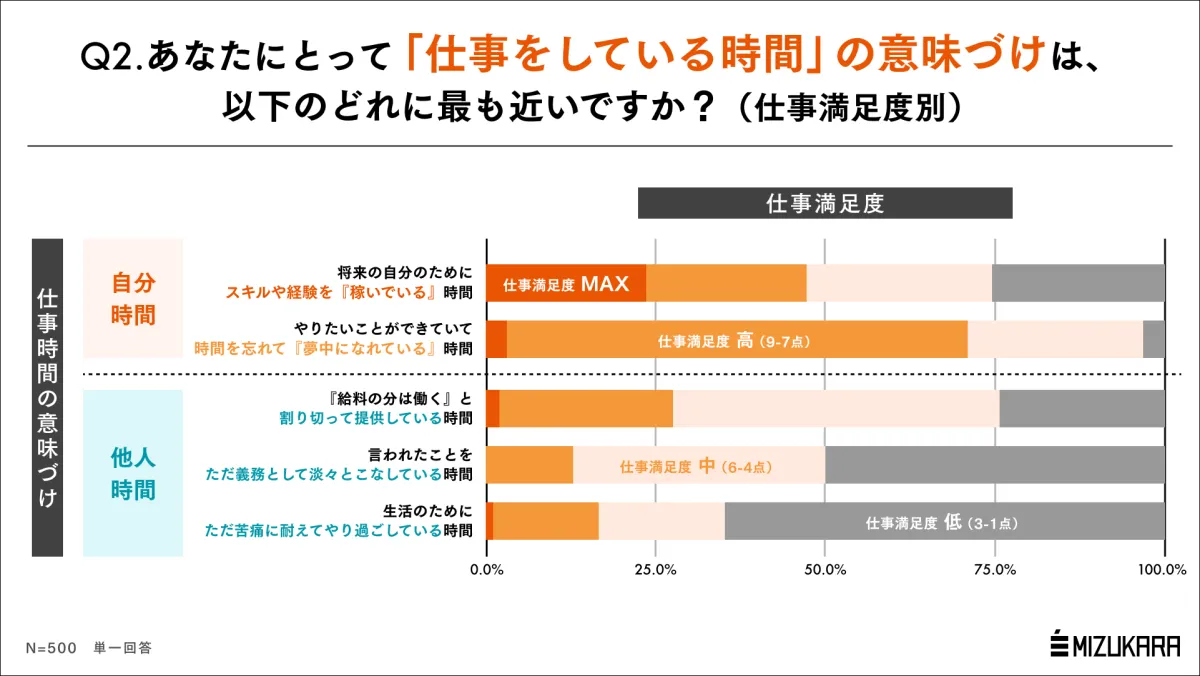
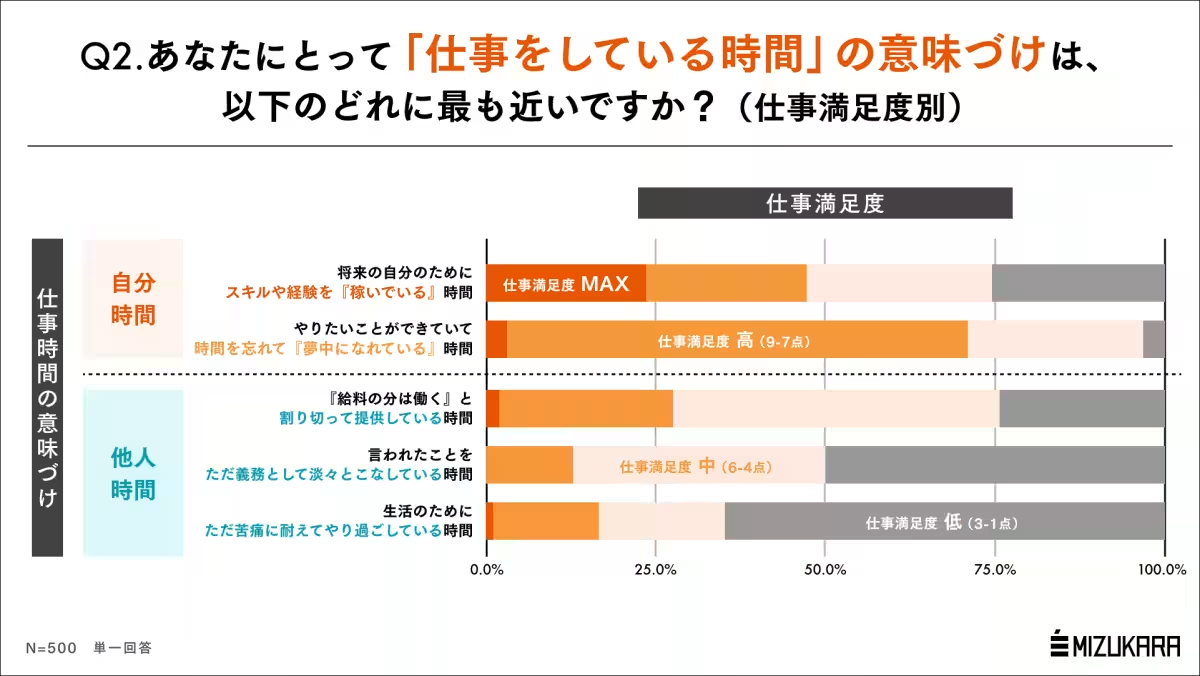
What drives this stark difference in how individuals perceive their personal time? Mizukara's findings unveiled a significant correlation between the duration of personal time and job satisfaction. Simply put, those who find joy and fulfillment in their jobs tend to allocate a larger portion of their day to what they consider personal time. This connection suggests that people who are invested in their work experience it as an extension of their personal life rather than a hindrance to it.
This begs the question: Do we sacrifice the majority of our work hours for fleeting moments of personal time after work, or do we embrace our work as a significant part of our day and then reward ourselves with leisure in the evening? The mindset adopted can lead to drastically different interpretations of our daily experiences.
Redefining the Meaning of our Work Hours
The differences in job satisfaction stem from how individuals perceive their work hours. For those who view their job as an opportunity to gain experience for future growth or as a thrilling endeavor, job satisfaction tends to be notably higher. Conversely, those who approach their job with a transactional mindset—seeing it merely as a means to a paycheck—often report lower job satisfaction. Hence, the way we frame our work dramatically influences our overall happiness and engagement.
This study indicates that, despite being in the same workplace, our varying attitudes can lead us to experience entirely different interpretations of life. The differentiation between merely fulfilling responsibilities and passionately engaging with our work can result in significant contrasts regarding personal fulfillment.
Perhaps the key takeaway is that if we approach work as personal time, life may become richer and more rewarding. Thus, it is essential to reassess what 'work' means personally and redefine it as necessary. When the meaning we attribute to our work aligns with our personal ambitions and life goals, it could lead to actionable changes such as pursuing a department transfer or even changing jobs altogether if our current role fails to resonate.
Conclusion
The study titled 'Correlation Between Personal Time and Job Satisfaction' sheds light on how our perspectives on work can enhance or diminish our daily satisfaction. By understanding the intrinsic value of our jobs and embracing them as part of our personal time, we create more fulfilling experiences that lead to greater contentment in both our personal and professional lives.
- - Study Details: Conducted on February 10, 2026, among 500 working individuals aged 20 to 59 across Japan via online survey.
About Mizukara Inc.
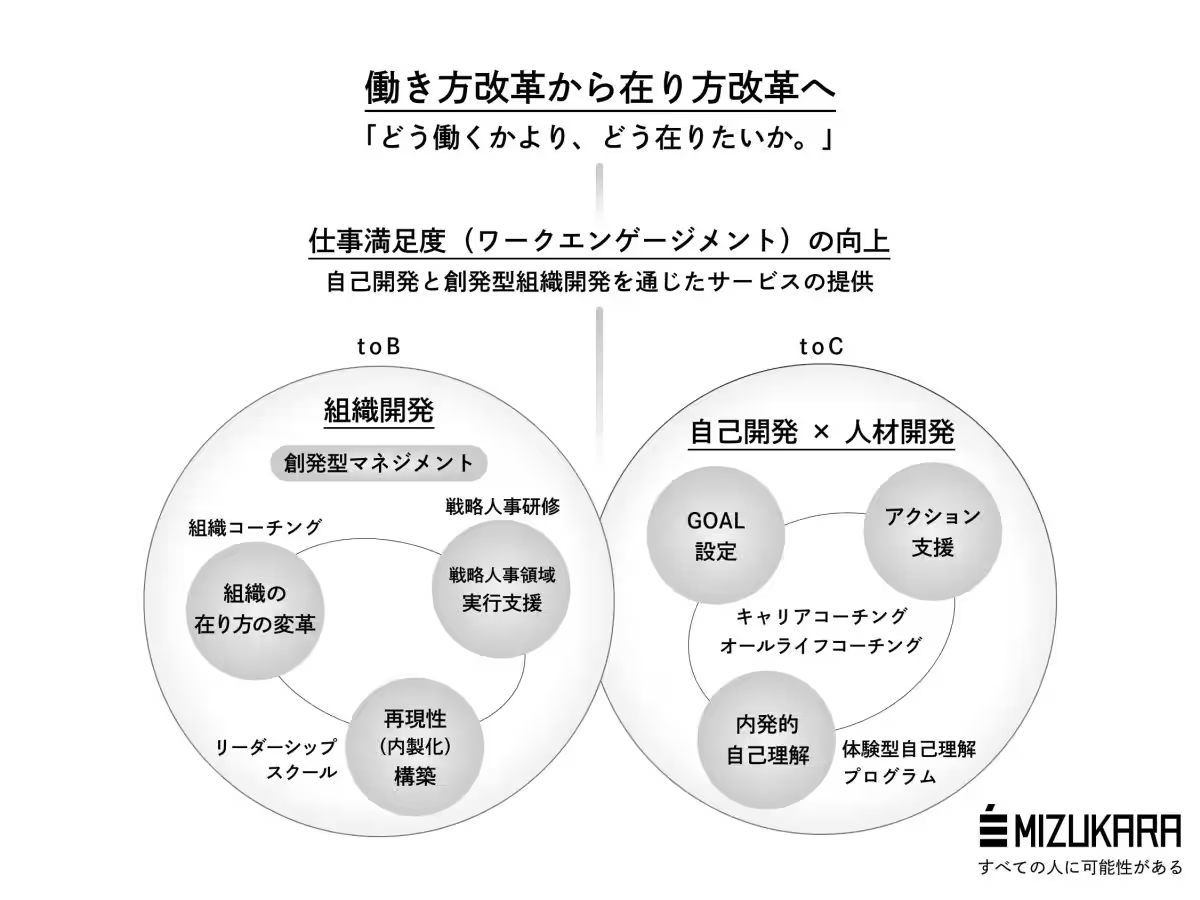
Mizukara Inc. embodies the philosophy that everyone possesses potential. The company focuses on career coaching—both individual and organizational—alongside experiential self-understanding programs. Aiming to improve work engagement in Japan, Mizukara offers diverse services, from personal development to executive coaching. Their mission is to empower individuals and organizations to live out their goals in an increasingly demanding era.
For more information about Mizukara’s offerings, you can visit their official website here.
Topics People & Culture)
【About Using Articles】
You can freely use the title and article content by linking to the page where the article is posted.
※ Images cannot be used.
【About Links】
Links are free to use.