



Understanding and Supporting Children with Developmental Disorders: A Training Workshop in Okinawa
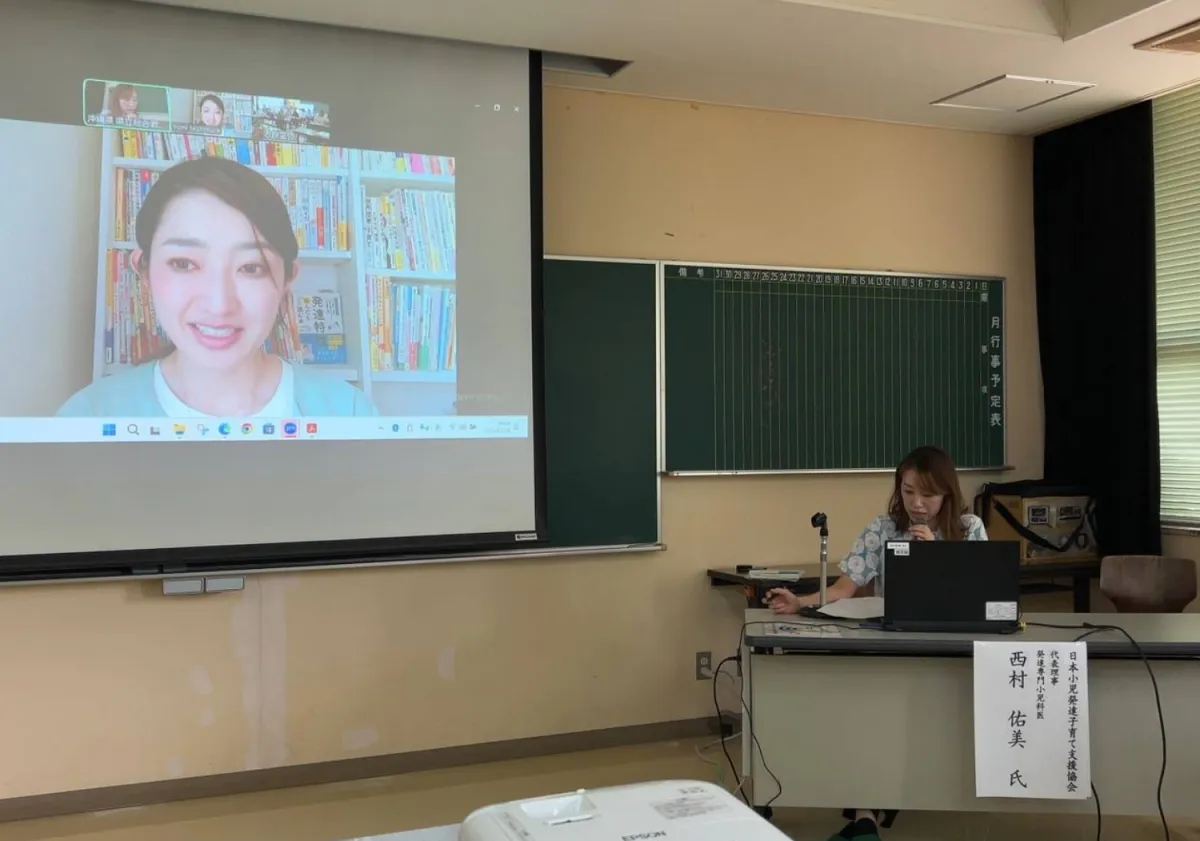
On July 28, 2025, Dr. Yumi Nishimura, a pediatrician specializing in developmental disorders, conducted a training session for educators at the Okinawa Prefectural General Education Center. The workshop, titled ‘Understanding and Supporting Children with Developmental Disorders,’ aimed to provide strategies for teachers working with children from preschool to high school who exhibit various developmental traits.
During the online presentation, Dr. Nishimura addressed the challenges faced by teachers dealing with students who are often described as ‘restless,’ ‘prone to tantrums,’ or ‘engaging in problematic behaviors.’ The session attracted 180 participants, including teachers, school nurses, nutritionists, special needs educators, dormitory supervisors, and support staff, who joined both in-person and through on-demand viewing options.
Dr. Nishimura emphasized the significance of effective communication techniques to motivate students with developmental traits. She introduced the concepts of ‘ignoring, waiting, and praising’ as key strategies for classroom management. These techniques are derived from well-researched parent training methods and are considered effective ways to foster positive behavior in children.
One of the primary takeaways was the importance of providing positive reinforcement. By focusing on children’s strengths and praising their good behaviors within the context of their age and comprehension levels, educators can help build students’ self-esteem and nurture their potential. Dr. Nishimura explained that recognizing positive behaviors and voicing appreciation not only fosters a supportive environment but also encourages ongoing good conduct.
Conversely, the immediate reaction to problematic behaviors often serves as reinforcement, leading to a cycle where students repeat those behaviors due to the attention they receive. Dr. Nishimura noted the necessity of sometimes withholding immediate responses, thereby reducing the likelihood of unwanted behaviors.
The training was interactive, filled with practical examples and case studies to illustrate the points being discussed. Attendees expressed a keen interest in implementing these strategies within their educational practices, sharing their reflections post-session. Many reported a shift in their understanding, realizing the value of patience, and highlighting desirable behaviors rather than reacting hastily to challenging actions.
Feedback gathered from participants highlighted several key insights. One educator remarked, ‘I learned the importance of waiting before responding to disruptive behavior. By focusing on positive actions and reinforcing them, I can convey encouragement more effectively.’ Another shared, ‘While I had been practicing waiting and praising before, I had never considered the impact of ignoring problematic behavior, which can often reward it with attention.’
A further participant noted, ‘Understanding the significance of how and when to praise students has transformed my approach. Instead of only acknowledging achievements, I now make it a point to notice and verbalize good behavior on a daily basis.’
Dr. Nishimura's lecture was not just enlightening concerning student management but also correlated the idea that changing surroundings can lead to positive transformations in children. Many educators expressed a renewed commitment to applying these strategies not only in the classroom but also in their parenting.
The association behind this training is committed to helping parents and supporters of children with developmental traits by providing resources and methodologies geared toward their effective upbringing. Given the positive reception, Dr. Nishimura will return to Okinawa next year to conduct further training sessions. Those interested in pursuing collaborations or requests for lectures are encouraged to reach out to the association directly.
By fostering awareness and understanding, such workshops stand as valuable contributions towards improving the educational experiences and outcomes for children with developmental disorders. The association remains dedicated to actively participating in local governmental initiatives to further support communities in nurturing these children’s unique strengths and capabilities.
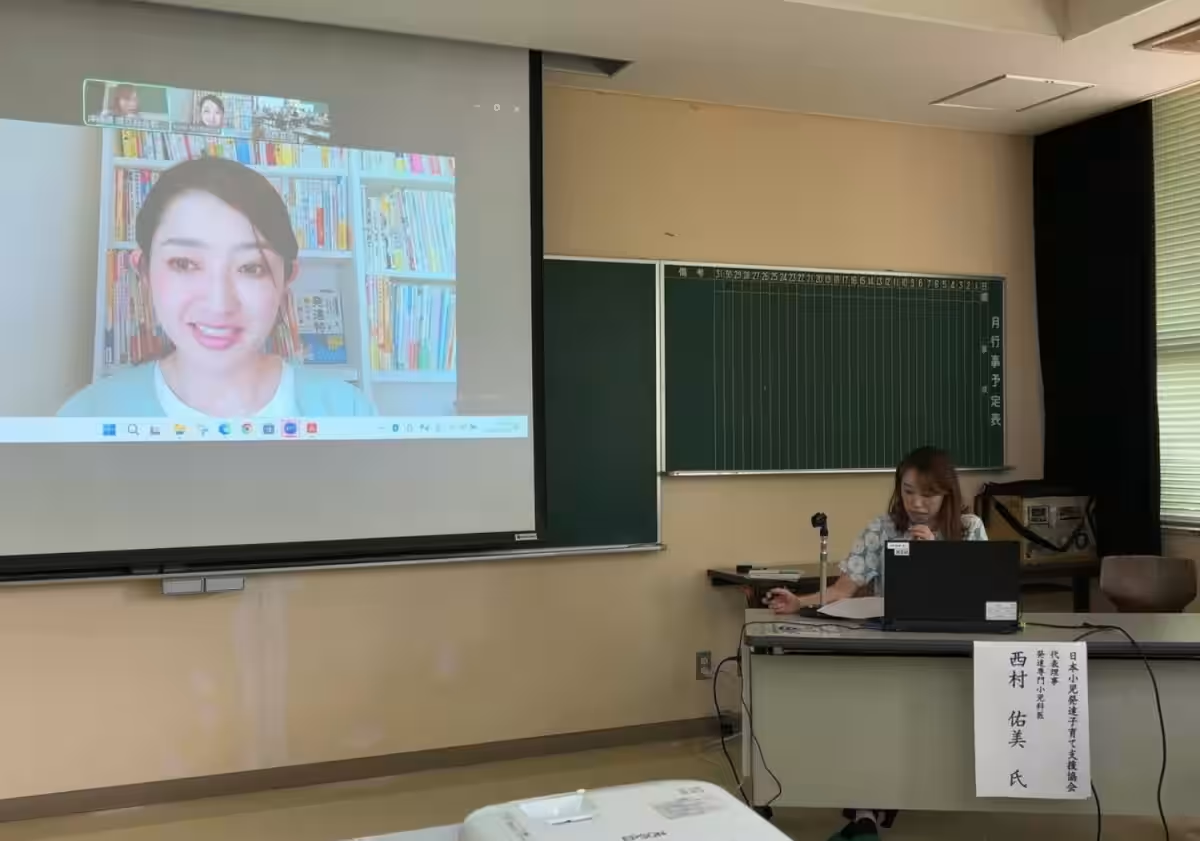
During the online presentation, Dr. Nishimura addressed the challenges faced by teachers dealing with students who are often described as ‘restless,’ ‘prone to tantrums,’ or ‘engaging in problematic behaviors.’ The session attracted 180 participants, including teachers, school nurses, nutritionists, special needs educators, dormitory supervisors, and support staff, who joined both in-person and through on-demand viewing options.
Dr. Nishimura emphasized the significance of effective communication techniques to motivate students with developmental traits. She introduced the concepts of ‘ignoring, waiting, and praising’ as key strategies for classroom management. These techniques are derived from well-researched parent training methods and are considered effective ways to foster positive behavior in children.
One of the primary takeaways was the importance of providing positive reinforcement. By focusing on children’s strengths and praising their good behaviors within the context of their age and comprehension levels, educators can help build students’ self-esteem and nurture their potential. Dr. Nishimura explained that recognizing positive behaviors and voicing appreciation not only fosters a supportive environment but also encourages ongoing good conduct.
Conversely, the immediate reaction to problematic behaviors often serves as reinforcement, leading to a cycle where students repeat those behaviors due to the attention they receive. Dr. Nishimura noted the necessity of sometimes withholding immediate responses, thereby reducing the likelihood of unwanted behaviors.
The training was interactive, filled with practical examples and case studies to illustrate the points being discussed. Attendees expressed a keen interest in implementing these strategies within their educational practices, sharing their reflections post-session. Many reported a shift in their understanding, realizing the value of patience, and highlighting desirable behaviors rather than reacting hastily to challenging actions.
Feedback gathered from participants highlighted several key insights. One educator remarked, ‘I learned the importance of waiting before responding to disruptive behavior. By focusing on positive actions and reinforcing them, I can convey encouragement more effectively.’ Another shared, ‘While I had been practicing waiting and praising before, I had never considered the impact of ignoring problematic behavior, which can often reward it with attention.’
A further participant noted, ‘Understanding the significance of how and when to praise students has transformed my approach. Instead of only acknowledging achievements, I now make it a point to notice and verbalize good behavior on a daily basis.’
Dr. Nishimura's lecture was not just enlightening concerning student management but also correlated the idea that changing surroundings can lead to positive transformations in children. Many educators expressed a renewed commitment to applying these strategies not only in the classroom but also in their parenting.
The association behind this training is committed to helping parents and supporters of children with developmental traits by providing resources and methodologies geared toward their effective upbringing. Given the positive reception, Dr. Nishimura will return to Okinawa next year to conduct further training sessions. Those interested in pursuing collaborations or requests for lectures are encouraged to reach out to the association directly.
By fostering awareness and understanding, such workshops stand as valuable contributions towards improving the educational experiences and outcomes for children with developmental disorders. The association remains dedicated to actively participating in local governmental initiatives to further support communities in nurturing these children’s unique strengths and capabilities.
Topics Other)
【About Using Articles】
You can freely use the title and article content by linking to the page where the article is posted.
※ Images cannot be used.
【About Links】
Links are free to use.