



New International Standards Propel Next-Generation XR Content Industry Forward
The Evolution of Avatars in the XR Content Landscape
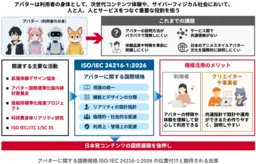
In the current digital age, the introduction of immersive technologies such as the metaverse, virtual reality (VR), augmented reality (AR), and location-based entertainment (LBE) marks a significant shift in user interaction and content consumption. Central to this evolution is the avatar—an embodiment of the user that serves as a bridge between individuals and the services they interact with. However, until now, there has been a lack of standardized methods for describing the various types, functionalities, and experiences associated with avatars.
Recently, the release of international standard ISO/IEC 24216-1:2026 has addressed this gap by providing a comprehensive framework for avatar terminology, functionality, and design considerations. This standard serves as a guide for developers, designers, and service providers involved in the creation and deployment of avatar-based systems and applications. By establishing common requirements and recommendations, it facilitates easier integration and understanding among creators and users alike.
Benefits of the New Standard
The ISO/IEC 24216-1:2026 enables content creators to adhere to international benchmarks when designing avatars, which in turn fosters the development of user-friendly experiences that prioritize safety and quality. For platform operators, the standard allows for a cohesive presentation of avatar functionalities, simplifying cross-service compatibility and international expansion. Ultimately, users gain a clearer understanding of avatar characteristics and functions, enhancing their ability to select services that best suit their needs. As cultural diversity and differing value systems are acknowledged, users can engage more confidently within the XR ecosystem.
A critical expectation of this standard is its potential to foster international common understanding concerning Japan's unique anime-style avatars, thereby promoting international engagement in content and XR industries. As avatars become increasingly central to experiences in various domains such as gaming, education, and virtual social interactions, this standard is poised to serve as a foundation for even broader applications.
Framework for Safe and High-Quality XR Experiences
By encouraging a clear definition of avatar types and features, the standard plays a vital role in creating a safer and more enriching XR experience. Users can now access clear descriptions of avatar functionalities, which allows them to make informed decisions about the services they engage with. Furthermore, creators can design avatars that not only cater to high-quality experiences but also take into account psychological safety and the myriad ways individuals express their identities.
The collaborative efforts behind this standard trace back to the National Institute of Advanced Industrial Science and Technology (AIST), which established the Domestic Committee for Avatar International Standardization within the Extended Experience Design Association (DAAX). This consortium works with industry experts and scholars to refine standards that reflect real-world needs and challenges within XR content creation.
The Road to Standard Development
Significant academic research and practical insights contributed to the development of this standard, including findings from AIST's proprietary XR evaluation system, Xperigrapher®. This research informed not only avatar ownership and bodily realism but also the overall XR experience quality. Ongoing discussions with various industry stakeholders have further shaped the trajectory of avatar standardization, enabling the proposal of this standard to the International Organization for Standardization’s technical committee ISO/IEC JTC 1/SC 35.
Future Directions and Cultural Impacts
Moving forward, AIST is committed to promoting this standard and exploring related international standardization initiatives. Furthermore, as diverse avatar representations thrive, platforms will find it easier to communicate features, enhancing mutual understanding and international collaboration among services.
An exciting aspect of this initiative is its implications for Japan's unique avatar culture rooted in anime and gaming. By articulating these characteristics within a universally applicable framework, Japanese content creators can better communicate their unique offerings to global markets. Furthermore, as avatars become essential in sectors ranging from education to tourism, this standard lays the groundwork for the widespread adoption of avatar technologies in everyday life.
As we look ahead, the establishment of ISO/IEC 24216-1:2026 serves as a critical step in creating a safe, enjoyable, and culturally rich digital experience for users worldwide. Through ongoing development and collaboration, the potential for avatars to enrich our interaction within digital spaces continues to expand, promising an exciting future filled with limitless possibilities.
Topics Consumer Technology)
【About Using Articles】
You can freely use the title and article content by linking to the page where the article is posted.
※ Images cannot be used.
【About Links】
Links are free to use.