



The Critical Situation of Home Care Services in Japan Amid Workforce Shortages
The Critical Situation of Home Care Services in Japan
The home care industry in Japan has entered a phase of unprecedented difficulty, particularly in the domain of visiting care services. This essential sector for in-home support is grappling with significant workforce shortages, exacerbated by rising operational costs linked to global inflation, as well as steep fees imposed by staffing agencies and recruitment firms. The imminent adjustments to the long-term care insurance system set for the fiscal year 2024, which include reductions in basic service fees, threaten to worsen the financial strain on many service providers. This article delves into the findings of our latest analysis, based on data compiled in January 2025, to highlight both the disparities in service availability across regions and the interconnectedness of visiting care with residential services, such as assisted living facilities.
Analysis Overview
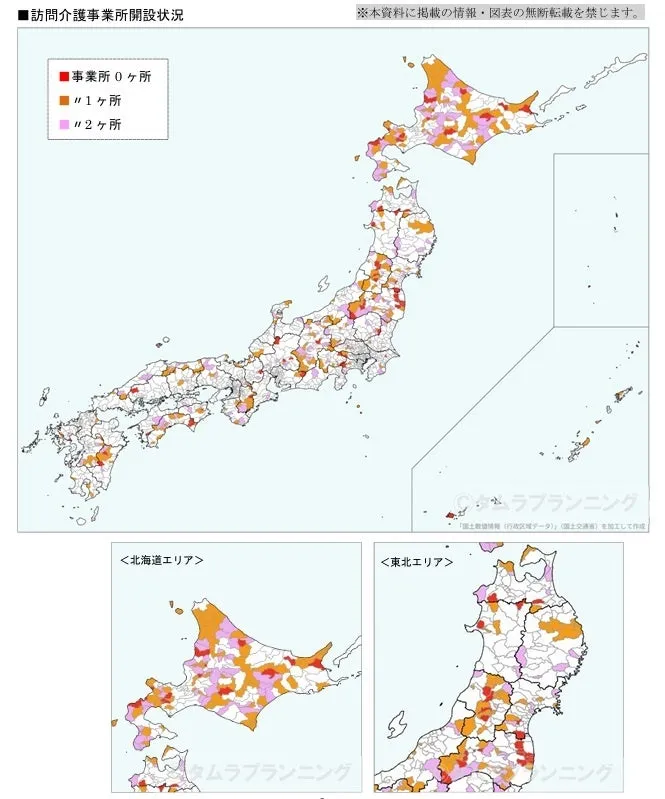
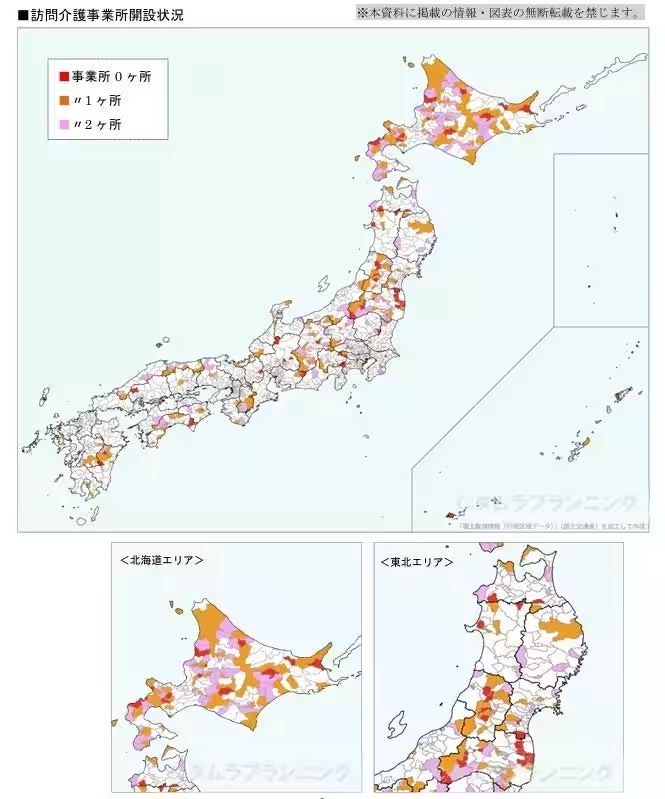
Our detailed survey revealed that there are currently 82 municipalities in Japan with no visiting care facilities, while nearly 500 municipalities have only one or two such providers. Among them, Hokkaido records the highest concentration with 14 municipalities lacking any visiting care services. Approximately 30% of municipalities nationwide face similar deficiencies, underscoring a significant gap in the availability of essential care services. In these rural localities, private sector participation appears grim, and without government intervention, sustaining a functional care service framework remains highly precarious.
Conversely, urban areas, characterized by higher population density, have seen a surge in efficiency-focused combined facilities. Despite facing fee reductions under the same building discount regulations, the visiting care services embedded within these residential complexes are thriving, showcasing a stark divide in service delivery across the country.
A Closer Look at Service Availability
1. Municipalities with Zero Visiting Care Services: The data indicates that 82 municipalities across Japan currently possess no visiting care services, with Hokkaido notably leading with 14 municipalities. Additionally, approximately 562 municipalities, which represent about 29.6% of the total, have only one or two such services available. The regions of Hokkaido, Fukushima, Yamagata, Nagano, and Kochi are highlighted as particularly vulnerable, suffering from severe resource gaps.
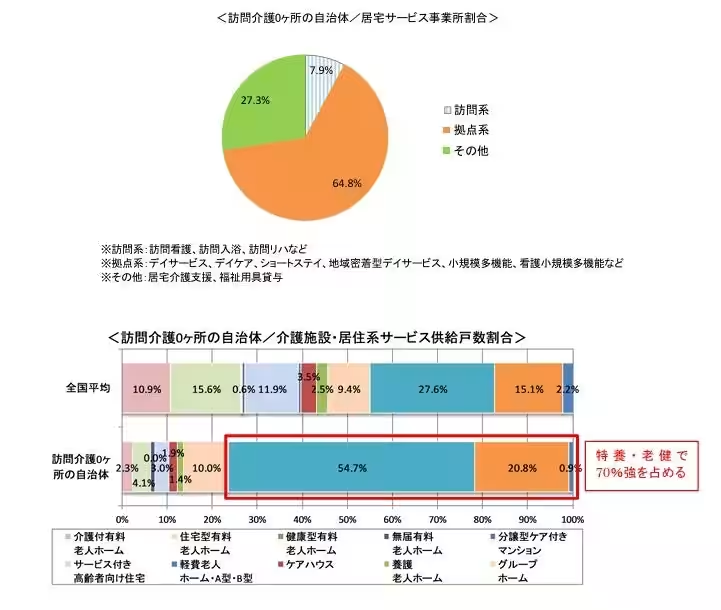
2. Alternative Support Measures: In areas devoid of visiting care services, alternative models such as day services and short-stay facilities are stepping in to fill the gap. Specifically, facilities like nursing homes and assisted living centers serve not only as care providers but also as essential hubs for other service models, indicating that institutional care remains predominant in keeping elderly care sustainable in these hard-hit regions.
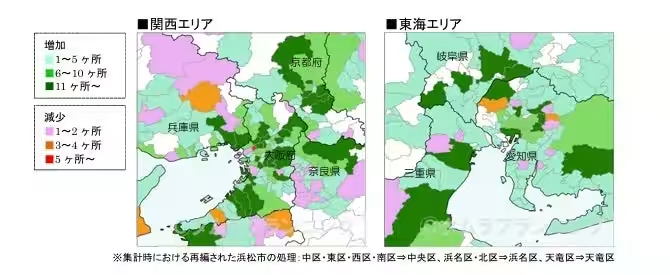
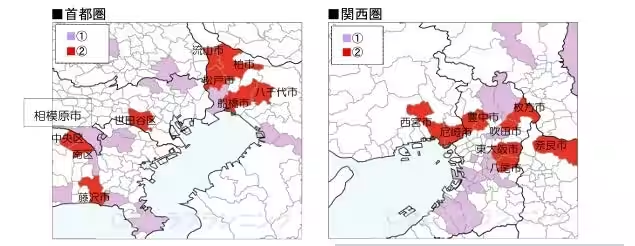
3. Trends in Visiting Care Facilities: From January 2021 to January 2025, a net increase of 681 visiting care facilities was recorded, while 495 facilities saw declines, demonstrating an ongoing bifurcation between urban and rural settings. Notable growth in the Kansai and Tokai regions showcases demand fueled by nearby residential complexes with integrated care services, which are now more prevalent as urbanization continues to influence community healthcare.
4. Concentration of Services in Urban Areas: Our findings illustrate a significant reliance in urban areas on combined facility models where over ten visiting care homes exist alongside other support facilities. This trend reveals how urban infrastructures adapt to efficient operation, often benefiting from economies of scale that lower service costs while maintaining a high quality of care.
Conclusion: Urgent Revisions Required
The disparities in visiting care services highlight an urgent need for reassessment of the compensation structures accompanying long-term care services. Revisiting and adjusting care fees to reflect on regional realities is paramount, alongside increasing governmental involvement, particularly in jurisdictions struggling to maintain service continuity.
As we await the publication of our extensive report titled 'Long-Term Care Insurance Home Service Data' due in July 2025, we continue to compile diverse datasets related to the elderly housing and care sectors. Our initiative strives to illuminate the path toward sustainable reform and to ensure equitable access to home care services for Japan’s aging population.
For further information regarding existing data and services, please visit Tamura Planning & Operating.
The pressing needs highlighted in this analysis must serve as a wake-up call, galvanizing stakeholders to act decisively in order to uphold the integrity and accessibility of home care services across Japan.
Topics Other)
【About Using Articles】
You can freely use the title and article content by linking to the page where the article is posted.
※ Images cannot be used.
【About Links】
Links are free to use.