




Advanced MEMS Gas Cell Manufacturing Platform for Next-Generation Atomic Clocks
Introduction
In the world of technology, miniaturization is a growing trend that is enabling new applications in various fields. Among the advancements in this domain, the development of ultra-compact atomic clocks stands out, promising enhanced functionality for global navigation satellite systems (GNSS), communication networks, autonomous vehicles, and various sensor systems. Recognizing the potential of such advancements, a collaborative team has established a pioneering MEMS (Micro-Electro-Mechanical Systems) gas cell manufacturing platform that not only enables high precision in fabricating gas cells but also maintains the efficiency of mass production processes.
Innovation of MEMS Gas Cell Technology
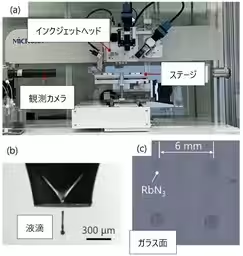
The collaboration includes prominent institutions such as the National Institute of Information and Communications Technology (NICT), Kyoto University, Tokyo Metropolitan University, Toyobo MC Company, and Neoark Inc. Together, they have accelerated the design and optimization processes for gas cells used in ultra-compact atomic clocks. This was achieved primarily through the development of inkjet printing technology which enhances the precision control of gas environments within these MEMS gas cells.
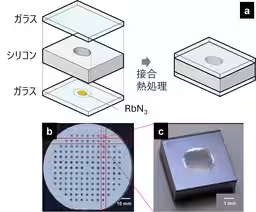
The key innovation involves the utilization of rubidium azide (RbN₃) microparticles, which produce rubidium atoms and nitrogen gas upon thermal decomposition. These microparticles are precisely applied onto glass wafers using inkjet printing technology, allowing for meticulous control over the amount of RbN₃ and, consequently, the nitrogen partial pressure within the gas cells.
Achievements
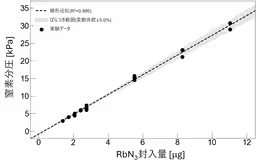
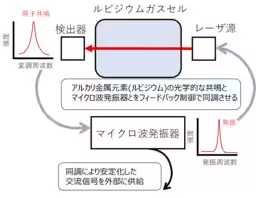
Through this innovative approach, the research group successfully demonstrated the capability to control nitrogen gas generation inside the gas cells with high precision and reproducibility. Furthermore, by varying the nitrogen partial pressure, they could effectively produce MEMS gas cells, enhancing the assessment of Coherent Population Trapping (CPT) resonance characteristics necessary for optimizing atomic clock performance.
The results of their efforts show that robust relationships exist between the amount of RbN₃ utilized and the resulting nitrogen partial pressure, enabling tight control over internal conditions essential for high-performance gas cells. This contrasts sharply with conventional methodologies that focused solely on evaluating variabilities post-manufacture, establishing a new standard for design control at the wafer level.
Operational Background
The operational context for this technology is deeply tied to the essential roles that ultra-compact atomic clocks will play in critical infrastructure. High performance in these clocks is largely dependent on the specific pressures and compositions of gas within the MEMS gas cells. Consequently, refining these conditions is paramount for delivering optimal performance in real-world applications.
Conventional manufacturing techniques have struggled to simultaneously ensure mass production efficiency while maintaining precise control over the gas cell environment, leading to significant limitations in performance enhancement. However, this platform streamlines both manufacturing and control, facilitating the rapid optimization of the gas cells necessary for next-generation atomic clocks.
Future Prospects
The platform introduced not only excels in nitrogen pressure control but also perfectly aligns with scalability for mass production. Moving forward, the focus will be on optimizing both the gas cell structures and production conditions further, aimed at realizing a highly efficient and reliable ultra-compact atomic clock.
Research Credential
The pivotal article, authored by Shun Kiyose and colleagues, titled "Nitrogen-Pressure Dependence of Coherent Population Trapping Signal Characteristics in Microfabricated Rubidium Vapor Cells," was published in the IEEE Open Journal of Ultrasonics, Ferroelectrics, and Frequency Control, marking a significant step in advancing precision timekeeping technologies.
Conclusion
With the establishment of this innovative gas cell manufacturing technology, the vision for highly accurate ultra-compact atomic clocks shifts closer to reality. It is anticipated that these advancements will lead to improved infrastructures in various sectors, ultimately benefiting industries reliant on precise time synchronization and positioning capabilities.

Topics Consumer Products & Retail)



【About Using Articles】
You can freely use the title and article content by linking to the page where the article is posted.
※ Images cannot be used.
【About Links】
Links are free to use.