



Innovative New Education Model at Inazuki Higashi School in Kama City
A New Era of Learning: Inazuki Higashi School
Kama City, Fukuoka Prefecture, has taken a significant step toward modernizing education with the introduction of the Inazuki Higashi School. This institution stands as a testament to the innovative design and educational philosophy that aims to cultivate both academic and personal growth among students.
Background of the Project
Established as part of a larger initiative to create three new compulsory education schools in the region, Inazuki Higashi School is designed as a collaborative space that integrates both elementary and junior high school curriculum under a single educational management system. This concept of a compulsory education school, which combines elementary and middle school education, was formalized in 2016, marking a new direction in Japanese educational structure.
One notable innovation in this project is the design-build approach, where architects and builders closely collaborated to expedite the project timeline while maintaining high standards. This methodology allowed for seamless communication and integration of ideas from the conceptual phase through to the construction phase, ensuring that the school's design meets the evolving educational needs addressed by the Ministry of Education.
Design Features
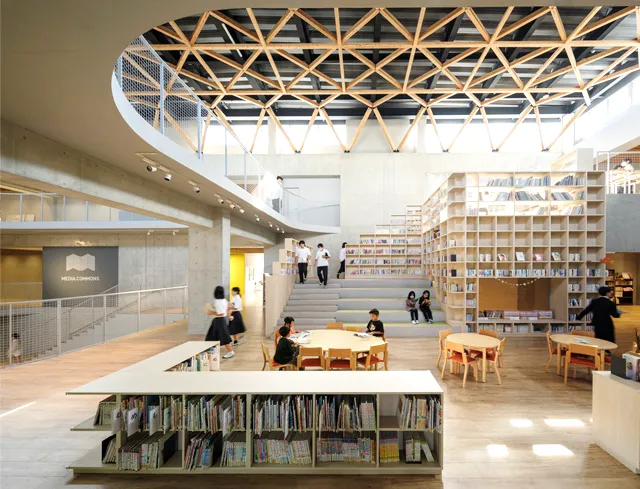
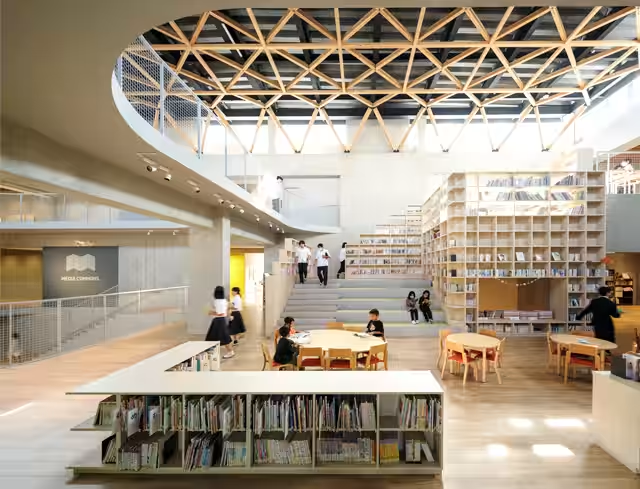
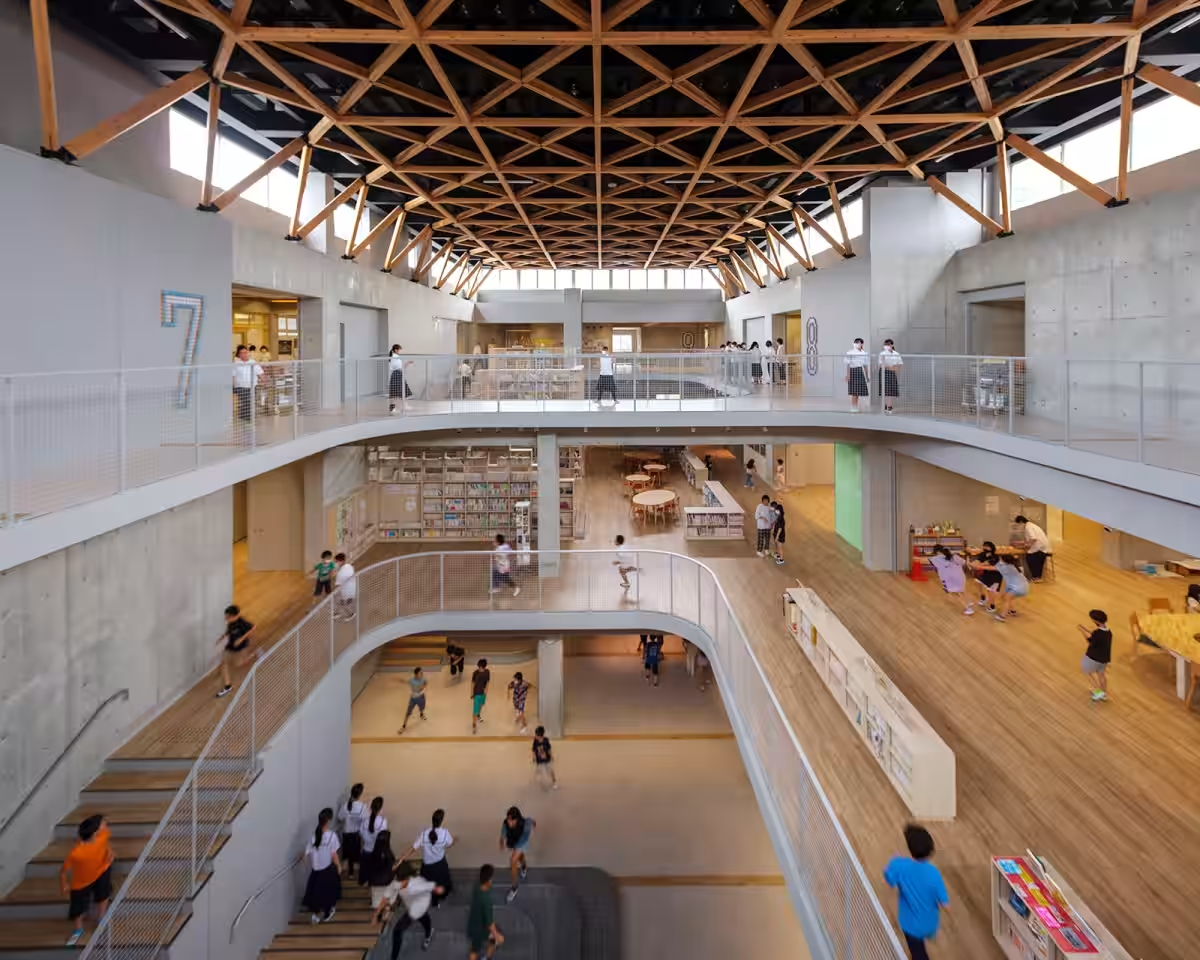
At the heart of the Inazuki Higashi School's design is the Media Commons, a multi-functional space that serves as a library, corridor, and presentation area. This central hub promotes interaction and communication among students by doubling as both a quiet study area and a venue for presentations and learning activities. Furthermore, the students were actively involved in the creation of grade signage, fostering a sense of ownership and tradition within the school community. This signage is designed to be updated by students, enabling them to contribute actively to their school's identity.
The design of Inazuki Higashi School was conceived with the understanding that a robust educational environment should reflect the community's vision of personal growth. As stated by the design team, the primary goal was to create a space that encourages significant personal and academic experiences, enriching local community life through education.
Architectural Overview
Located at 1536 Hira, Kama City, the school features a total floor area of 12,085.79 square meters and spans three stories. The structural design combines reinforced concrete (RC) and steel frame elements, with an emphasis on sustainability and functionality. The execution of this innovative design has garnered multiple prestigious awards, including the Fukuoka Prefectural Beautiful Town Building Award and Good Design Award, reflecting its outstanding contribution to educational architecture.
Focus on Student Development
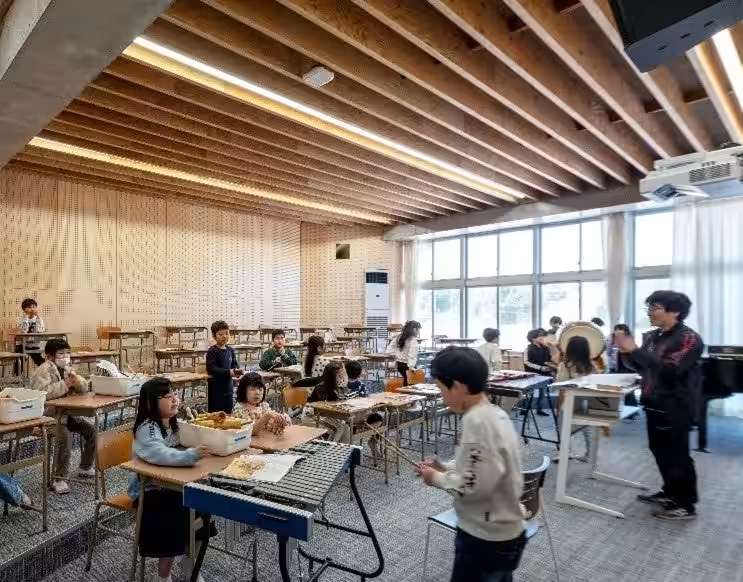
The design concept at Inazuki Higashi School emphasizes community-building through varied learning environments and inter-grade interactions. To facilitate this, the building incorporates a spatial layout where younger students occupy the first floor, and older students utilize the third floor, with communal resources located centrally. This encourages regular interactions among different age groups, enhancing communication skills and fostering a sense of community.
The school also eliminates traditional long corridors, opting instead for a floor plan that centers around the Media Commons, facilitating interactions in a dynamic and flexible manner. With dedicated areas for grade-specific units and shared lounges, the layout is intentionally structured to enhance the learning experience and ensure every student feels a sense of attachment to their educational environment.
Conclusion
Inazuki Higashi School is more than just a building; it signifies a shift toward a more integrated, thoughtful approach to education that marries architecture and pedagogy. As the project reflects on collaboration across various stakeholders and disciplines, it is a prime example of how modern educational facilities can contribute positively to the community while nurturing the next generation. The collaborative efforts of Kama City, the design team, teachers, and students not only showcase innovative approaches to education but also provide a model for future developments across Japan.
This school embodies the vision of fostering human development, fulfilling Kama City’s aspiration that “community development is human development.” Its design and operational approach will undeniably create a lasting impact on students, teachers, and the broader community well into the future.
Topics Other)
【About Using Articles】
You can freely use the title and article content by linking to the page where the article is posted.
※ Images cannot be used.
【About Links】
Links are free to use.