



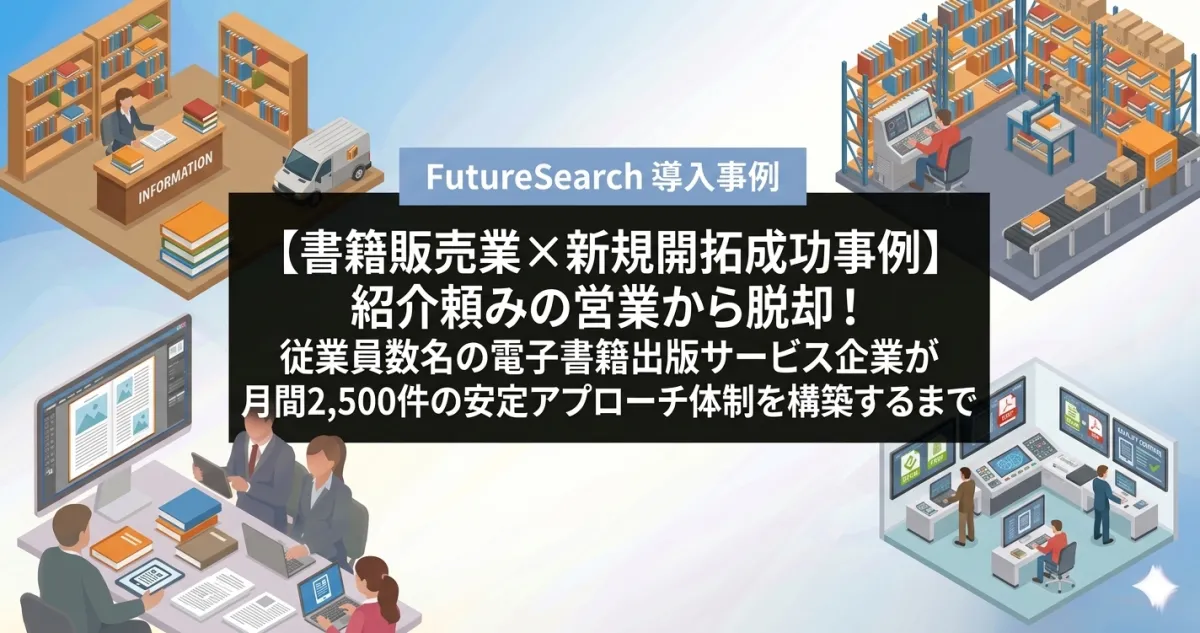
Transforming Sales Strategies: How FUTUREWOODS Helped J Company Break Free from Referral Dependency
Transforming Sales Strategies: A Case Study of J Company and FUTUREWOODS
In a world where businesses heavily rely on networks and referrals for growth, J Company, a small electronic book publishing service, faced the challenge of stagnation. Based in the Kansai region, this firm, employing only a few individuals, had long depended on existing clients' referrals to generate new business opportunities. While customer satisfaction remained high, the inconsistency in their monthly deal flow frustrated their aspirations for sustainable growth.
This article delves into how J Company broke free from its referral-dependent sales approach by integrating a powerful sales support tool, FUTUREWOODS' FutureSearch. This transition not only led to a significant increase in lead generation but also enhanced their engagement with potential clients.
The Challenge: Limitations of a Referral-Dependent Model
For years, J Company operated under a business model reliant on referrals, causing a volatile monthly cycle regarding new prospects. Their existing clientele, while loyal and satisfied, could not generate enough referrals to ensure a constant flow of new business. Even attempts to implement direct mail campaigns were met with hesitation due to a lack of a solid mailing list and effective messaging strategies. The company found itself trapped, with little clarity on how to systematically approach new customers.
Realizing that the success of their business hinged on overcoming this hurdle, they needed a strategic pivot to expand their outreach.
Strategic Shift: Testing Before Full Implementation
Amid explorations for a viable solution, J Company discovered the effectiveness of an inquiry form-based sales tactic. This approach allows companies to send messages directly to potential leads through web forms, offering higher visibility compared to traditional emails. Intrigued, they implemented FutureSearch to facilitate this form of outreach.
Initially, they began with the basic plan of FutureSearch, equipped with essential functionalities. As their understanding and operational capability grew, and recognizing the need for broader engagement, they upgraded to the expansion plan within three months. This swift transition opened up new avenues for operations, leading to a year of stable usage and achievement.
Implementation: Targeting the Right Audience
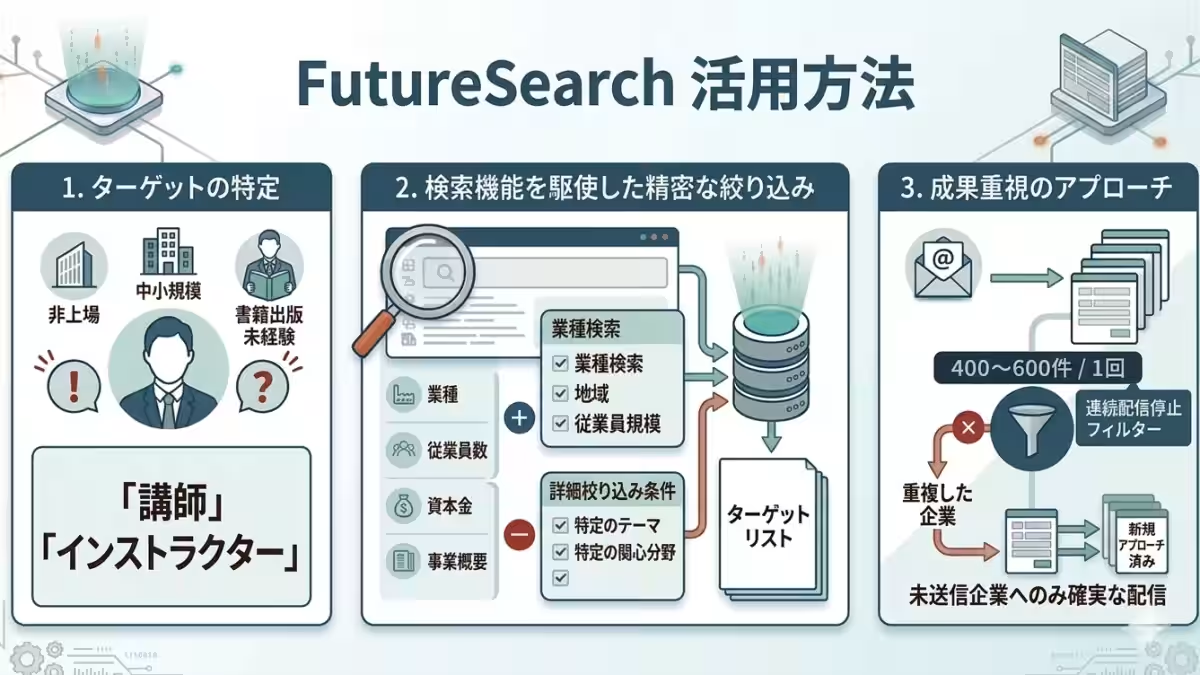
Utilizing FutureSearch’s company search capabilities, J Company cleverly identified non-public, small-sized firms with keywords like “instructor” or “lecturer” in their descriptions. By strategically filtering out competitors, they focused their efforts on business owners who had yet to publish a book but were interested in enhancing their visibility through publication.
Employing a “cumulative opt-out filter,” they avoided sending duplicate messages within specified time frames while executing approximately 2,500 form outreach messages monthly.
Success Metrics: Consistent Performance and Engagement
The introduction of FutureSearch significantly transformed J Company’s outreach capabilities. Currently, they proudly report:
- - Monthly outreach volume: Around 2,500 messages
- - Unique visit rate: Over 5.8%
With the industry standard hovering around 5%, J Company’s persistent ability to exceed this benchmark highlights the effectiveness of their targeted approach and messaging tailored to resonate with their audience.
Conclusion: Building a Robust Lead Generation Framework
Through their collaboration with FUTUREWOODS and the strategic implementation of FutureSearch, J Company successfully transitioned from an introduction-dependent business model to a dynamic lead-generation system. The key to their success was clearly identifying the audience interested in enhancing their visibility through publishing and establishing consistent outreach avenues.
For businesses with similar challenges in forming a stable lead generation strategy, leveraging tools like FutureSearch could be the turning point toward achieving sustained growth.
For more details and insights about this case study, visit FUTUREWOODS case study.



Topics Business Technology)
【About Using Articles】
You can freely use the title and article content by linking to the page where the article is posted.
※ Images cannot be used.
【About Links】
Links are free to use.