



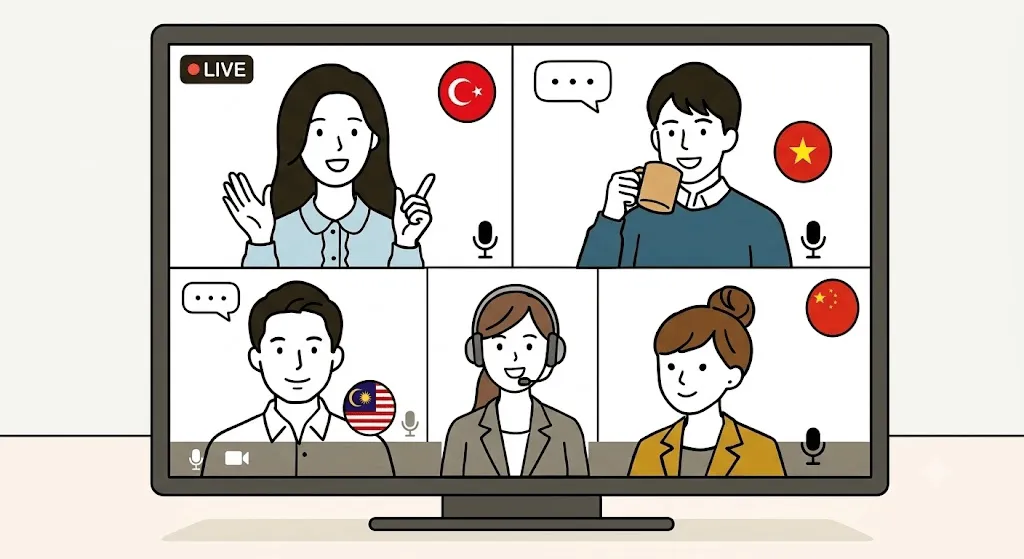
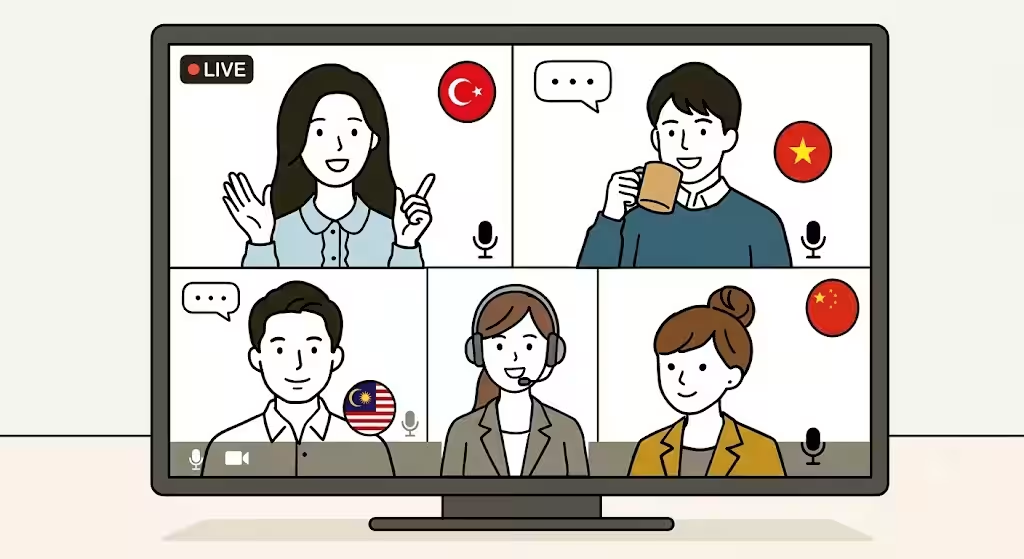
The Real Experience of Foreign Employees in Japanese Workplaces: Insights from Young Professionals
Understanding the Challenges of Foreign Employees in Japan
As Japan continues to embrace globalization and diversity, the hiring of foreign employees is becoming increasingly common. However, issues with communication often hinder the integration of these talented individuals into the workplace. A recent survey conducted by Originator, a Tokyo-based company specializing in recruitment of foreign students, explored the experiences of young foreign employees working in Japan, shedding light on the intricacies of Japanese workplace communication and culture.
Key Survey Findings
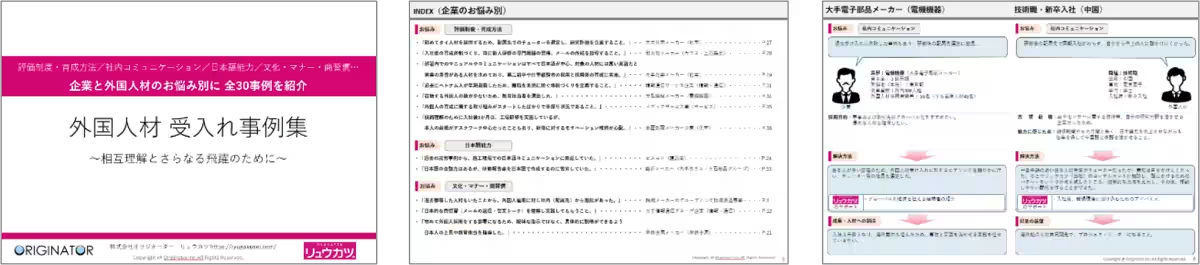
Originator’s survey, part of their 'Ryukatsu' platform, gathered the perspectives of four young foreign employees who have been working in Japan for less than two years. Here are some of the notable points raised:
1. Communication Nuances: Many foreign employees reported confusion not with the Japanese language itself but with the cultural nuances embedded within it. Expressions like “検討します” (I will consider it) can lead to misunderstandings, as it may often imply indecision or that immediate action is not feasible. This emphasizes the importance of understanding the context and intent behind the words, which is essential in communication within Japanese workplaces.
2. AI Tools in Language Learning: Many interviewees mentioned using AI tools to assist in writing Japanese emails and checking documents. While these tools can be beneficial, they highlighted the risks of relying too heavily on AI, as the generated content can sometimes diverge significantly from their actual language proficiency. For this reason, they advised maintaining a balance between using AI resources and personal language practice.
3. Creating a Supportive Work Environment: The employees expressed a desire for workplaces that foster open communication where questioning is encouraged. They emphasized being treated as integral team members, rather than receiving special treatment due to their foreign status, which helps build a more inclusive atmosphere.
Insights into Japanese Professional Etiquette
From the perspective of these young professionals, the following cultural practices stood out:
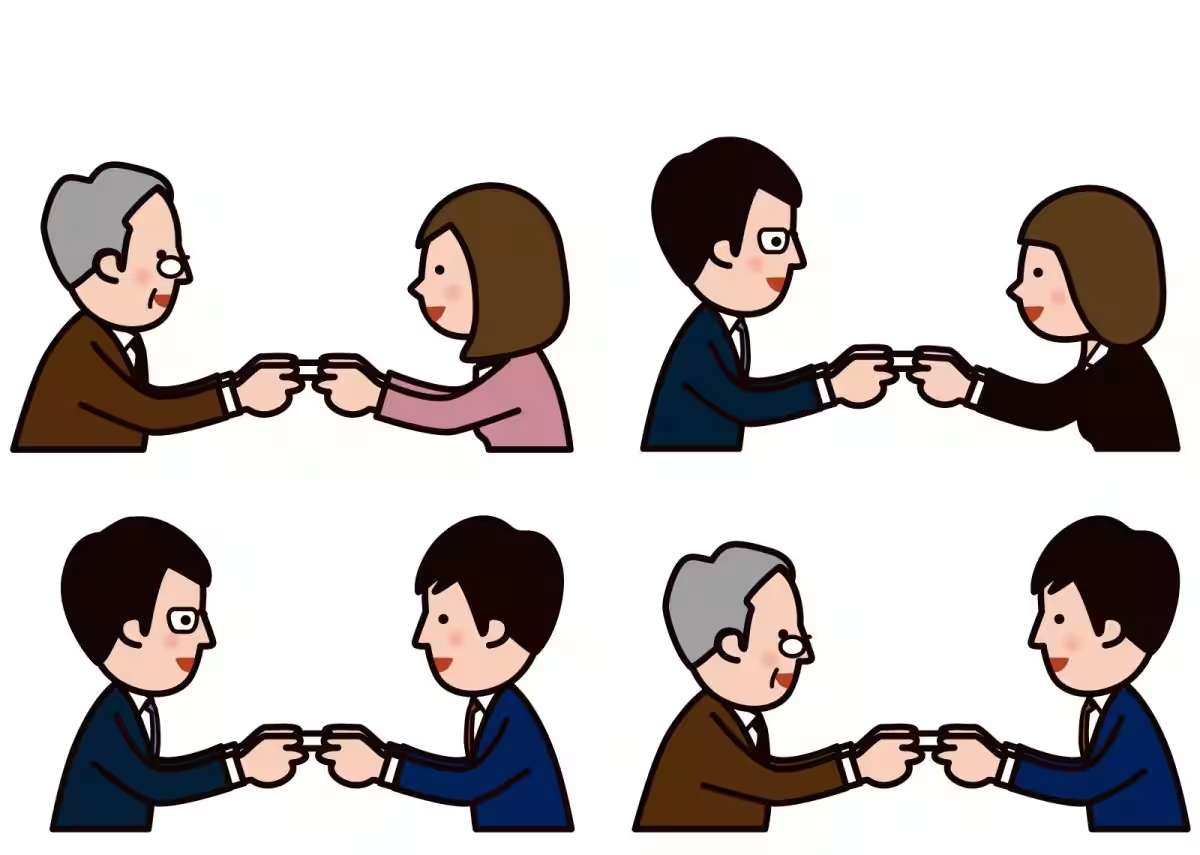
- - Business Card Exchange: One employee described the experience of exchanging business cards as akin to a synchronized dance, reflecting the deep respect inherent in Japanese culture. It is a demonstration of the attention to formality that characterizes Japanese business interactions.
- - Subtle Rules of Engagement: Another noted the difficulty of interpreting vague instructions. The expression






Topics Other)
【About Using Articles】
You can freely use the title and article content by linking to the page where the article is posted.
※ Images cannot be used.
【About Links】
Links are free to use.