



ENEOS and Faiger Sign Long-Term Agricultural J-Credit Purchase Agreement
ENEOS and Faiger Forge Partnership for Agricultural Sustainability
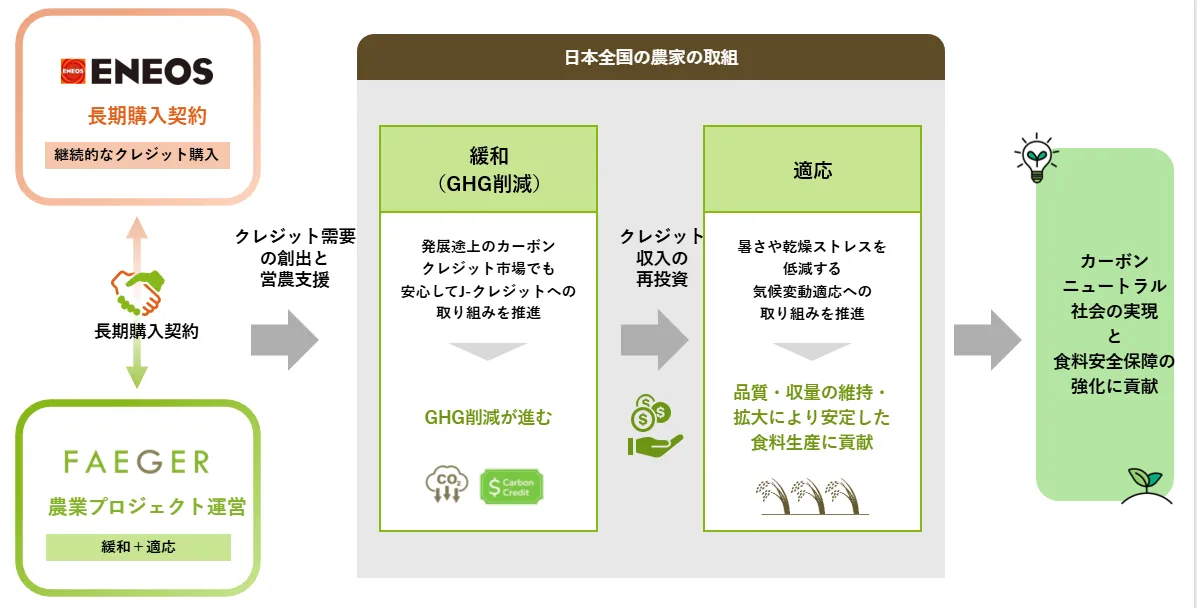
ENEOS Corporation has recently announced a long-term purchasing agreement of agricultural J-Credits with Faiger Inc. This collaboration aims to support both the reduction of greenhouse gas (GHG) emissions in rice farming and the adaptation to climate change, aligning with ENEOS's goal of achieving a carbon-neutral society.
The partnership seeks to create an environment where farmers can confidently implement GHG reduction agricultural practices. By doing so, the two companies aim to establish a foundation for stable agricultural management even amid climate challenges. Faiger aspires to implement this initiative across rice fields equivalent to approximately 20% of Japan’s total, targeting an annual reduction of 1 million tons of CO₂. ENEOS intends to support this endeavor, contributing to the broader societal impact of ensuring food security.
Addressing the Challenges in Carbon Credit Market
As the carbon credit market is still taking shape, uncertainty within the system presents a substantial barrier for farmers contemplating GHG reduction practices. Despite awareness of the benefits of these methods, the unpredictability in consistent revenue makes it challenging for farmers to shift their agricultural practices.
The agreement between ENEOS and Faiger aims to tackle these issues. Rather than limiting their efforts to pilot projects, they plan to generate demand for agricultural-derived credits at a societal implementation scale covering about 20% of Japan's rice fields. This will provide farmers with a stable revenue stream, encouraging them to adopt GHG reduction practices.
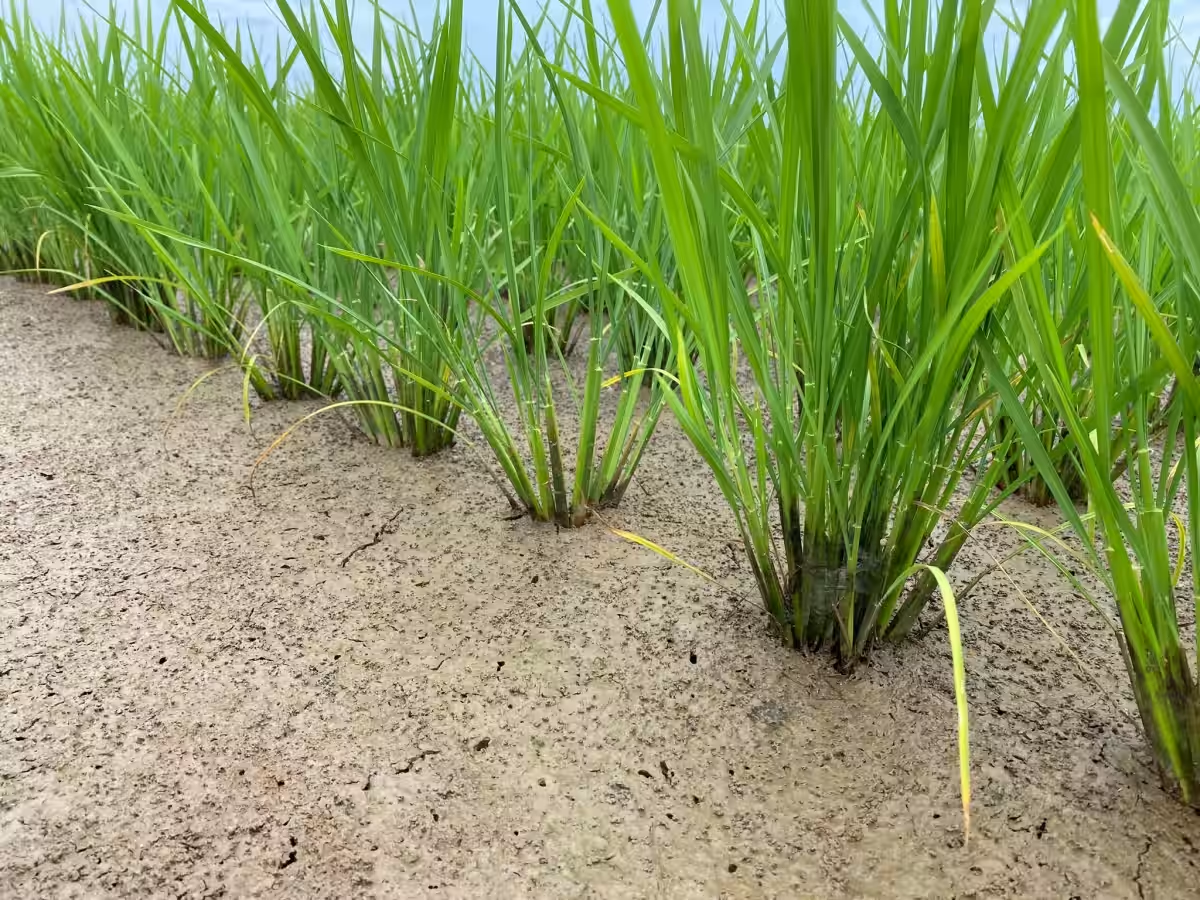
The initiative builds upon traditional Japanese rice farming methods, specifically extending the “Chu-bōshi” process. This technique involves draining water from rice paddies for a certain period to dry the soil. By lengthening this drying period, they aim to curb methane emissions from the paddies, thereby facilitating GHG reduction.
Additionally, this process helps supply oxygen to the soil, promoting root development. Healthier roots will enhance the robustness of rice plants from the heading stage through to harvest, ultimately ensuring yield stability and improved rice quality.
Ensuring Stability Amid Climate Change
Recent years have seen an increase in quality deterioration due to high temperatures and dryness during summer across national production areas. The significance of this endeavor lies not only in contributing to GHG reduction but also in ensuring stable food production through quality maintenance and yield enhancement.
Furthermore, by generating long-term demand for credits, ENEOS will enable farmers to receive ongoing revenue associated with the extended drying process. This financial incentive can then be reinvested into climate-resilient agricultural technologies and materials, fostering a cycle of funding and innovation aimed at sustainable agricultural practices combined with GHG reduction efforts.
ENEOS Group is committed to its goal of reducing CO2 emissions from Scope 1 and 2 by 46% by fiscal year 2030 compared to fiscal year 2013. This partnership is a significant step towards creating and utilizing agricultural-derived J-Credits while aiming to achieve a balance between stable energy and materials supply and the realization of a carbon-neutral society.
On its part, Faiger is dedicated to generating agricultural carbon credits and providing climate adaptation solutions domestically and internationally to realize sustainable agriculture. With a focus on the agricultural sector, they are working closely with farmers to promote these initiatives.
Moving forward, both companies plan to strengthen their collaboration beyond the scope of credit purchasing, especially regarding climate change adaptation efforts. They are committed to contributing to the stability of food production even under climate change, working together towards sustainable agricultural practices.
In summary, this partnership marks a significant progression toward integrating sustainable practices within Japan's agriculture. By supporting farmers in GHG reduction efforts and improving resilience against climate change impacts, ENEOS and Faiger are proving that collaboration can lead to a more sustainable future for agriculture.
Topics Other)
【About Using Articles】
You can freely use the title and article content by linking to the page where the article is posted.
※ Images cannot be used.
【About Links】
Links are free to use.