




Examining the Impact of Self-Efficacy on Academic Performance of Students
Understanding the Effects of Self-Efficacy on Student Achievement
In a remarkable initiative, EnergyD Co., Ltd., headquartered in Shinjuku, Tokyo, has partnered with Gakken Holdings to execute a comprehensive study focusing on how self-efficacy can influence academic performance. This year-long analysis involved tracking 3,249 junior high and high school students enrolled in Gakken Group's educational programs. The findings indicate that students demonstrating improvements in self-efficacy, motivation towards academic enhancement, and specific learning behaviors experienced an average rise of 5.5 points in their standardized test scores.
Why Self-Efficacy Matters
The results of this study align with the Ministry of Education, Culture, Sports, Science and Technology's emphasis on 'the ability to learn independently' as a fundamental component of academic prowess. Educational reforms are increasingly valuing not only cognitive skills but also non-cognitive factors like autonomy, cooperation, and curiosity.
In a rapidly changing educational landscape, it's crucial to understand how to cultivate this 'ability to learn independently' and connect it to tangible academic outcomes, contributing significantly to current educational policies, school environments, and family life.
Study Overview and Key Results
Participants and Methodology
The study targeted junior high and high school students enrolled in Gakken Group's schools from April 2024 to March 2025. Each student participated in EnergyD's specialized CORE classes alongside standard lessons. The research continuously measured three key indicators:
1. Learning Purpose Awareness
2. Self-Efficacy
3. Concrete Learning Actions
The data was then compared with academic performance metrics, such as periodic test scores and report card evaluations.
Findings
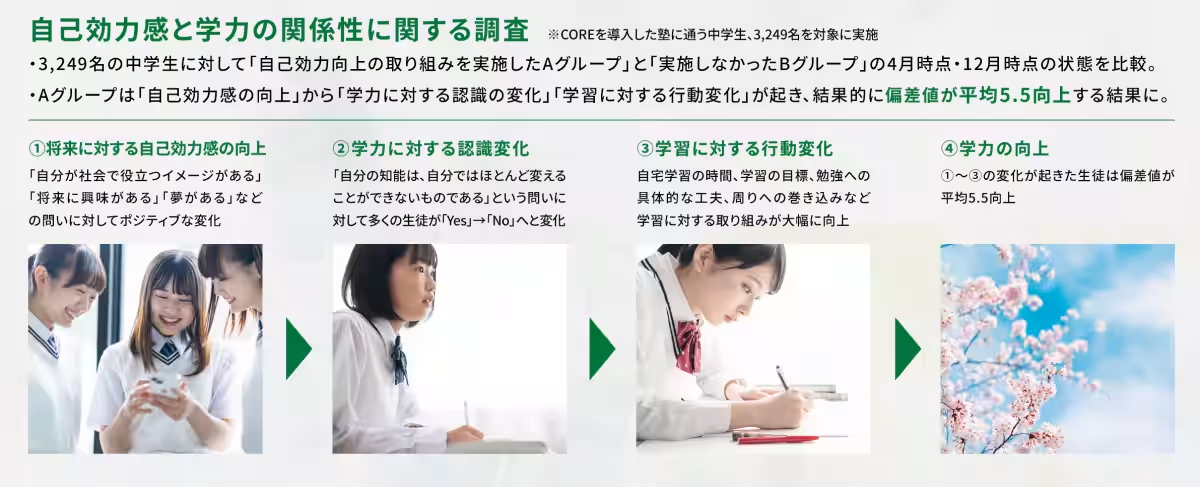
By December of the same year, students who showed improvements across all three indicators averaged a 5.5-point increase in their test scores. Notably, a clear sense of future goals and increased time spent studying correlated strongly with enhanced academic performance.
It is essential to note that these findings suggest correlation, not causation—similar trends were observed even when comparing subgroups based on varying participation levels and operational conditions.
Trends Observed Among Students and Teachers
Student Trends
Daily interactions with EnergyD's courses fostered an environment where students reported a greater likelihood of participating in discussions and developing concrete study plans. Increased self-efficacy propelled a positive shift in mindset—the belief that “I can do this.”
Teacher Approaches and Feedback Loops
Throughout the study, teachers were observed giving positive reinforcement for minor changes, which encouraged more proactive engagement from students. This supportive feedback loop not only elevated students’ motivation but also heightened teachers’ sense of fulfilment from being able to provide further assistance, thereby creating a virtuous cycle of learning.
How Self-Efficacy Transformed Learning Behaviors
The findings illustrate a clear trajectory:
- - Clarifying learning objectives
- - Increasing self-efficacy
- - Modifying study behaviors (time management, strategies, goal setting, peer involvement)
- - Resulting in enhanced academic performance (an average rise of 5.5 points in standardized test scores among students showing growth across all three indicators)
The Importance of Strong Connections
The backbone of this successful cycle includes:
- - Purpose Awareness: Defining future goals and understanding the purpose of learning.
- - Self-Efficacy: Belief in one’s ability to improve through effort.
- - Learning Behavior: Increasing study hours, improving methods, setting goals, and engaging family, friends, and teachers.
Future Endeavors
Building on the insights gained from the collaboration with Gakken Group, EnergyD aims to expand partnerships with schools, municipalities, and tutoring centers. The ultimate goal is to create an educational environment where each student feels empowered with the belief that they can succeed.
The study’s insights will drive progress across three key domains:
- - Sustaining Academic Improvement: Integrating goal setting, reflection, and daily behavior management with regular classes to create data-backed positive experiences.
- - Addressing School Refusal: Gradually re-establishing connections to learning through designing small success experiences and collaborative efforts with households, schools, and support organizations.
- - Building Relationships and Proactive Strategies: Enhancing classroom relationships and monitoring indicators of student progress to foster a supportive culture that encourages risk-taking.
In conclusion, this study showcases the transformative role of self-efficacy in enhancing student academic performance. EnergyD's commitment to implementing and validating these findings reflects a strategic approach to not only improve learning outcomes but to create holistic educational environments conducive to long-term student success.

Topics Other)
【About Using Articles】
You can freely use the title and article content by linking to the page where the article is posted.
※ Images cannot be used.
【About Links】
Links are free to use.