



Trends in Rent Prices for Fixed-term Lease Properties in Tokyo for 2025
Trends in Rent Prices for Fixed-term Lease Properties in Tokyo for 2025
As part of its ongoing commitment to providing consumers with valuable housing market insights, Athome Inc., based in Ota, Tokyo, has partnered with Athome Lab Inc. to analyze the rent trends for fixed-term lease properties for the fiscal year 2025, spanning from April 2025 to March 2026. This study reflects the evolving landscape of the real estate market in Japan, particularly in the Tokyo metropolitan area.
Overview of the Tokyo Metropolitan Area
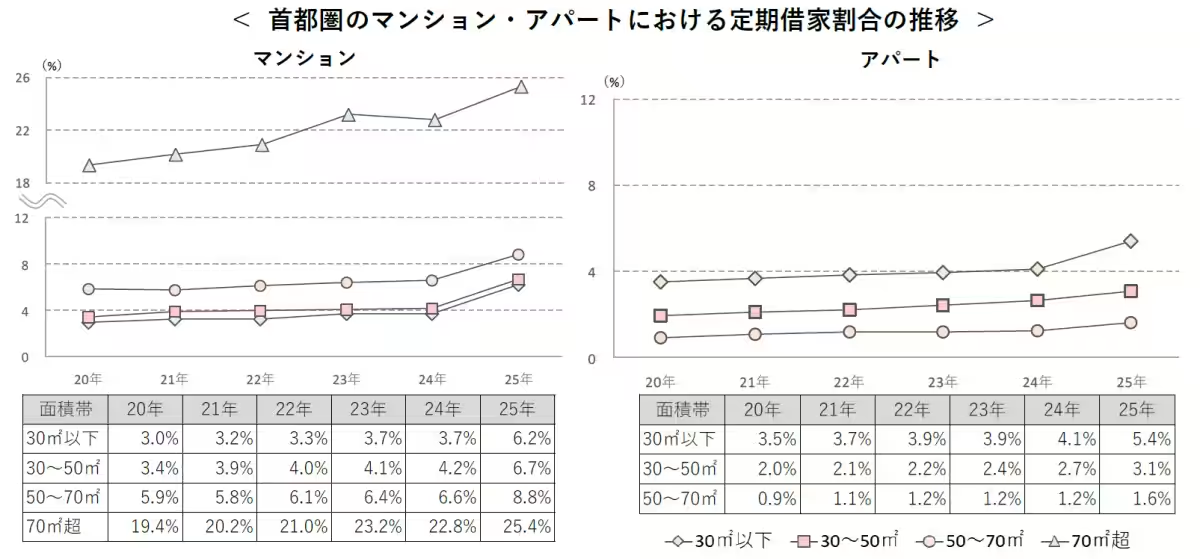
The analysis indicates a noticeable increase in average rental prices for both apartments and condominiums operating under fixed-term leases. Specifically, in the apartment sector, there has been a significant rise in areas and property sizes that now surpass the average rent of traditional leases from the previous year. The findings suggest that rental demand is shifting, with 2025 set to see a higher proportion of fixed-term leases across all metropolitan areas, particularly within the 23 wards of Tokyo.
The report shows that the growth in rental prices is particularly marked in family-sized apartments, which signals a shift towards more stable rental agreements that minimize risks such as non-payment or long-term occupation by tenants. As rent prices continue to escalate, landlords are increasingly recognizing fixed-term leases as a favorable option that allows for smoother adjustments to rental rates.
In-Depth Analysis from Athome Lab
According to Junko Iwazumi, Executive Officer and Head of Data Marketing at Athome Lab, the trend of increasing fixed-term leases is especially pronounced in urban family-oriented segments. This growth has been spurred by several factors:
- - Minimized Risks for Landlords: The fixed-term lease format offers landlords a way to avoid issues related to tenant defaults and the prolonged occupation of properties.
- - Flexibility in Rent Adjustments: As the cost of living in urban environments rises, landlords find it easier to adjust rates when using fixed-term agreements, aligning rent prices with current market conditions.
However, this trend isn't without its challenges. Operational burdens on management companies and a lack of familiarity with the fixed-term leasing process can deter some landlords from making the switch. Moreover, the consumer base open to accepting non-renewable contracts is limited, implying that properties must be well-located or meet other advantageous conditions to ensure successful transactions.
Research Overview
The study primarily examined the Tokyo metropolitan area, which includes the 23 wards of Tokyo, outlying Tokyo areas, Kanagawa, Saitama, and Chiba prefectures. Additionally, it referenced data from other significant cities including Sapporo, Sendai, Nagoya, Kyoto, Osaka, Kobe, Hiroshima, and Fukuoka.
Data Definition
For the purposes of this report, "rent" is defined as the total amount paid by tenants each month, which includes rent alongside management and common facility fees. In the report, properties were categorized based on size:
- - Singles: 30 square meters or less
- - Couples: 30 to 50 square meters
- - Families: 50 to 70 square meters
- - Large Families: More than 70 square meters
This distinction helps in understanding the types of properties that are in higher demand and how these segments are evolving in terms of rental agreements.
Additional Details
For a more comprehensive view of this analysis, you can download the detailed PDF report from the Athome corporate website.
This information paints a clear picture of the current state of the rental market in Tokyo and provides impactful insights for both landlords and potential tenants looking for housing solutions in a dynamic market.
Topics Consumer Products & Retail)

【About Using Articles】
You can freely use the title and article content by linking to the page where the article is posted.
※ Images cannot be used.
【About Links】
Links are free to use.