



Navigating the Turbulent Times: A Comprehensive Report on Small Business Strategies for 2026
A Comprehensive Report on Strategies for Small Businesses
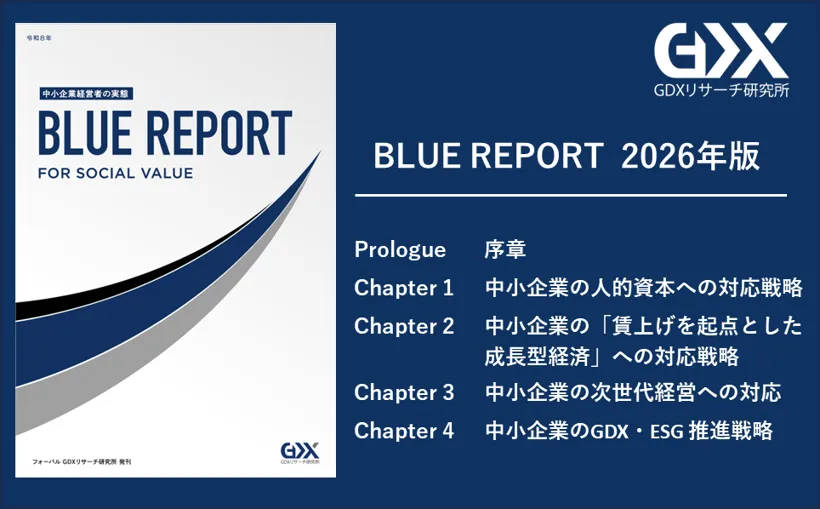
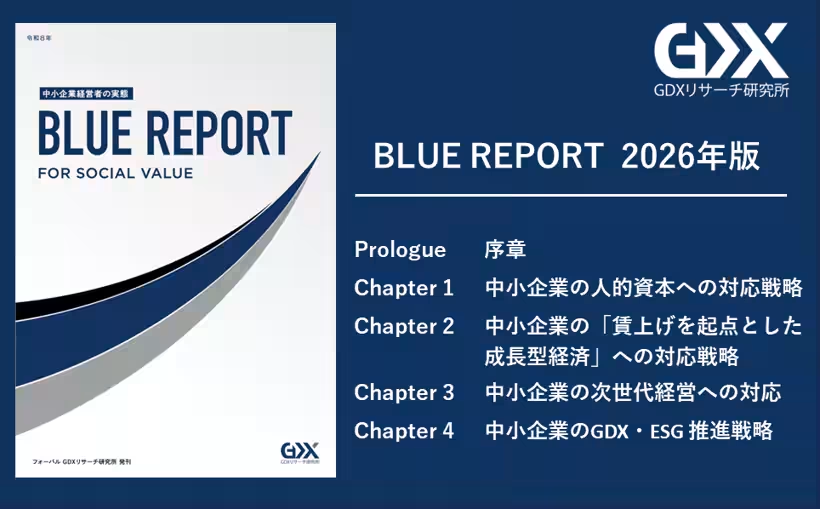
On June 2, 2026, the Forval GDX Research Institute, led by CEO Masanori Nakajima and based in Shibuya, Tokyo, unveiled its latest document titled "For Social Value Blue Report 2026." This report centers on the management challenges and strategic responses of small businesses, drawing insights from a series of interviews conducted over various months. Featuring four distinct chapters, it serves as a critical resource for small business leaders navigating an increasingly complex economic landscape.
Background and Purpose of the Report
The year 2025 marked a pivotal moment for small businesses, driven by factors such as rising material prices, increased inflation, and a continuing trend of labor shortages. Furthermore, with the aim of transitioning to a growth-oriented economy spurred by wage increases, businesses are also urged to address the complexities surrounding human capital management, business and human rights, and the enhancement of governance through digital transformation (DX), green transformation (GX), and environmental, social, and governance (ESG) principles.
The report synthesizes data from surveys conducted annually since 2019, showcasing findings from four rounds of interviews with small business owners held between July 8, 2025, and February 13, 2026. It carefully explores how small businesses can ensure sustainable growth amidst these challenges by presenting detailed responses to four key strategic areas:
1. Strategies for Addressing Human Capital
2. Strategies Grounded in Wage-Increase-Driven Economic Growth
3. Responses Toward Next-Generation Management
4. Strategies Promoting GDX and ESG Initiatives
Overview of the Report
Chapter 1: Strategies for Addressing Human Capital
The expanding global discourse around business and human rights has raised expectations for companies to be vigilant in their treatment of human rights throughout their supply chains. To achieve sustainable growth and fulfill their social responsibilities, it is essential for businesses to incorporate human rights considerations into their management strategies. Additionally, the increasing labor shortage has intensified interest in maximizing employee value through effective human capital management. This chapter delivers insights on the recognition and actions taken by small businesses in relation to human capital.
Chapter 2: Strategies for Wage-Increase-Driven Economic Growth
With inflation triggering government initiatives to support wage increases, the momentum for rising salaries is becoming more pronounced across society. While wage hikes are often linked to enhanced employee retention and satisfaction, challenges such as stagnant sales and profit margins remain prevalent. Therefore, small businesses are tasked with improving productivity and securing resources to sustain wage increases. This chapter analyzes the state of wage increases within small enterprises, their impacts, and profiles businesses successfully implementing wage strategies.
Chapter 3: Responses to Next-Generation Management
As the economic environment grows more challenging due to price hikes, labor shortages, and global economic policy shifts, small businesses find themselves scrambling to adapt. Consequently, long-term strategic planning is at risk of being postponed. The chapter recognizes the rising importance of external expert support known as "accompaniment support" as a means to navigate these hurdles. It elaborates on identifying management challenges, effective responses, and how various forms of support can enhance business performance and recruitment capabilities.
Chapter 4: Promoting GDX and ESG Initiatives
The interest in digital transformation (DX), green transformation (GX), and ESG principles has surged as companies strive for fortified foundations and sustainable management. This chapter surveys the initiatives undertaken by small businesses in these areas while comparing the findings to previous years' data to analyze advancements and shifts. Additionally, it addresses the reality of labor shortages and responses for talent acquisition.
About Forval GDX Research Institute
Small businesses constitute over 99% of Japan's corporate landscape, and their growth is pivotal to the nation's vitality. The research institute aims to transform these businesses through the integration of green and digital strategies, termed GDX (Green Digital Transformation). Committed to illuminating the realities of GDX among small enterprise sectors, the Forval GDX Research Institute crafts various reports, papers, and findings to share valuable insights with the public. Their mission is clear: pursue the imperative reality of small businesses’ GDX strategies while striving to become an indispensable presence in this sector.
For further details, please visit Forval GDX Research.

Topics Business Technology)

【About Using Articles】
You can freely use the title and article content by linking to the page where the article is posted.
※ Images cannot be used.
【About Links】
Links are free to use.