



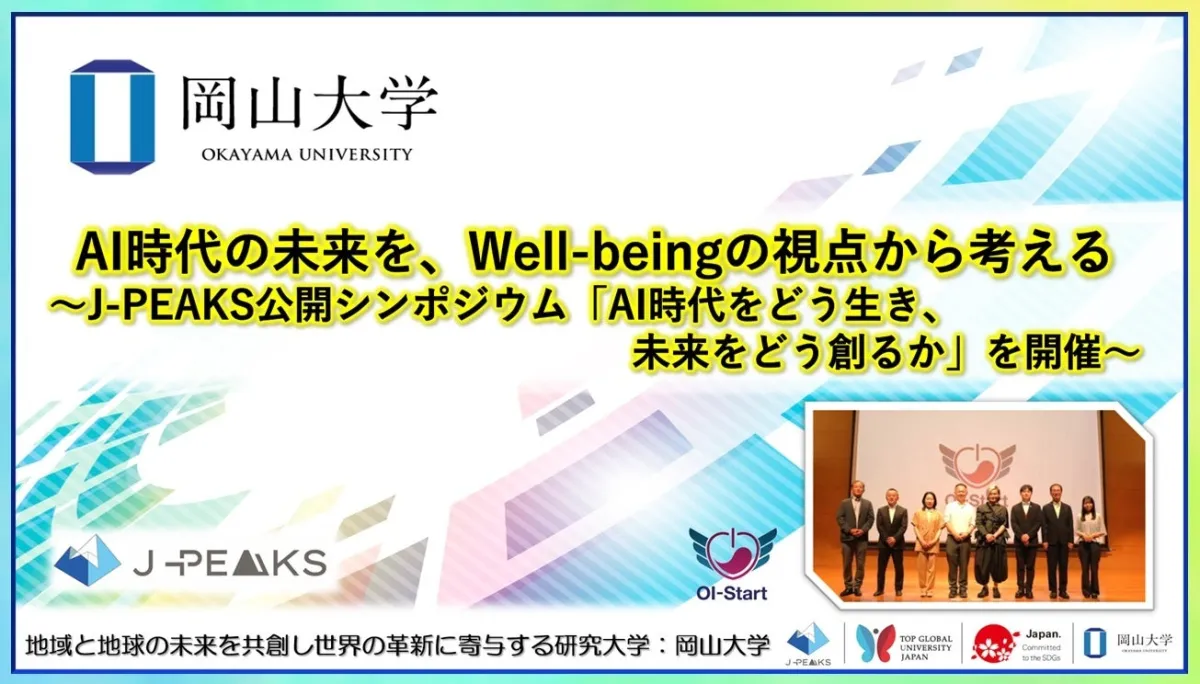
Considering the Future in the Age of AI: A Symposium on Well-Being and Society
A Symposium on AI and Well-Being at Okayama University
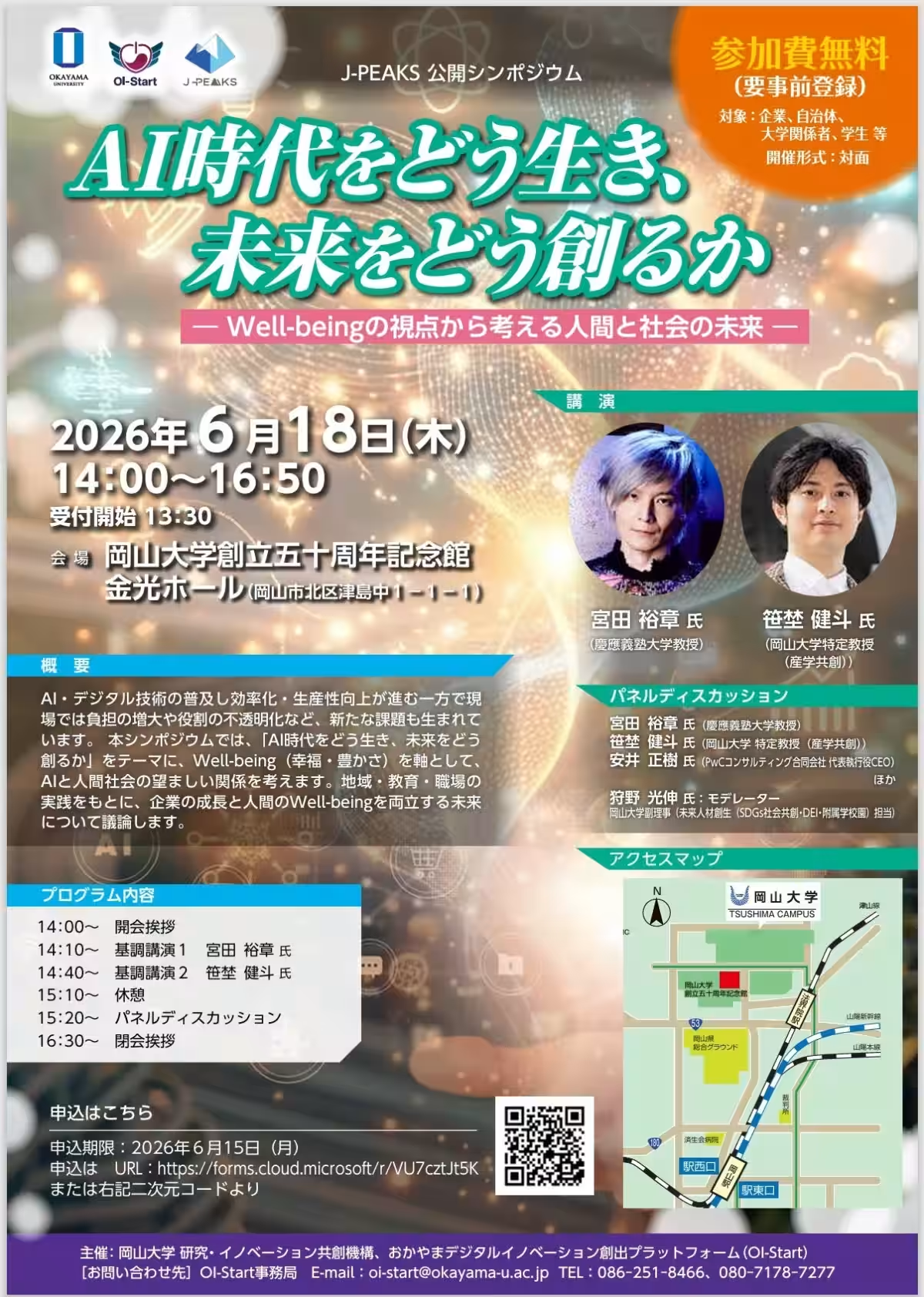
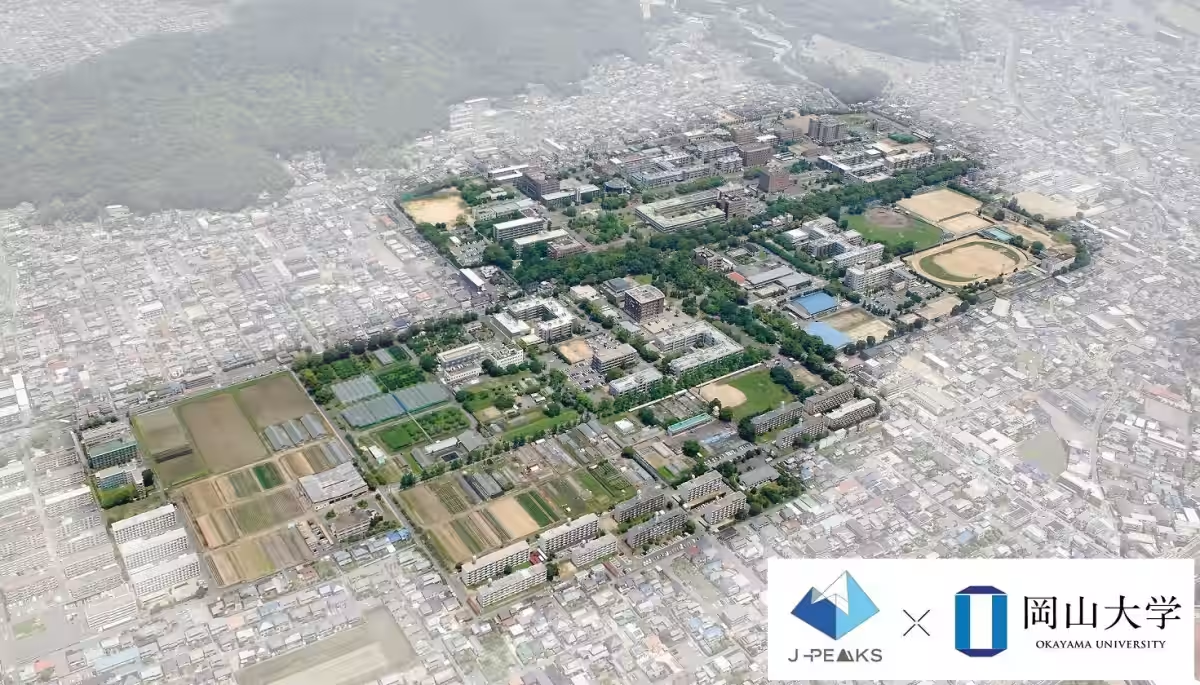
On July 18, 2026, Okayama University hosted a public symposium titled "How Do We Live in the Age of AI and Create the Future? - Considering Human and Social Futures from the Perspective of Well-Being". Located at the university's Tsushima Campus, the event emphasized the importance of integrating digital technologies such as generative AI into our understanding of well-being and community sustainability.
The symposium aimed to foster discussions among industry, academia, and government, highlighting the evolving roles they play in realizing a society that prioritizes well-being amid rapid technological advancements. The discussions were particularly relevant as generative AI is transforming various sectors, from education to labor, and it necessitates an understanding of shared values and common futures.
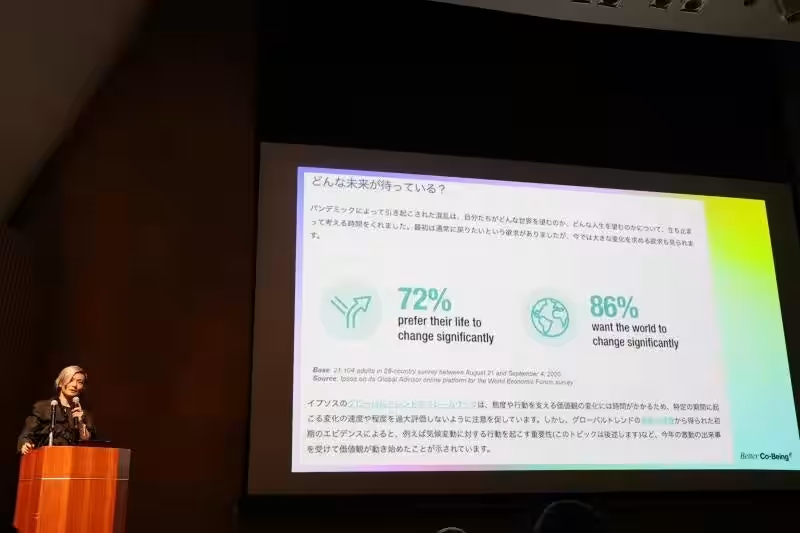
The event commenced with a keynote address by Professor Hiroaki Miyata from Keio University. He positioned the current era as a transformative period — a "turning point of civilization" where the conventional parameters of economic rationality and the pursuit of the greatest happiness for the majority are giving way to a new value framework. His concept of "Better Co-being" emphasizes diversified happiness that resonates with varied values. He stressed the necessity of developing the ability to pose suitable questions in this AI-driven age, promoting richer connections among individuals and nature.
Following Professor Miyata, Professor Kento Sasano from Okayama University spoke on "Universities and Well-Being in the Age of Generative AI". He noted that with the evolution of generative AI, the role of universities is shifting from merely disseminating information to nurturing the capacity for judgment. He articulated that authentic well-being in this age relates to learners' awareness that their education is linked to future realities—a paradigm shift in higher education that must be addressed by universities moving forward.
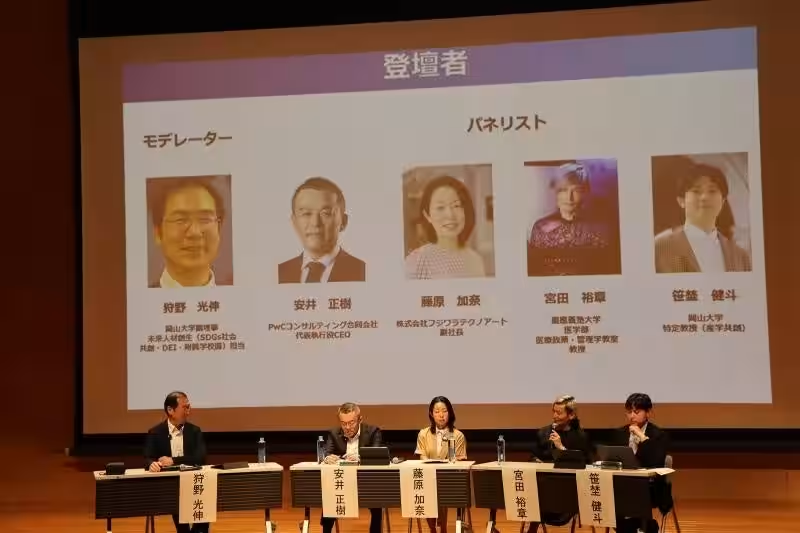
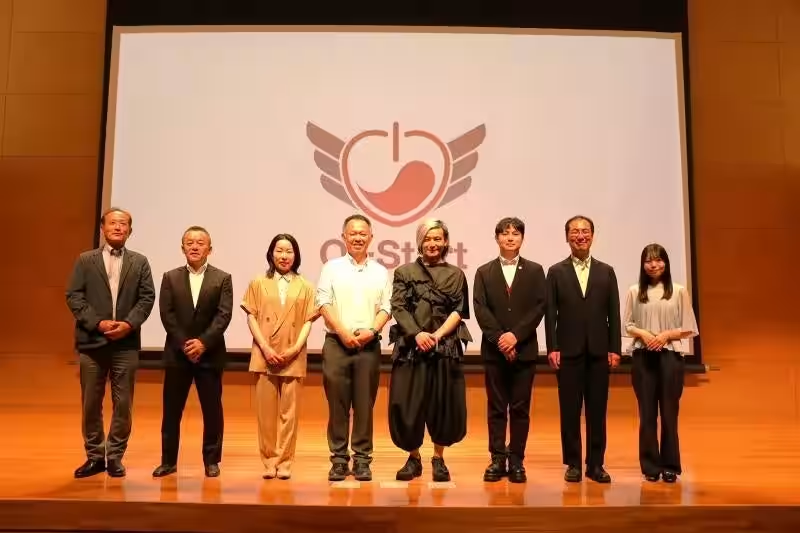
A panel discussion with Professor Miyata, Professor Sasano, CEO Masaki Yasui of PwC Consulting, and Deputy CEO Kana Fujiwara from Fujiwara Techno Art, was moderated by Mitsunobu Kano, Deputy Director of Okayama University. The discussions revolved around human resource development, corporate management, and the integral roles of universities and communities in the AI age. An essential question that arose from the audience was about how to prepare high school students to thrive in a society influenced by AI. This prompted an engaging dialogue concerning the kinds of curricula needed in schools and the importance of collaborative efforts among industry, academia, and government to support next-generation learning environments.
The symposium was also influential as the kickoff event for the "AI x Well-being" working group of the Okayama Digital Innovation Creation Platform (OI-Start). Moving forward, Okayama University, along with the OI-Start initiative, is committed to strengthening collaborations with local businesses, educational institutions, and government entities to translate the insights gained from this symposium into actionable practices that enhance well-being in various aspects of life including corporate activities, community-building, and educational reform.
As this symposium illustrates, Okayama University is positioning itself at the forefront of research and innovation, focusing on planetary health, community health, and human health. As it continues to explore how AI and data can open new possibilities for individuals and society, all eyes will be on its efforts to jointly create a sustainable future for both local communities and the planet. The initiative highlights Okayama University's role as a distinctive research institution dedicated to enhancing the well-being of society.
As the symposium concluded, participants were encouraged to carry forward the many questions and ideas generated during the discussions, fostering an ongoing dialogue about how to harness technology for a more inclusive, prosperous future. Okayama University remains committed to its mission as a public research university that prioritizes collaboration and the co-creation of sustainable innovations for the benefit of society.

Topics Other)







【About Using Articles】
You can freely use the title and article content by linking to the page where the article is posted.
※ Images cannot be used.
【About Links】
Links are free to use.