



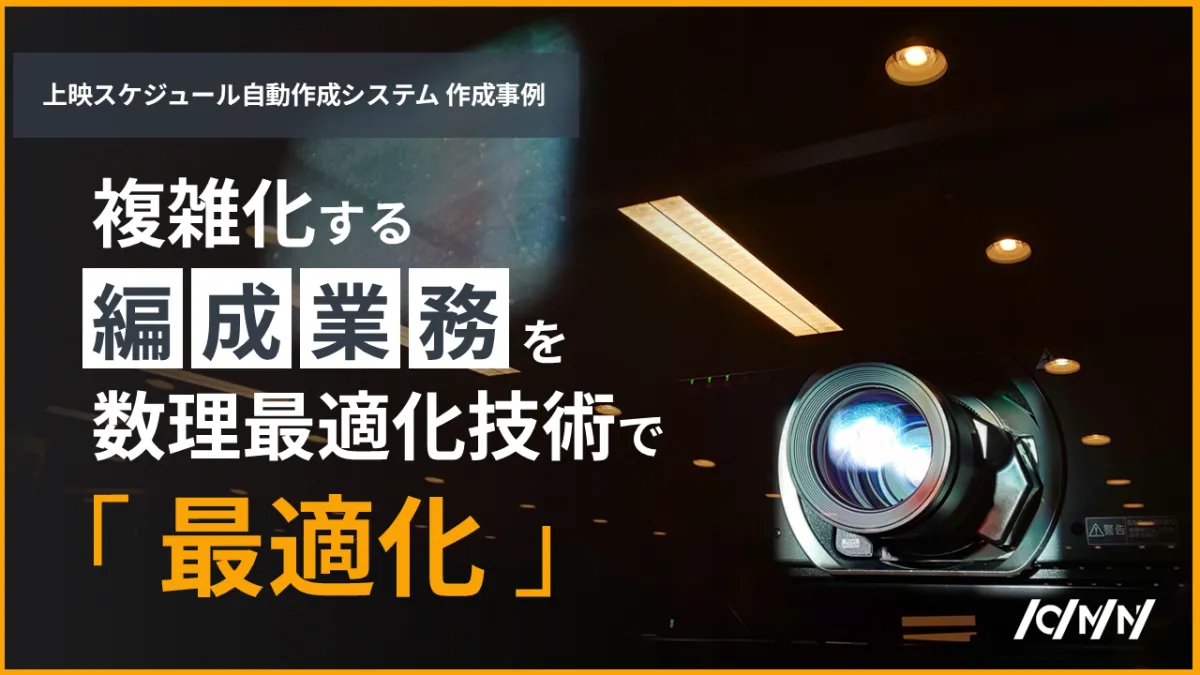
Optimizing Movie Theater Schedules in One Hour: A New Approach to Complex Scheduling Tasks
Introduction
The challenges faced by movie theaters in scheduling are more intricate than ever before. With the increasing number of film releases, managing schedules, screenings, and resources has become a sophisticated endeavor. In light of this, OHM Network Inc. has announced the development of a pioneering automated creation system for movie theater schedules, promising efficiencies that adapt to today's complex industry landscape.
Background: Rising Number of Film Releases
Historically, the quantity of films released in Japan hovered around 550 to 650 annually in the early 2000s. However, with the advent of digital technology and the changing landscape of the film industry, this number has surged to over 1,000 films each year. As of 2024, approximately 1,190 films are expected to be released, with 685 being Japanese and 505 foreign films. The challenge of deciding how to optimally schedule numerous films on a limited number of screens has increasingly become a daunting task for theaters.
Shifts in the balance of foreign and Japanese films further complicate scheduling, reflecting changing viewer preferences and contributing to the growing intricacy of cinema programming.
Complexity of Scheduling
The process of creating film schedules involves more than just filling in slots; it requires the fine-tuning of numerous factors simultaneously. Elements that must be managed include:
- - Screening times
- - Conditions for each screen
- - Cleaning and transition times between showings
- - Attendance records and profitability
The need to balance these variables requires sophisticated, algorithmic predictions, which have previously relied heavily on the experience of seasoned professionals in the industry.
Case Study Overview
Recognizing the evolving challenges in the film industry, OHM Network has revisited an automated screening schedule creation system developed over four years ago. Despite its inception, the methodology is still relevant, addressing complex constraints, efforts towards standardizing what is often a subjective process, and focusing on operational usability.
Solution: Mathematical Optimization
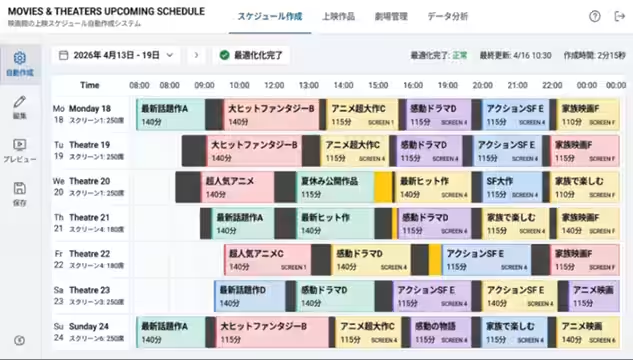
The system operates by establishing a comprehensive optimization model that handles various factors concurrently, involving:
1. Data Integration: Integrating screening information, equipment details, and performance data.
2. Constraint Formalization: Structuring real-world rules into a mathematical model that includes intervals between screenings, frequency of shows, and equipment limitations.
3. Optimal Solution Hunting: Rapidly identifying the most effective screening schedule from countless possible combinations.
4. Human Oversight: Allowing for final adjustments by personnel to ensure operational integrity.
Results and Impact
The introduction of this system has yielded significant improvements:
- - Reduction in Working Time: From several hours to about an hour.
- - Decreased Operational Burden: A marked reduction in the workload associated with scheduling.
- - Elimination of Individualization: Moving away from sole reliance on individual expertise.
- - Standardization in Operations: Establishing a consistent methodological approach.
Technical Aspects
The essence of this system lies not merely in scheduling but in optimizing multiple constraints and resources concurrently. By addressing screens, times, and content in a unified framework, the decision-making processes within theaters have been considerably streamlined.
Future Applications
The technology highlighted by this case is not confined to the film industry; it holds potential applications across various sectors, including:
- - Event planning (venues, schedules, types)
- - Staff shift management
- - Production and delivery planning
As industries grapple with heightened complexities and labor shortages, the value of optimization technologies will continue to rise.
Conclusion
This example underscores the fundamental mathematical optimization principles that OHM Network has cultivated over the years. While stemming from earlier developments, it carries a universal relevance to contemporary challenges in business operations.
Contact Information
For inquiries about adapting these scheduling methods for your own operations, feel free to reach out.
Company Overview
- - Name: OHM Network Inc.
- - Location: Central Niigata City, Niigata Prefecture, Japan
- - CEO: Shunya Yamagishi
- - Business: Development of business systems and shift management systems like R-Shift
- - Website: www.omnetwork.co.jp
Topics Consumer Products & Retail)

【About Using Articles】
You can freely use the title and article content by linking to the page where the article is posted.
※ Images cannot be used.
【About Links】
Links are free to use.