



Exploring Employee Dependence on AI Tools: Insights from a New Survey
Exploring Employee Dependence on AI Tools: Insights from a New Survey
A recent survey conducted by NSS Smart Consulting, which specializes in ISO acquisitions and operations, has shed light on the growing reliance of employees on generative AI tools in their workplaces. Covering those who have utilized generative AI for over a year, this survey aims to understand how these tools are being employed and the implications of their use.
Rise of Generative AI in the Workplace
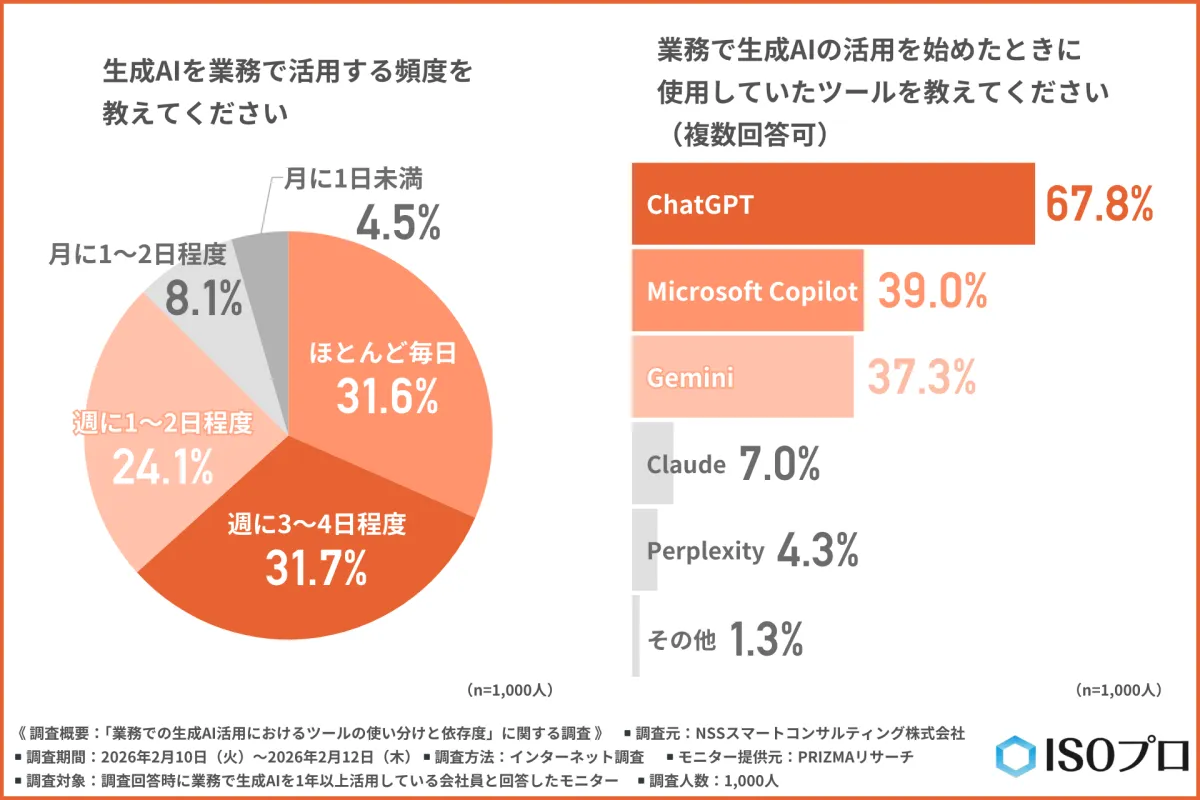
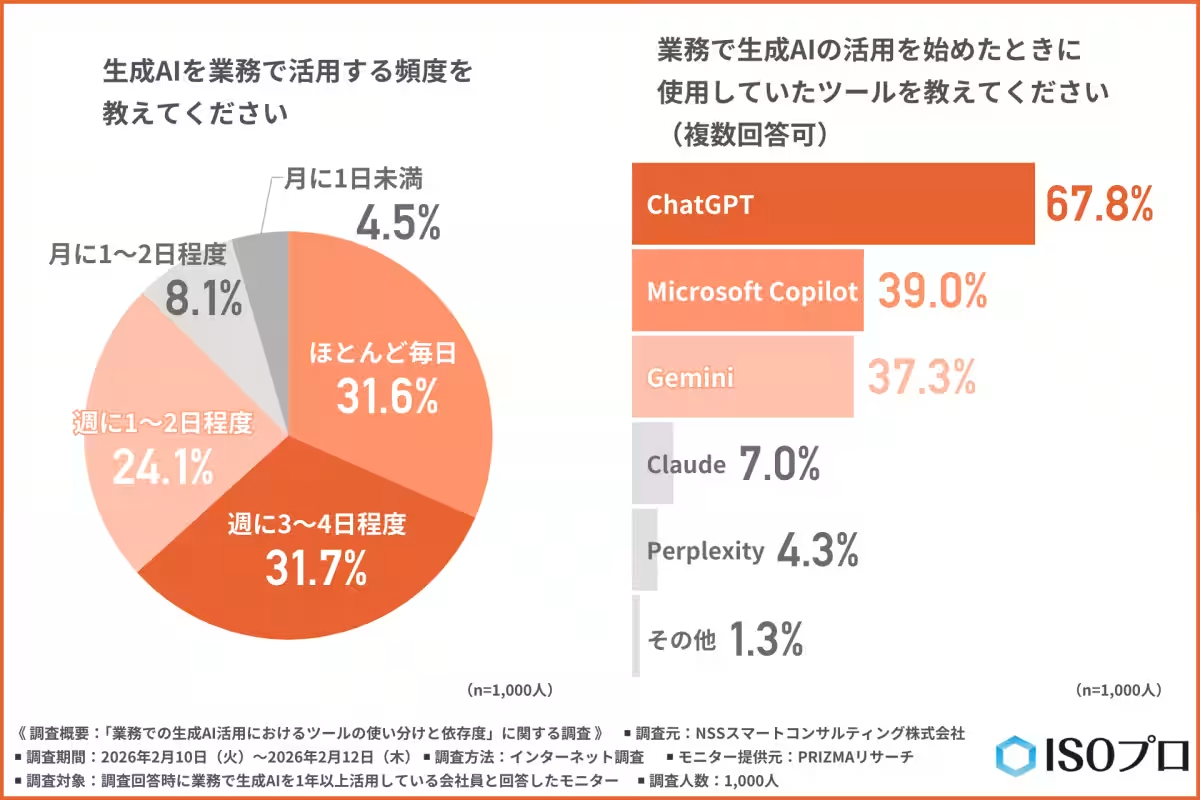
The growing diversity of generative AI models, including ChatGPT, Google's Gemini, Microsoft Copilot, and Claude, indicates a rapid evolution in this market. The latest data highlights that a significant number of employees, 31.6%, use generative AI almost daily, while another 31.7% use it three to four times a week. Together, these figures show that over 60% of employees have integrated these tools into their daily work processes.
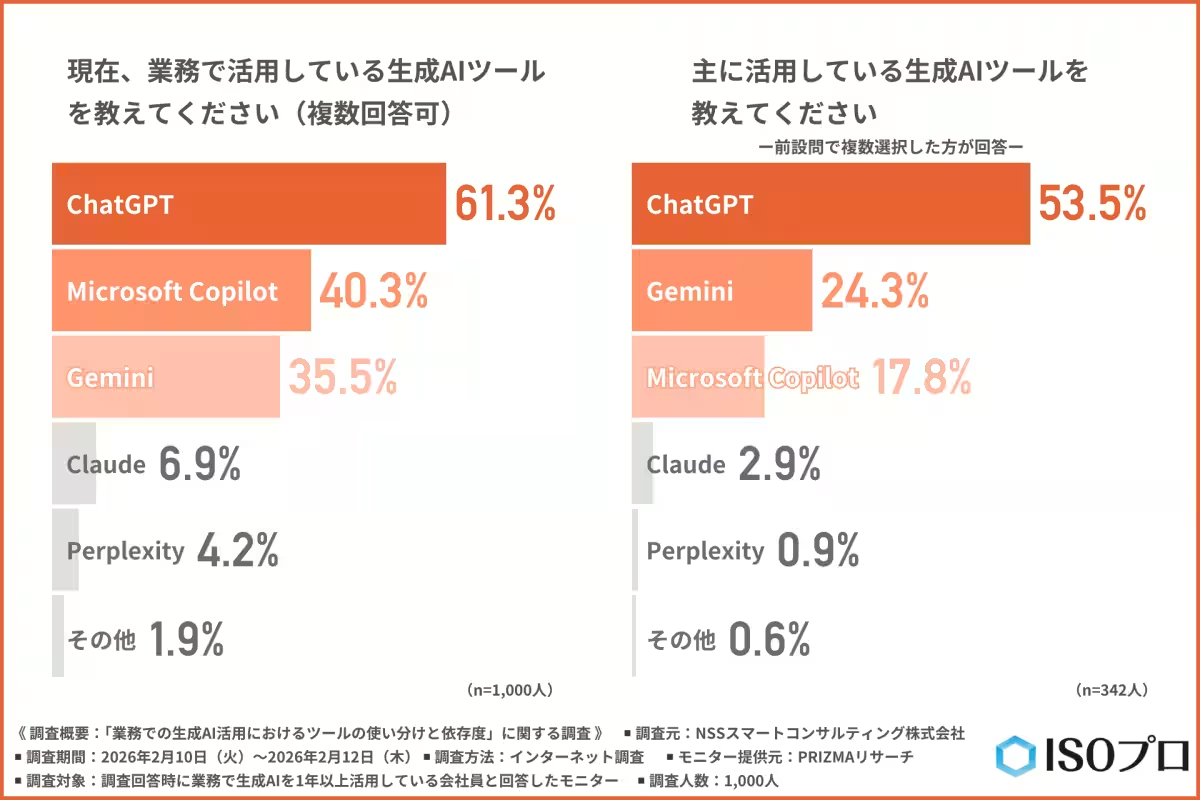
Initially, when asked which generative AI tools were used, the results revealed that a staggering 67.8% started with ChatGPT. This unsurprising result emphasizes ChatGPT's strong market presence, with Microsoft Copilot and Gemini closely trailing behind at 39.0% and 37.3%, respectively. Nonetheless, ChatGPT remains the top choice among current tools, utilized by 61.3% of respondents, showcasing its retention in workplace applications.
A Mix of Tools for Enhanced Efficiency
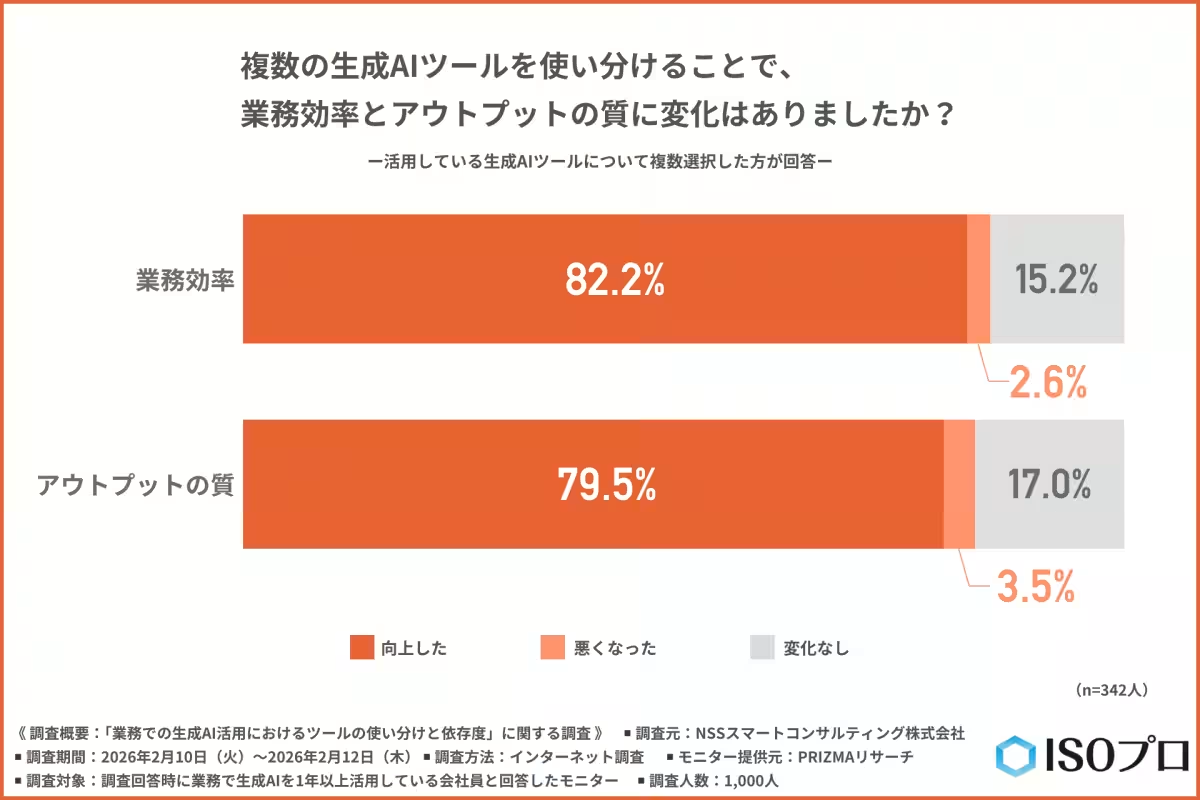
The survey also delved into how users segregate their functions among various tools. An overwhelming 82.2% noted improved workplace efficiency due to utilizing multiple AI tools. It has been observed that those who use various tools for specific tasks report better productivity than those relying solely on one. The data suggests that users prioritize the tool that best suits the task—be it Microsoft Copilot for documentation or Gemini for research—enhancing their operational efficiency significantly.
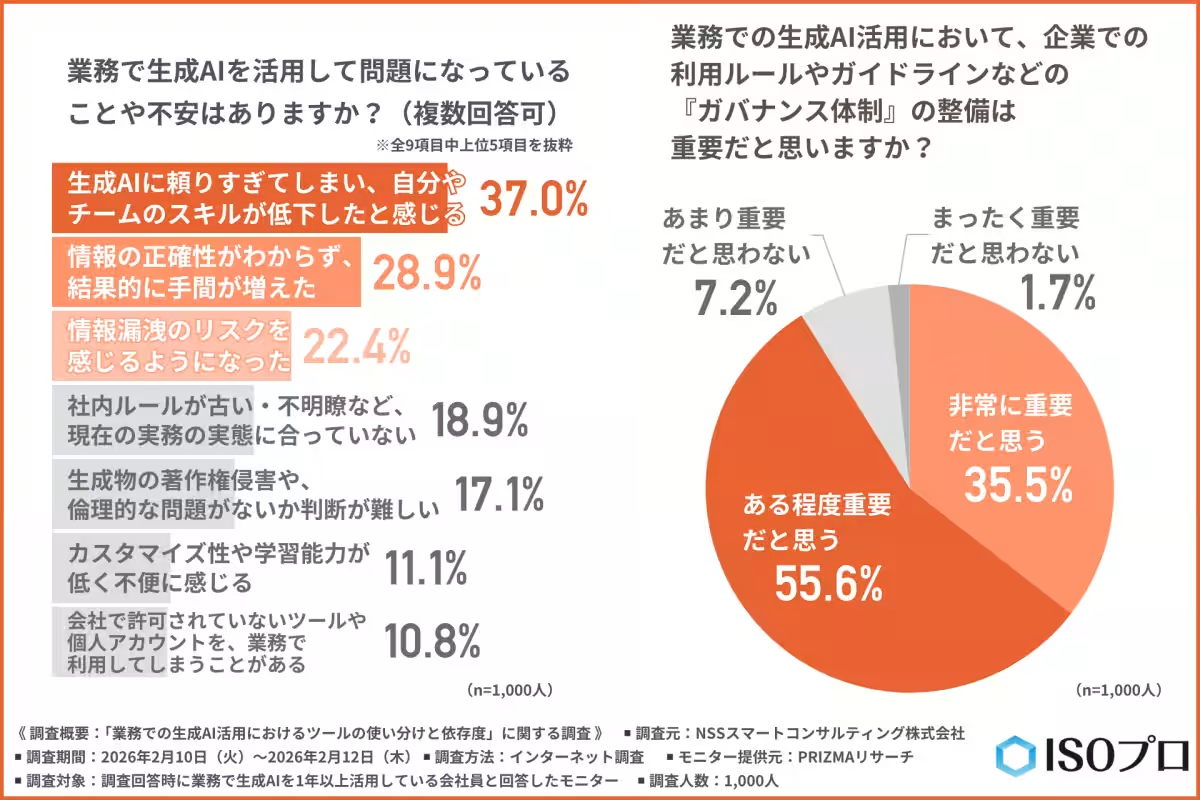
Interestingly, while 37.0% of respondents expressed concerns over diminishing personal skills due to dependency on AI, it’s crucial to recognize that reliance isn't solely a drawback; it simultaneously offers a streamlined approach to tasks that historically consumed more time.
Rising Concerns About Over-Reliance
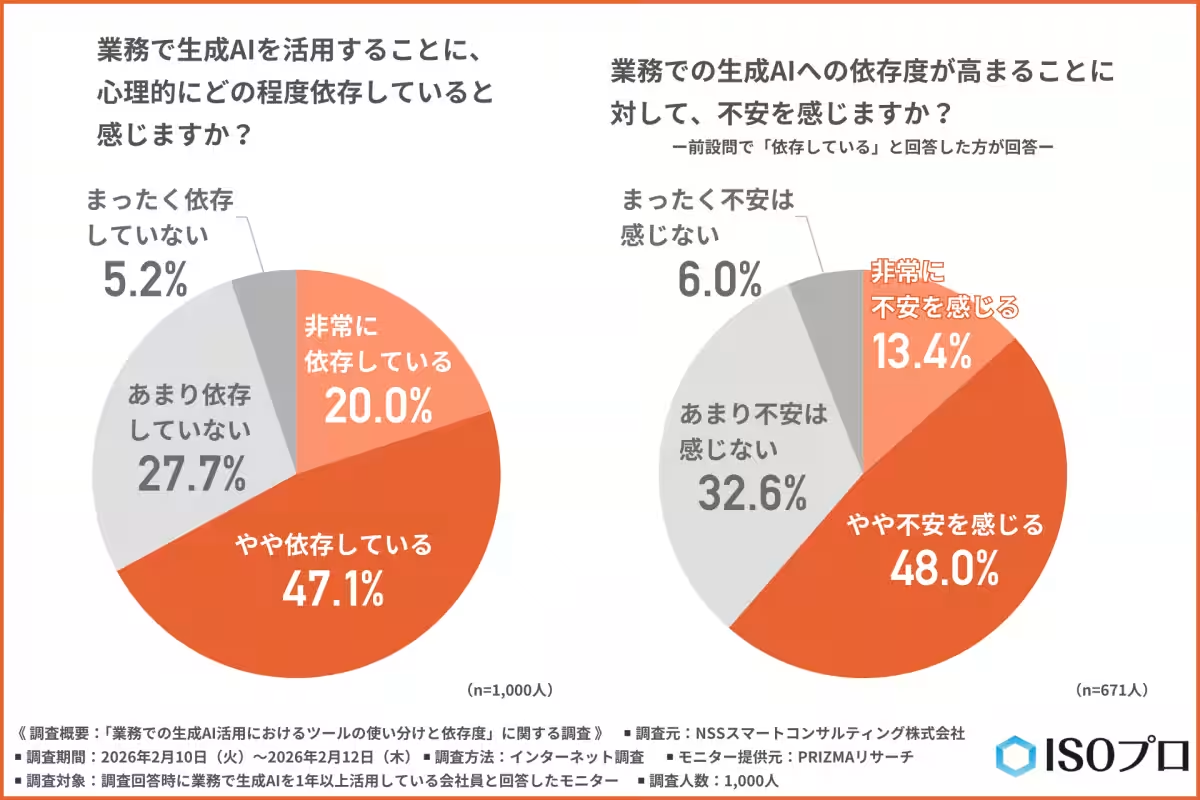
Despite the benefits, about 70% of respondents acknowledged feeling a degree of reliance on AI in their work. This dependence raises the question of whether employees could manage their workflow effectively without these tools. There is a palpable tension between the ease of AI-driven processes and the potential risk of job degradation. Furthermore, approximately 60% expressed anxiety over this reliance, fearing a potential loss of essential skills and a reduced capacity for quality outputs.
When participants were asked what worries them about increased reliance on AI, the prevalent concern centered around skill depreciation and issues related to data accuracy. Nearly 28.9% feared an escalation in manual labor due to the AI's erroneous outputs, while 22.4% highlighted the possible threats to information security.
The Importance of Corporate Governance
The survey's findings also emphasize the increasingly vital role of governance regarding the use of generative AI tools. Approximately 91.1% of employees recognized the importance of companies establishing strict guidelines and protocols for AI usage, indicating a strong desire for secure operating environments. Evidence points toward a collective employee call for assurance in how companies manage AI technologies, amid fears of unregulated usage leading to greater risks.
In summary, while the convenience of AI tools provides undeniable benefits in enhancing efficiency and productivity, the potential risks associated with over-reliance raise significant concerns among employees. The results reflect how critical it is not only to adopt such technologies but to implement comprehensive governance structures that address these emerging challenges. NSS Smart Consulting continues to lead by providing critical insights and support for companies navigating these pressing issues. Addressing the unique interplay between innovative technology and practical guidelines is essential for future business success.

Topics Business Technology)

【About Using Articles】
You can freely use the title and article content by linking to the page where the article is posted.
※ Images cannot be used.
【About Links】
Links are free to use.