



X Square Robot Unveils Wall-B AI Companion Designed for Homes Soon to Arrive
X Square Robot Unveils Wall-B: A New Era of Home Robotics
X Square Robot, supported by major players like Alibaba and Xiaomi, has recently revealed Wall-B, a cutting-edge embodied AI model aimed at revolutionizing household assistance. The company announced that these innovative robots will begin rolling out to everyday homes in just 35 days, marking a significant leap towards integrating robots into family life.
A Major Launch Event
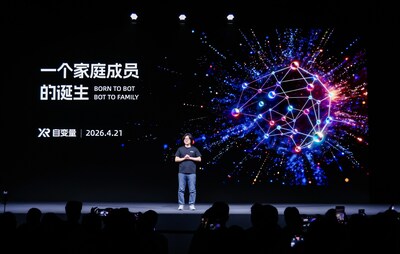
During an event dubbed "Born to Bot, Bot to Family," X Square presented its groundbreaking World Unified Model (WUM) - a comprehensive training framework that marries vision, language, action, and physical prediction into a cohesive system. This approach equips robots to tackle the unpredictable environments of homes, where tasks, arrangements, and human interactions can change at any moment.
Qian Wang, the founder and CEO of X Square Robot, emphasized the fundamental differences between factory robots and domestic counterparts. In factories, robots typically perform repetitive tasks, but in homes, they must be adept at executing a myriad of actions in various contexts. "The real challenge lies not in repetition but in a robot's ability to perform new actions in unstructured settings," Wang stated.
Integrating Learning and Functionality
Wall-B stands as the first full-scale application of the WUM architecture. Instead of relying on systems that train perception, language, and control separately, X Square's model optimizes these capabilities together from the outset. This integration allows for physical predictions—like force and friction—to be inherently part of the model rather than bolted on later.
Wang Hao, the CTO of X Square Robot, explained this strategy further: "Just as human infants learn to see, move, and communicate in an interconnected way, our architecture aims to replicate that holistic learning experience in robots."
The Basics of Wall-B's Technology
The success of this robot model rests on two foundational principles. The first is a data strategy oriented around real household environments, intentionally avoiding staged scenarios. This approach exposes the system to a wide array of domestic situations, including misplaced objects, temporary blockages, unforeseen obstacles, and spontaneous human activities. The second principle employs a predictive mechanism sensitive to physical contexts, enabling the robot to anticipate outcomes before acting, rather than simply reacting after an event occurs.
Collectively, these elements seek to bridge the daunting gap in robotics: transitioning from controlled demonstrations to reliable performance in real-world environments. X Square's experience in creating physical robotic platforms has significantly advanced its understanding of aligning simulation with reality under varying conditions.
Demonstrations Highlighting Capabilities
At the launch event, X Square showcased several live demonstrations. Notably, a robot successfully arranged flowers while adapting its grip and movement in real-time as the flower stems shifted out of view. This task, accomplished without a predetermined pathway, captured the attention of both national and international media.
While the advancements are impressive, X Square acknowledges that the technology remains in its nascent stages. Wang admitted that current systems can experience errors requiring remote intervention, such as misplacing items or halting unexpectedly mid-task. However, the continuous capability of the robots to operate and generate new real-world data 24/7 facilitates rapid improvements in their performance.
Looking Ahead to Deployment
This learning loop is central to X Square's next steps. With the promise of introducing Wall-B into ordinary households in only 35 days, the company highlights its long-term commitment to the domestic robotics sector. As X Square Robot prepares for this new chapter, the anticipation surrounding Wall-B is palpable, setting the stage for a new wave of AI integration into home life.
Topics Consumer Technology)
【About Using Articles】
You can freely use the title and article content by linking to the page where the article is posted.
※ Images cannot be used.
【About Links】
Links are free to use.