



X Square Robot Unveils Groundbreaking AI Model Set to Revolutionize Home Robotics in Just 35 Days
X Square Robot's Leap into Domestic Robotics
X Square Robot has officially launched its latest innovation, the Wall-B model, which brings a new wave of artificial intelligence (AI) designed for real home environments. This exciting development is backed by major companies such as Alibaba, ByteDance, Xiaomi, and Meituan. In just 35 days, Wall-B will begin its rollout in households, marking a significant stride toward integrating versatile robots into everyday life.
A New Approach to Robot Intelligence
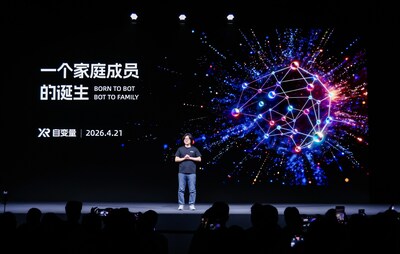
Unveiled at a recent launch event under the slogan “Born to be Robots, Robots for the Family,” Wall-B represents a monumental leap in robotics technology. The company introduced its World Unified Model (WUM)—a training architecture that amalgamates vision, language, action, and physical prediction into a single, cohesive system. This integrated approach aims not just to enhance robotics in controlled environments but also to adapt to the unpredictable nature of home life.
Qian Wang, the founder and CEO of X Square Robot, articulated the key difference between industrial and domestic robots: “Robots in factories can repeat the same action 10,000 times. In a home, they might need to perform 10,000 different tasks, each requiring a unique context.” The ability for robots to handle such variability presents a substantial challenge.
The World Unified Model (WUM)
Wall-B is the first practical application of the WUM architecture, which stands out by training perception, language, and control in tandem rather than in isolation. “We train vision, language, action, and prediction in the same network from day one,” explained Wang Hao, the Chief Technology Officer of X Square. “Human babies don’t learn to see, move, and communicate in separate stages; they integrate perception and action concurrently, with constant feedback from the physical world.” This principle underpins the design of Wall-B.
The model is based on two fundamental pillars:
1. Real-World Data Strategy: The training relies on actual domestic environments rather than simulations, allowing the robot to experience various everyday situations like misplaced objects, unexpected obstacles, and spontaneous human activities.
2. Physics-Based Predictive Mechanism: This feature enables the robot to anticipate physical outcomes prior to action, allowing for proactive adaptability instead of merely reactive behavior.
These components are intended to tackle one of the most daunting challenges in robotics: transitioning from controlled demonstrations to reliable performance in real settings. X Square's substantial hands-on experience with physical robotic platforms bridges the gap between simulation and reality, enhancing operational efficiency under various conditions.
Real-Time Demonstrations
During the event, X Square conducted several live demonstrations showcasing Wall-B’s capabilities. In one notable performance, a robot was able to arrange flowers while dynamically adjusting its grip and movement in response to the changing position of the stems, even when visual occlusion occurred. Remarkably, the task was completed without predefined trajectories, captivating the attention of the national and international media present at the showcase.
Despite the technological advancements, X Square acknowledged the existing limitations of the system. Wang pointed out that current models may make errors requiring remote intervention, like placing shoes in the kitchen or pausing tasks to process the next action. However, the continuous operation of robots, coupled with the generation of real-world data around the clock, fosters swift system enhancements.
This iterative learning cycle is crucial as X Square aims to integrate its robots into ordinary homes in just 35 days. This development underscores the company’s long-term commitment to the domestic robotics sector, aspiring to make a lasting impact on everyday family life.
Topics Consumer Technology)
【About Using Articles】
You can freely use the title and article content by linking to the page where the article is posted.
※ Images cannot be used.
【About Links】
Links are free to use.