



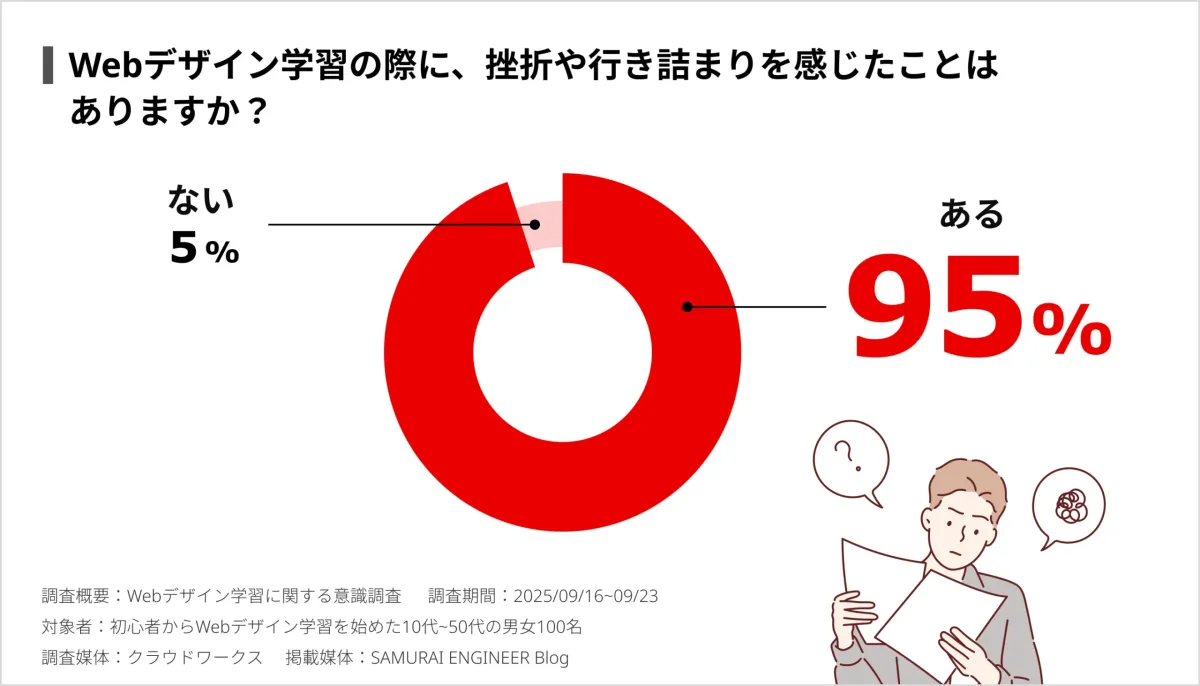
A Study Reveals 95% of Web Design Learners Struggle with Setbacks
Insights from a Recent Survey on Web Design Learning
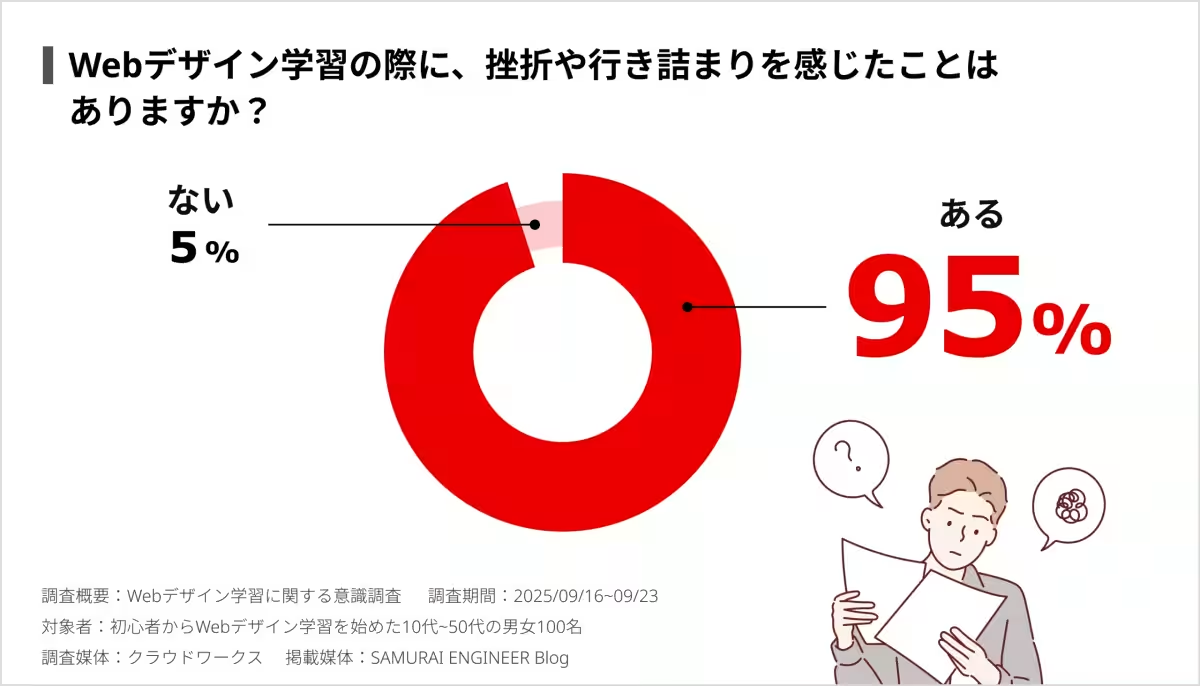
In a recent survey conducted by SAMURAI, a noted IT school, it was revealed that an overwhelming 95% of individuals ranging from their teens to fifties who have embarked on a journey to learn Web design have encountered difficulties or setbacks at some point during their learning process. This eye-opening statistic highlights the challenges that many beginners face in mastering this complex skill.
Reasons Behind Setbacks
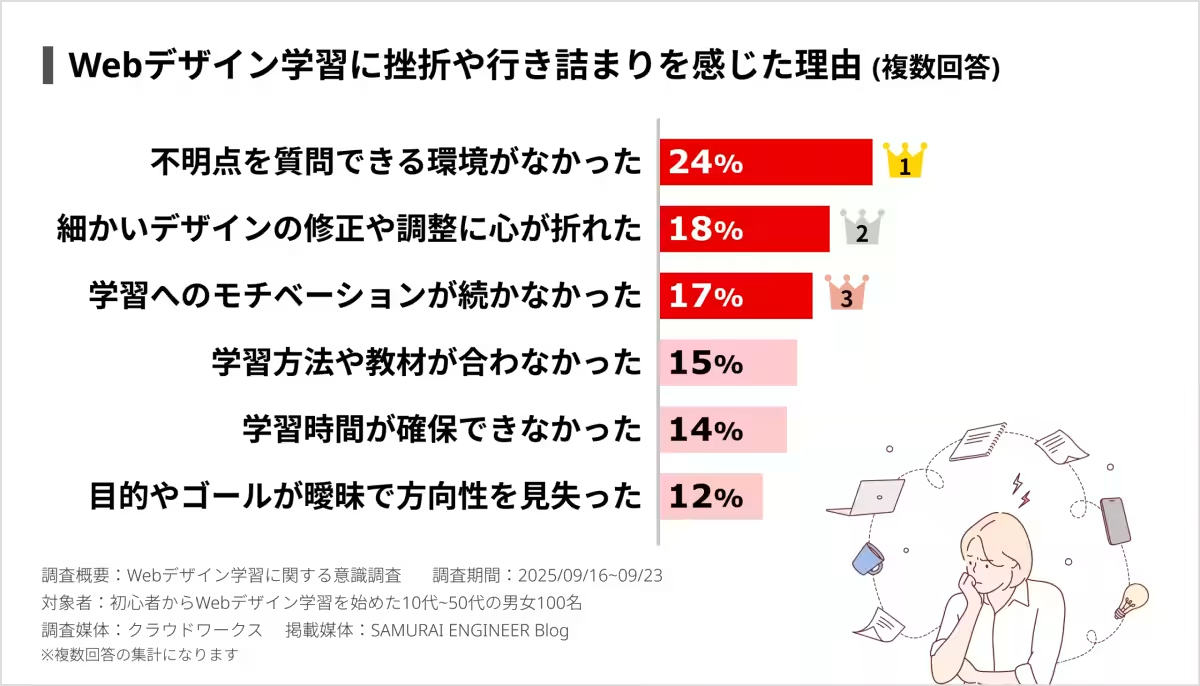
The survey sought to uncover the specific reasons behind these frustrations. When asked, the most common response (24%) indicated that learners often found themselves in environments lacking the ability to ask questions about unclear topics. Following closely, 18% shared that they felt overwhelmed by the meticulous corrections and adjustments required in design tasks, while 17% cited a diminishing motivation to keep learning as a significant hurdle.
Other noteworthy responses included:
- - 15% felt that the learning methods or materials did not suit their needs.
- - 14% struggled to allocate sufficient time for studying.
- - 12% lost their sense of direction due to unclear goals or objectives in their learning journey.
This data underscores a crucial point: the lack of support and guidance can create significant roadblocks for learners trying to navigate the complexities of Web design.
The Desire for Supportive Learning Environments
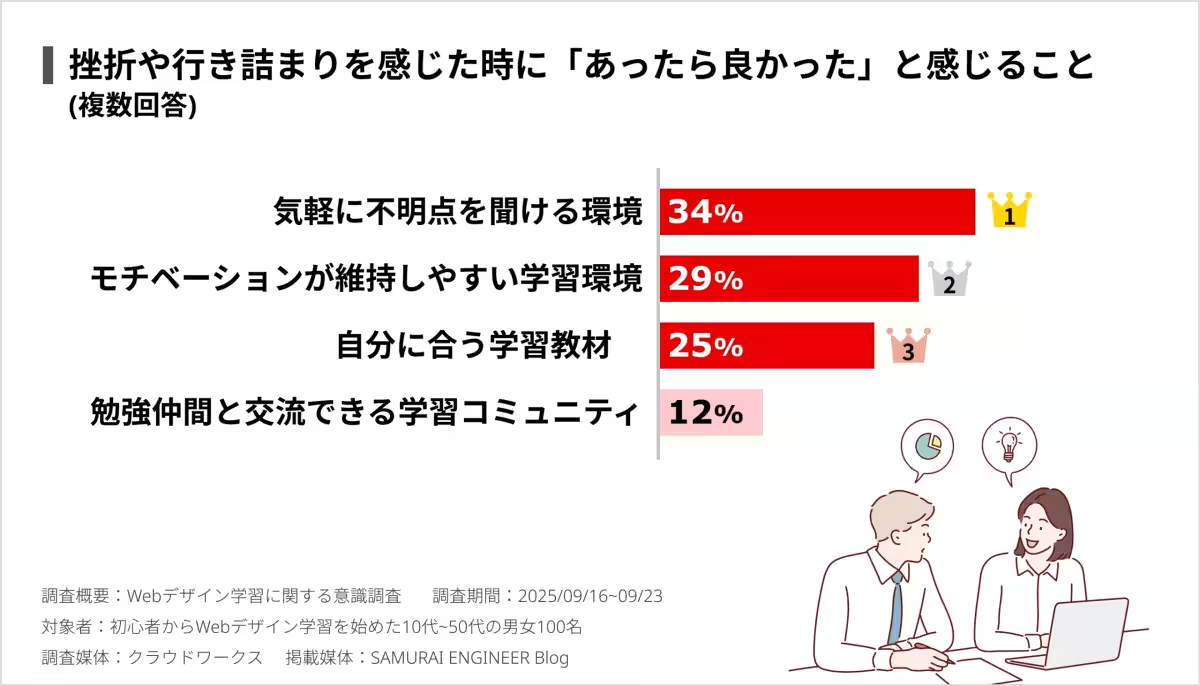
When those surveyed were asked what resources or environments would have helped them during their struggles, the overwhelming majority (34%) expressed a need for an informal space where they could ask questions freely. This was followed by the desire for more motivating study environments (29%) and learning materials that were better aligned with individual learning styles (25%). Additionally, 12% wished for community involvement with peers to foster motivation and collaboration during the learning process.
Viability of Self-Study versus Formal Learning
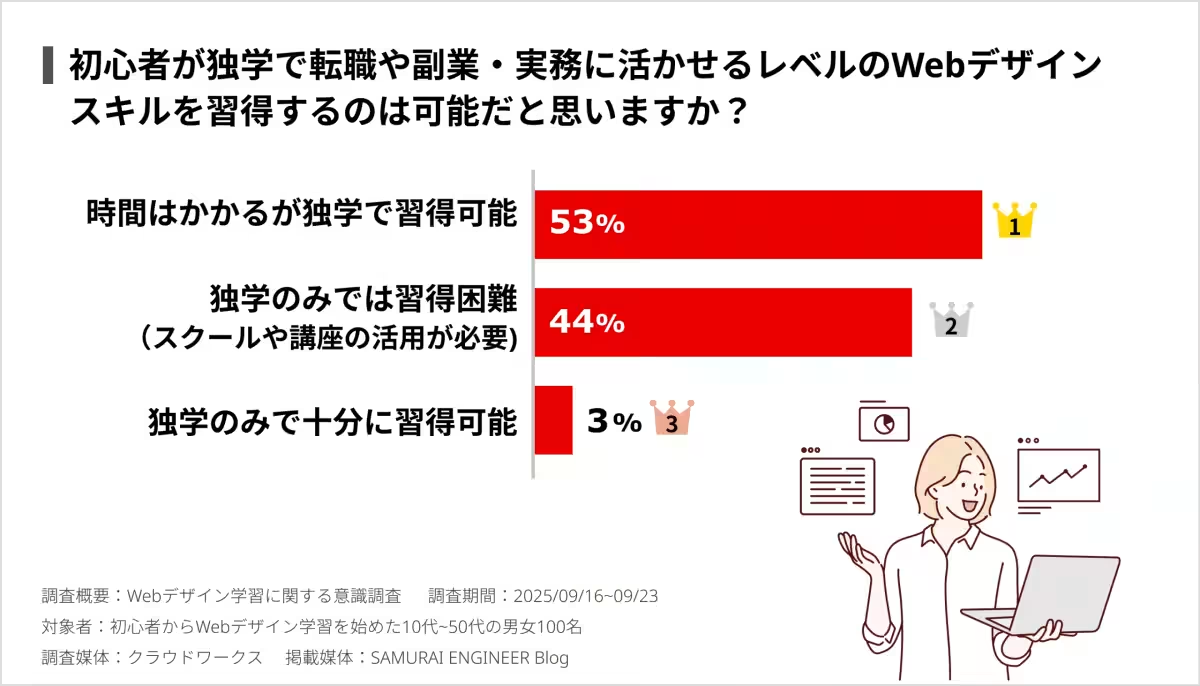
In terms of mastering essential Web design skills applicable for job changes or side projects, responses were mixed. 53% felt that while self-study could be sufficient, it would take considerable time. In contrast, 44% indicated that relying solely on self-study would be insufficient, emphasizing the need for courses or formal training. Only a small fraction (3%) believed that self-study could fully prepare them for practical application in the field.
Usage of AI Tools in Learning
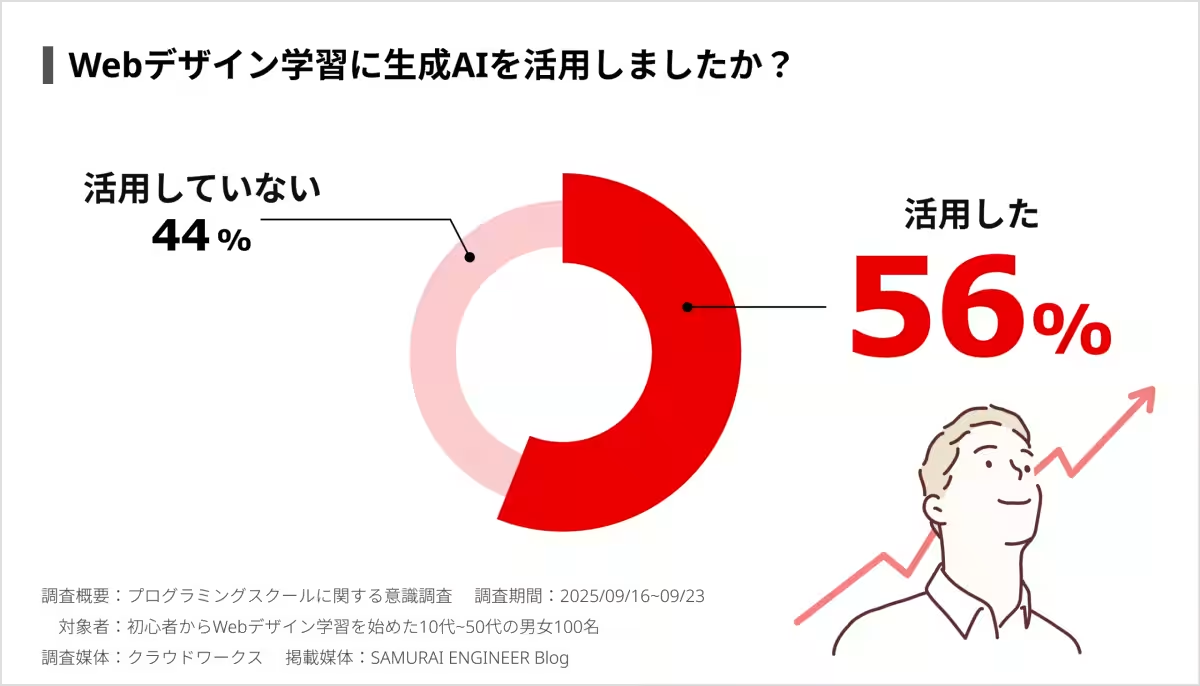
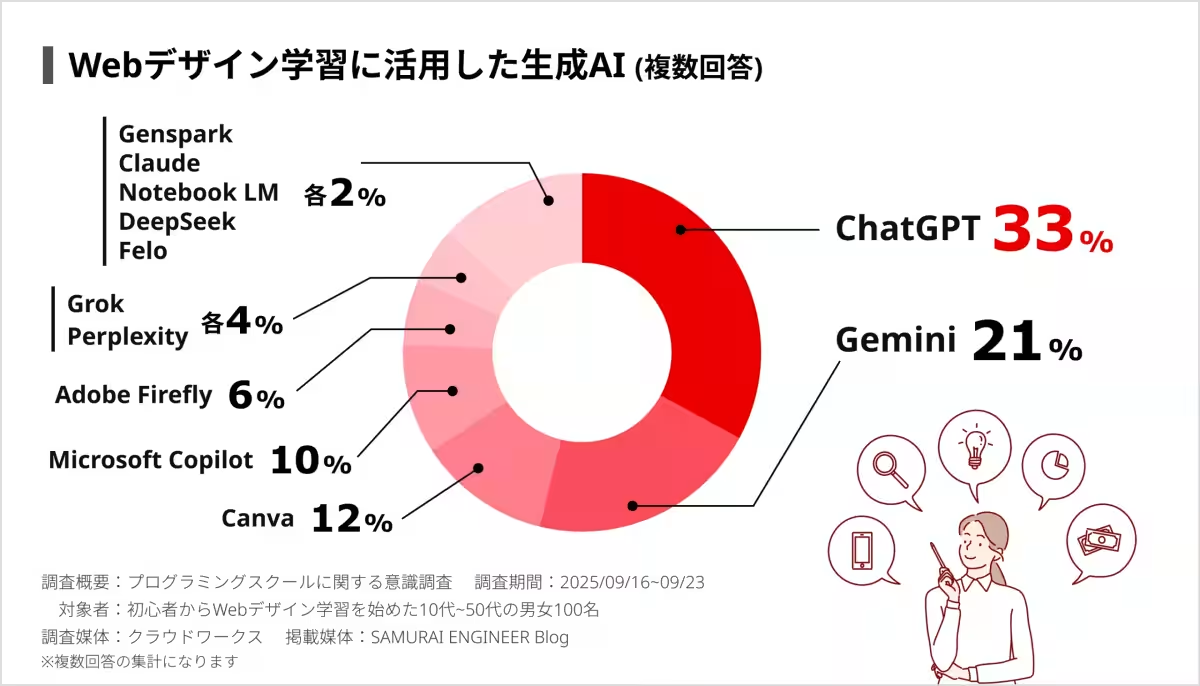
Interestingly, the research also explored how learners are incorporating technology into their educational practices. Notably, 56% of respondents reported that they utilized generative AI tools in their Web design studies. Among these tools, ChatGPT emerged as the most popular choice, utilized by 33% of the respondents, while 21% opted for Gemini. Other AI platforms mentioned included Canva, Microsoft Copilot, and Adobe Firefly, illustrating the diverse tech landscape learners are tapping into for help.
Overview of the Survey
This survey was conducted between September 16 and 23, 2025, targeting a cohort of 100 individuals aged 10 to 50 who are beginners in their Web design learning journey. The participants provided valuable insights into the state of Web design education today, revealing both the struggles and the adaptations learners are making in pursuit of their goals.
The response to this research reflects the evolving landscape of Web design learning, highlighting the crucial role that support networks and technological tools play in helping learners overcome challenges and enhance their skills. As the industry continues to grow, understanding these barriers will be essential in creating more effective learning environments for future designers.

Topics Other)
【About Using Articles】
You can freely use the title and article content by linking to the page where the article is posted.
※ Images cannot be used.
【About Links】
Links are free to use.