



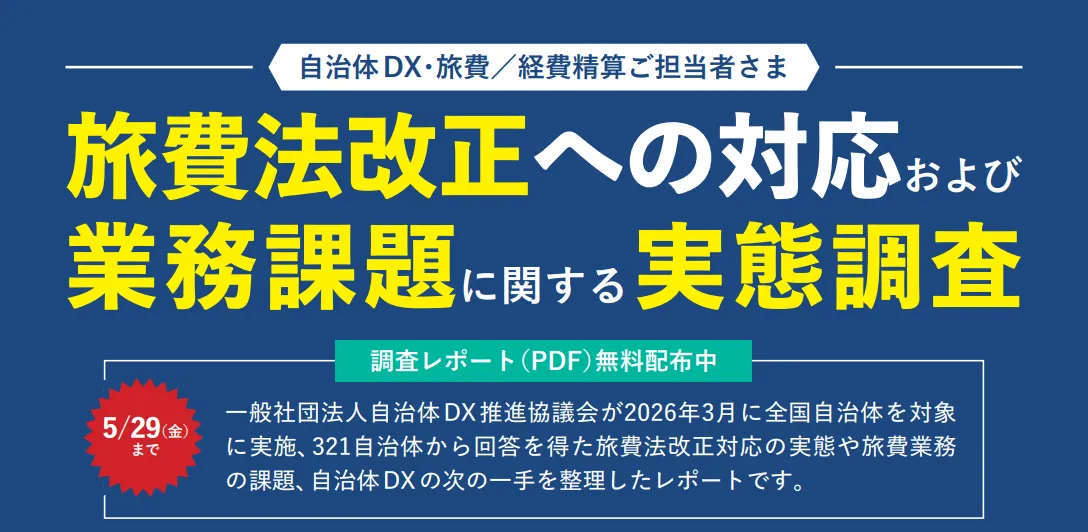
Survey Reveals 45.2% Increase in Administrative Burden for Municipalities: A Closer Look at Cashless Integration
Rising Administrative Burdens in Municipalities: A Survey Analysis
In a groundbreaking report released by the General Incorporated Association for Municipalities Digital Transformation Promotion Council (GDX), a concerning trend has emerged regarding the administrative workloads faced by local governments across Japan. The detailed survey, conducted among 321 municipalities, reveals a staggering 45.2% increase in administrative burdens since the implementation of the revised travel expense law.
Background of the Survey
The revised travel expense law, which came into effect in April 2025, marks the first major overhaul of the legislation since its inception in 1950. This update mandates significant changes such as the reimbursement of actual lodging expenses and the elimination of daily allowances. However, the interpretation and application of these new rules are left to individual municipalities, leading to a varied landscape of compliance and operational challenges.
As these municipalities adapt to the changes, they face new tasks such as verifying receipts, checking amounts, and maintaining budget limits. These increased responsibilities have raised alarms about the potential for human error and inefficiencies in their processes.
Key Findings from the Survey
The results of the survey, which aggregated responses from various municipalities, are illuminating. Here are the major findings:
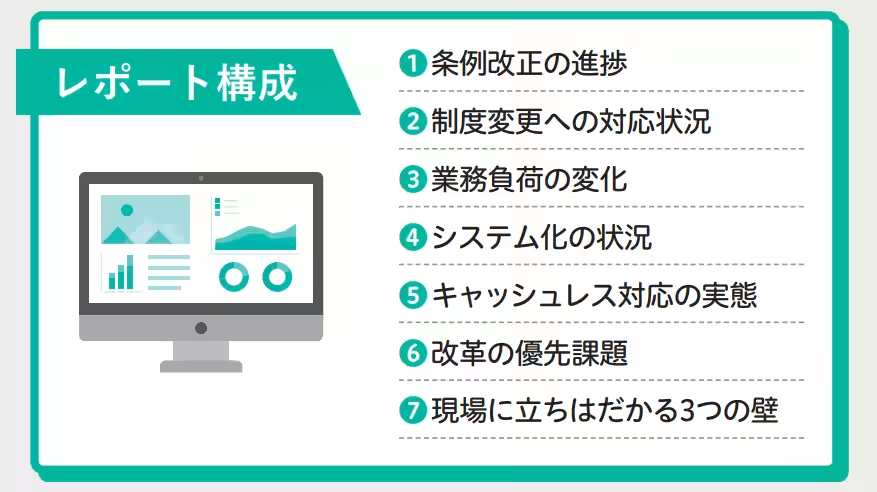
- - Progress on Ordinance Revisions: 63.9% of municipalities have started revising their ordinances to comply with the new law, with 32.4% fully implemented and 31.5% still in progress. However, 28.0% of respondents remain undecided about timelines.
- - Reimbursement Policies: 57.3% have shifted fully to the reimbursement of actual expenses, while 14.0% continue with fixed payments, and only 9.7% are applying a combination of the two.
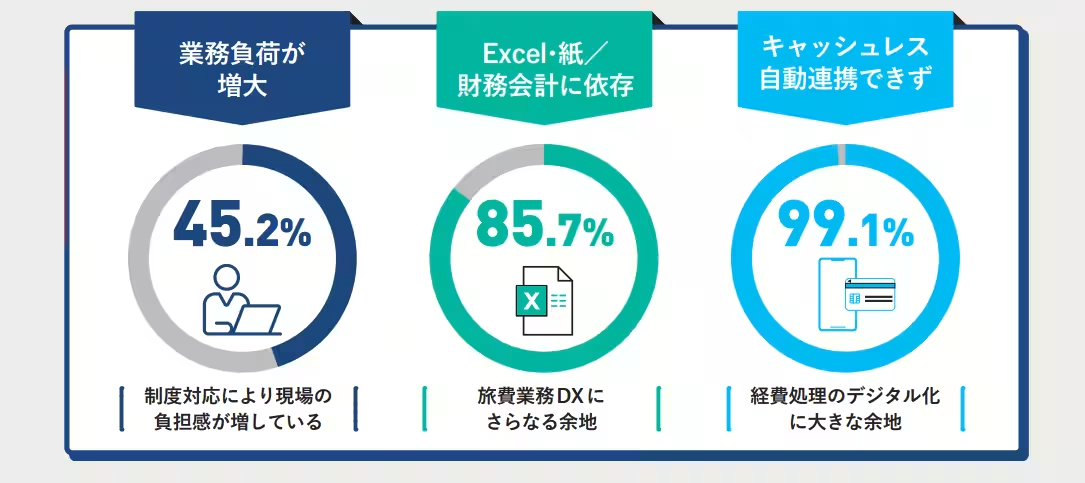
- - Administrative Workload: The burden on staff has visibly increased, with 45.2% acknowledging a rise in their workload, comprising 27.1% who reported a slight increase and 18.1% who said their workload has significantly grown.
- - Understanding Workload Metrics: Only 3.1% have quantified their workload, while the majority—63.6%—could not provide specific figures.
- - Technological Foundations: A staggering 85.7% depend on outdated operational systems, utilizing Excel and paper, with just 1.6% having adopted dedicated travel expense software.
- - Cashless Integration Challenges: An overwhelming 99.1% reported their inability to implement automated cashless integration, with 62.6% never having considered it and 36.4% resorting to manual entries.
- - Prioritized DX Initiatives: The survey highlighted that 53.6% of municipalities prioritized the automation of verification processes as urgent, followed by 19.6% focusing on transitioning to paperless systems and 18.4% on enhancing governance.
Insights into Municipalities' Current and Future Challenges
Findings from this survey underline a crucial paradox: while the legal framework is evolving, the foundational capabilities of municipalities lag behind these changes. Approximately 60% of local governments have begun to update their ordinances, but many still rely on outdated practices that hamper efficiency. The introduction of new verification tasks linked to the reimbursement of actual expenses complicates the existing processes, leading to increased workloads and higher risks of errors.
However, the survey also paints a hopeful picture regarding the future of digital transformation (DX) in municipalities. With a majority clearly identifying specific areas for improvement, such as automating verification processes and addressing application errors, it’s apparent that many municipalities now know what needs to be done. The focus has shifted from uncertainty about DX actions to clear next steps for implementation.
In conclusion, the insights derived from the survey emphasize both the immediate challenges local governments face in adapting to the revised travel expense law and the clear pathways that are emerging for effective DX strategies. This dual perspective serves as a reflection of the current status and future direction for municipal operations in Japan.
Report Overview
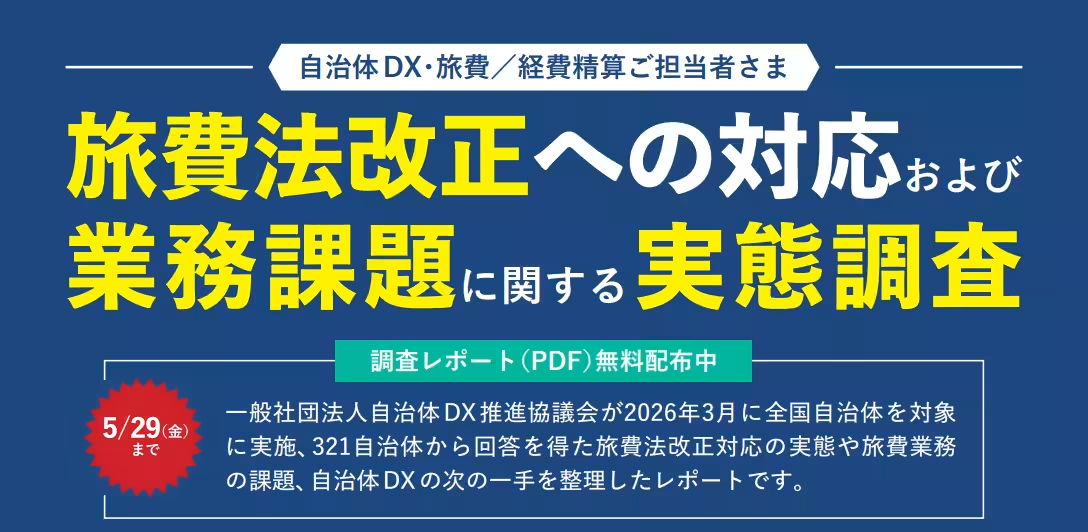
The full report titled "Investigation of Municipalities' Responses and Operational Issues Related to the Revised Travel Expense Law" is available for free download, consisting of 22 pages of comprehensive analysis from the GDX and is intended for municipal officials and stakeholders invested in digital transformation initiatives.
For requests regarding this report or to access more information, interested parties can contact GDX via email.
- ---
For further inquiries:
- - General Incorporated Association for Municipalities Digital Transformation Promotion Council (GDX)
- - Location: 1-3-1 Kita Aoyama, Minato-ku, Tokyo 107-0061
- - URL: GDX Official Website
Topics Policy & Public Interest)

【About Using Articles】
You can freely use the title and article content by linking to the page where the article is posted.
※ Images cannot be used.
【About Links】
Links are free to use.