



Mitsubishi Heavy Industries Participates in Autonomous Bus Trial Program to Enhance Road-Vehicle Coordination
Mitsubishi Heavy Industries Engages in Autonomous Bus Trial in Shimo-na City
Mitsubishi Heavy Industries (MHI) has announced its participation in a groundbreaking autonomous bus trial on the Jichiyu Medical University line in Shimo-na City, Tochigi Prefecture. This initiative aims to enhance the implementation of driverless buses while addressing the challenges of sustaining bus routes due to workforce shortages. The trial is set to run from December 15, 2025, for approximately 2.5 months, with the support of the Ministry of Land, Infrastructure, Transport and Tourism (MLIT) and collaboration from various local stakeholders.
Overview of the Project
The autonomous bus trial focuses on the effective management of road-vehicle coordination systems, which are designed to improve the safety and operational efficiency of self-driving buses. Implemented on the Jichiyu Medical University line, the project specifically addresses the detection and communication of real-time data regarding surrounding vehicles and pedestrians, ultimately enabling a safer and smoother transport experience.
As part of the trial, MHI will be responsible for deploying and removing the road-vehicle coordination systems, alongside data collection efforts. This project highlights MHI's dedication to fostering innovative transportation solutions, particularly in areas struggling with driver shortages.
Innovative Technology Behind the Trial
Utilizing cutting-edge single-lens optical cameras combined with advanced AI image analysis, the road-vehicle coordination system is equipped to cover blind spots encountered by autonomous buses. This high-tech system detects and tracks vehicles and pedestrians, converting their location, movement direction, and speed into actionable data transmitted to the autonomous bus. More impressively, the AI can differentiate between vehicle types, such as trucks, passenger cars, and motorcycles, enhancing the bus's situational awareness.
MHI's strategy emphasizes using cost-effective single-lens optical cameras to make the technology more accessible for widespread implementation. The trial serves as a further extension of MHI's ongoing efforts to develop autonomous bus safety measures, particularly through tests that enhance intersection safety when buses are turning or approaching from side streets.
The Operational Mechanics
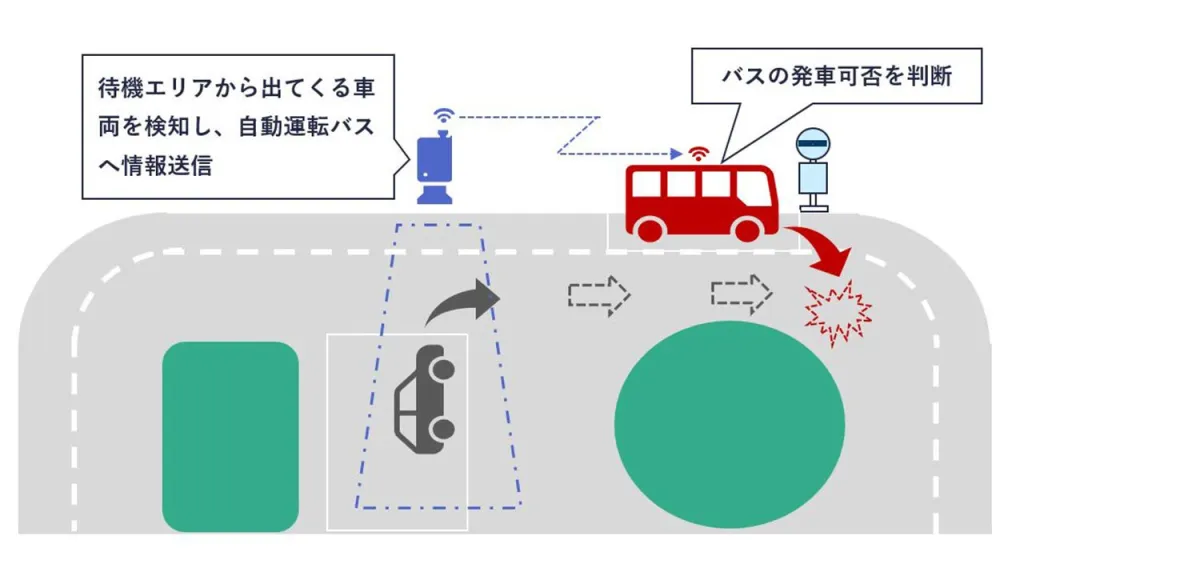
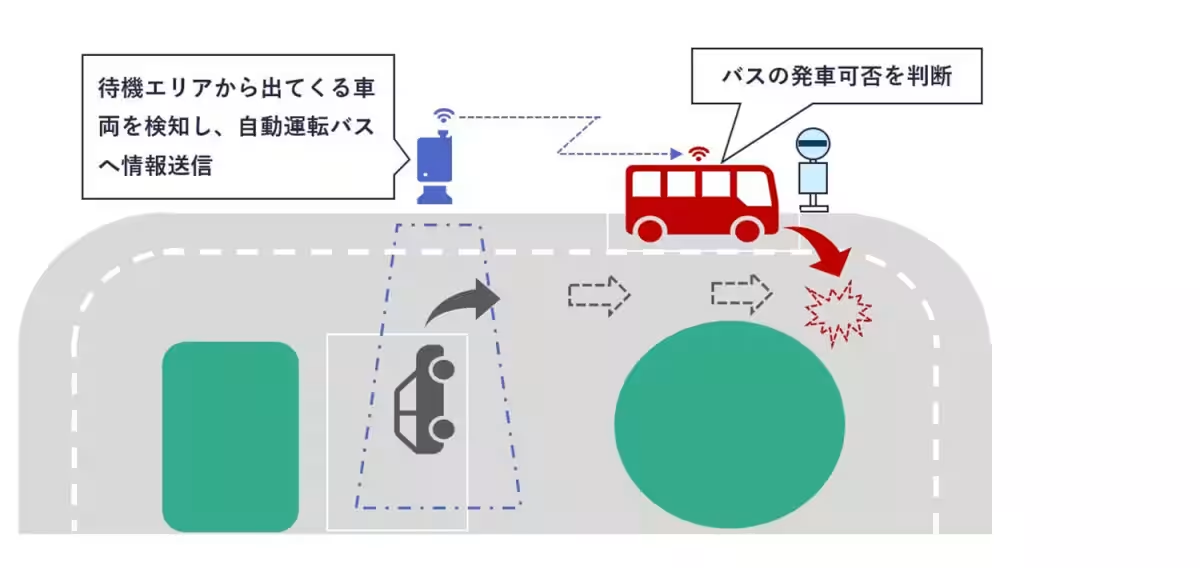
In practical terms, as the autonomous bus departs from the bus stop located at the JR Jichiyu Medical University Station rotary, the road-vehicle coordination system will detect vehicles approaching from the rear-right side—an area where direct detection via onboard sensors can be challenging. The system will send critical information about these approaching vehicles, like their locations and speeds, to ensure a safe departure from the bus stop.
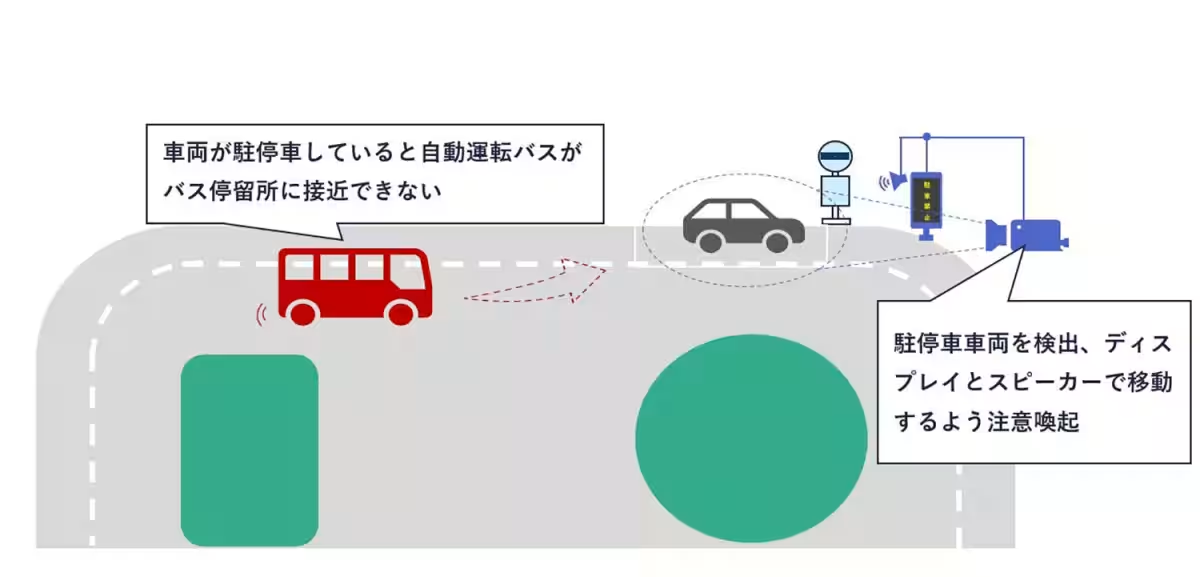
Moreover, if any general vehicles are parked near the bus stop area, the system will identify these obstructions and provide prompts through visual and audio notifications, urging drivers to move their vehicles. This way, the trial ensures the smooth operation of autonomous buses without unnecessary delays.
Future Endeavors in Autonomous Transport
Looking forward, MHI aims to expand its research and development in road-vehicle coordination systems and other operational support technologies. The overarching goal is to implement solutions that not only enhance the deployment of autonomous buses but also secure reliable transportation means in regions experiencing a workforce deficit. The commitment to further technological advancements in this domain shows MHI's dedication to meeting the evolving demands of public transportation.
As autonomous transport continues to evolve, Mitsubishi Heavy Industries stands at the forefront of innovation, ready to support the transformation of urban mobility in Japan and beyond.
Topics Other)
【About Using Articles】
You can freely use the title and article content by linking to the page where the article is posted.
※ Images cannot be used.
【About Links】
Links are free to use.