



Tokyo's King Salmon Project Selects Startups to Tackle Urban Challenges Globally
Tokyo's Innovative Approach to Urban Challenges
The Tokyo Metropolitan Government has taken significant steps to tackle global urban challenges through its King Salmon Project. This initiative aims to leverage the innovative ideas and technological capabilities of Japanese startups to solve pressing issues faced by cities abroad. In its second phase, launched this year, the project has officially selected two promising startups: Food Reborn and Fabula. Collaborating with Jakarta (Indonesia) and Malmö (Sweden), these companies will engage in local projects aimed at sustainable urban solutions.
Project Overview
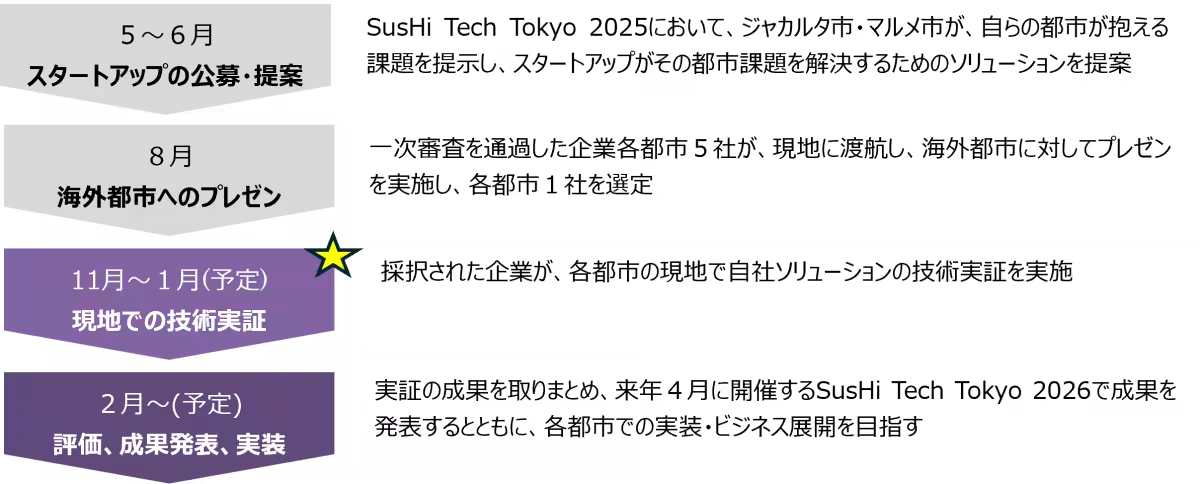
The King Salmon Project's overseas urban challenge resolution course is part of an international network known as the Global City Network for Sustainability (G-NETS). This course encourages collaboration with cities that are members of G-NETS to implement demonstration projects. The goal is to resolve urban issues and promote sustainable urban development through advanced technologies, branded under the initiative Sustainable High City Tech Tokyo (SusHi Tech Tokyo).
The project focuses on pivotal themes such as waste management and renewable energy. In August, local pitches were held in Jakarta and Malmö, culminating in the selection of the two startups based on their innovative proposals.
Selected Startups and Their Projects
1. Food Reborn
- Founded: 2017
- CEO: Etsuko Uda
- Focus: This startup aims to extract fibers from underutilized agricultural resources, such as pineapple leaves, to upcycle them into organic fertilizers and fashion items. Their project under the King Salmon initiative will produce biogas and biochar from organic and mixed waste, promoting the effective utilization of waste materials.
- Website: Food Reborn
2. Fabula
- Founded: 2021
- CEO: Kota Machida
- Focus: With a vision of “creating inspiration from waste,” Fabula seeks to innovate and add value to all types of underutilized resources. The startup specializes in developing new materials from food waste that can be transformed into furniture and other decorative items, driving towards a sustainable society.
- Website: Fabula
Through these selected initiatives, Tokyo aims to not only address challenging urban issues but also foster a culture of sustainability that extends beyond its borders. The participation in G-NETS signifies a commitment to global problem-solving, and the King Salmon Project is a vehicle for innovation and technology-sharing that can inspire cities worldwide.
Future Developments
Additional details regarding the demonstration projects and other aspects of the King Salmon Project will be made available on a dedicated webpage soon. This project is aligned with Tokyo's broader strategy aimed at nurturing a new generation of startups capable of making significant contributions on the global stage.
For instance, the SusHi Tech Tokyo initiative epitomizes Tokyo’s dedication to fostering sustainable city solutions through advanced technology. Following its inaugural conference in May, which attracted over 57,000 participants, plans are already underway for the next event in 2026.
The King Salmon Project is set against the backdrop of ambitious sustainability goals outlined in the Tokyo 2050 Strategy. With a focus on collaboration between innovative startups and international cities, this initiative is paving the way for a more sustainable urban future.
Conclusion
As the global community faces escalating challenges related to urbanization and sustainability, Tokyo's King Salmon Project symbolizes a proactive approach. By selecting innovative startups like Food Reborn and Fabula, the Tokyo Metropolitan Government is demonstrating its commitment to not only addressing local issues but also contributing to global solutions. The blend of technological advancement and sustainable practices provides a hopeful outlook for urban environments both in Japan and around the world.





Topics Other)

【About Using Articles】
You can freely use the title and article content by linking to the page where the article is posted.
※ Images cannot be used.
【About Links】
Links are free to use.