



Spot Work Job Market Sees Strong Demand Despite Declining New Listings
Spot Work Job Market Analysis - October 2025
A recent report by Tuna Group Holdings, a research institution focused on diverse work styles, sheds light on the current state of spot work in Japan. The data, collected for the month of October 2025, indicates that while demand remains high, the number of new listings has encountered a significant drop. Here’s a detailed look at the key findings from the report:
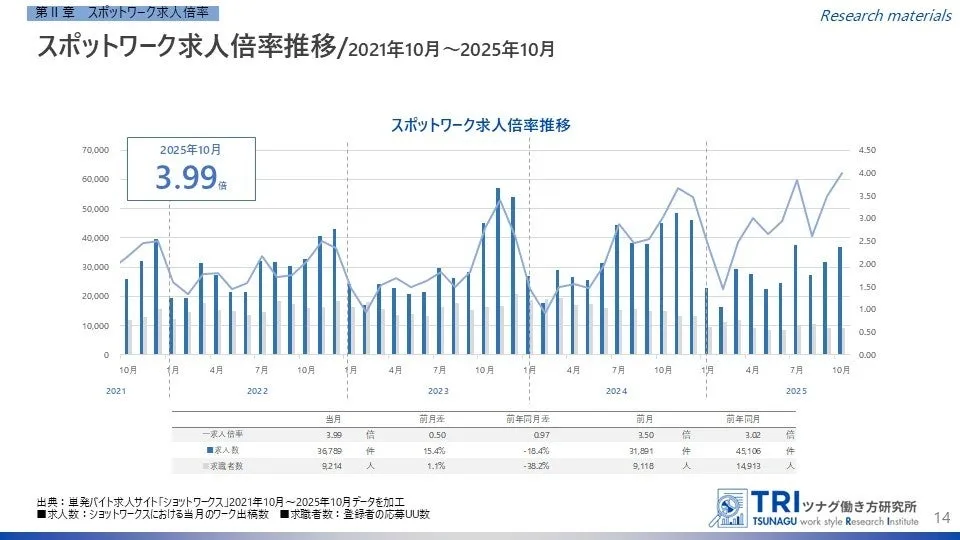
1. Job Availability Ratio Rises to 3.99
In October 2025, the job availability ratio for spot work reached 3.99, marking an increase of 0.50 points from the previous month. This uptick is consistent with the annual trend observed as the year-end approaches, typically seeing a spike in demand for spot workers. Moreover, compared to the same month last year, the ratio has risen by 0.97 points, highlighting that it has exceeded the previous year’s figure for 17 consecutive months.
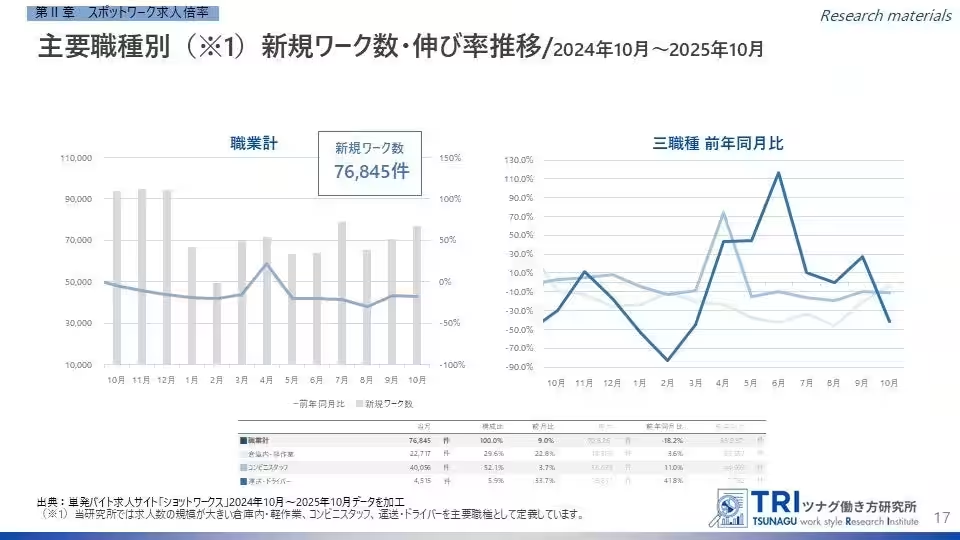
2. Decline in New Listings
Despite the positive job availability ratio, the report notes a concerning decline in new work listings. The number of new work opportunities reached 76,845, representing an 18.2% drop compared to the same month last year. This marks the sixth consecutive month of decline in new listings. Notably, the transportation and driver roles have seen a drastic reduction, with a decrease of 41.8% from the previous year, underscoring the challenges faced by this industry segment.
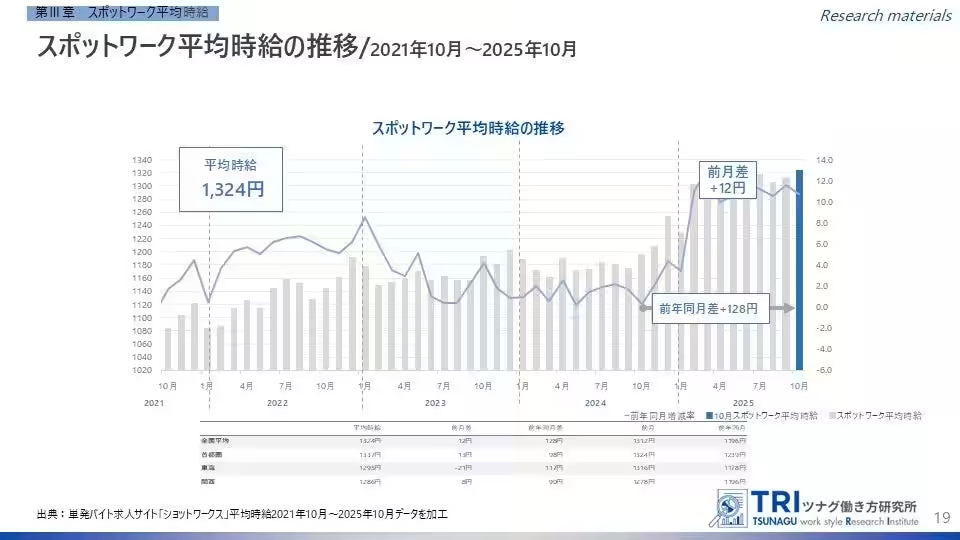
3. Average Hourly Wage Increases
Despite the decline in new listings, the average hourly wage for spot workers has risen to 1,324 yen, which is 12 yen higher than the previous month and 128 yen higher than the same month last year. In comparison, the average hourly wage for regular part-time workers stands at 1,302 yen, indicating that spot workers earn an average of 22 yen more per hour than their traditional part-time counterparts.
Understanding Spot Work
Spot work is defined as a working style in which individuals engage in short-term, one-off tasks without a continuous employment relationship. Within this category, we can identify two key types of work: gig work, where no employment contract is signed (such as Uber Eats delivery), and short-term contracts. The emergence of spot work has been accelerated by the pandemic, as both individuals seeking flexible work options and companies aiming for cost-effective labor strategies have increased their reliance on this work model.
The Importance of Market Monitoring
The ongoing monitoring of this market is essential to understand its dynamics and implications for the workforce. The Ministry of Internal Affairs and Communications has implemented indicators to track “underutilized labor,” which includes individuals wishing to engage in additional work. The ability for these individuals to take on spot work helps stabilize their incomes and can contribute to reducing the broader unemployment rate. Moreover, from a macroeconomic perspective, effectively utilizing this potential labor force can enhance national productivity.
About Tuna Group Holdings
Founded in 2015, Tuna Group Holdings has established a research institution dedicated to exploring diverse work styles. Led by Hiroshi Ohno, the institute collaborates with experts in labor law and human resources to analyze and propose reforms to current labor systems. As a leading entity addressing Japan's labor market challenges, Tuna Group is committed to bridging the labor demand and supply gap expected in 2030.
For more insights and detailed data from the Spot Work Market Data Report, visit Tuna Group Holdings' official website.

Topics Consumer Products & Retail)
【About Using Articles】
You can freely use the title and article content by linking to the page where the article is posted.
※ Images cannot be used.
【About Links】
Links are free to use.