




Understanding the Shift in Life Sciences Professionals’ Retention Strategies
The New Paradigm in Life Sciences Workforce Retention
In a recent study by Randstad, a leading global human resource service provider, the company uncovered intriguing insights about the life sciences job market. The findings were part of the "Randstad Employer Brand Research 2026 (Life Sciences)" report, released by the Tokyo-based organization. The life sciences field ranked first in industry attractiveness and showcased intriguing trends in employee preferences that reflect a significant shift in retention strategies.
Intellectual Engagement: A Key Driver
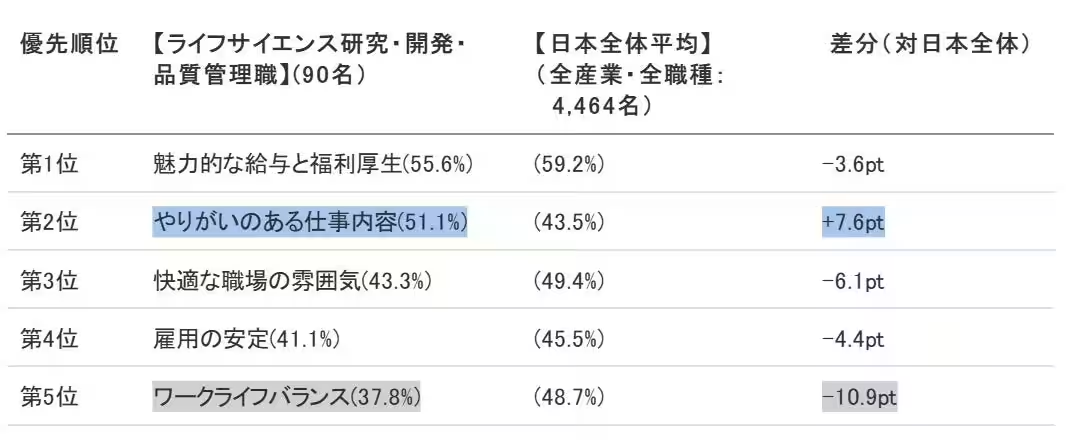
Interestingly, life sciences professionals expressed a strong desire for intellectually stimulating work, akin to their need for competitive salaries. The study revealed that 55.6% of respondents prioritized salary, with 51.1% emphasizing the importance of engaging and meaningful job roles. This quest for intellectual fulfillment demonstrates that scientists value challenging projects that spark their curiosity over traditional workplace comforts such as work-life balance (WLB), which ranked fifth among concerns.
This prioritization signifies a deeper commitment to their work. Rather than focusing on mere clocking out at regular hours, these professionals are driven by a quest for knowledge, seeking involvement in challenging projects related to drug development or regulatory compliance. Their motivations foster an environment where intellectual pursuits take precedence, often spurring innovation in clinical trials and scientific research, despite the accompanying pressures.
Purpose-Driven Work and Leadership Expectations
The research further highlighted an explicit demand for purpose-driven management and substantial R&D investments. Life sciences professionals strongly seek companies that offer clear visions aligned with societal benefits and environmental consciousness. 20% of the life sciences employees indicated a preference for strong leadership with a clear vision, significantly above the 14.7% average across all sectors. Additionally, there's an inclination towards organizations that utilize cutting-edge technology, with 14.4% showcasing this preference compared to 10.8% in the general workforce.
Respondents indicated that merely providing comfortable work environments or attractive benefits wasn't enough. They desire firms that are committed to making a positive impact on society and the planet through innovative research and development. Companies that fail to articulate such commitments may struggle to attract and retain these highly principled professionals.
The Internal Mobility as a Retention Strategy
Despite the prevalent notion that workers in any sector are interested in changing jobs, life sciences professionals showed a remarkable inclination to remain within their current company. Only 13.2% stated they planned to switch employers, a figure that mirrors general market trends. In contrast, 8.0% expressed interest in internal career shifts—a notable 1.6 times higher than the national average—revealing a strong desire to refresh their skills and accept new challenges without leaving their organization.
The motivations behind this internal transition desire arise from aspirations to avoid stagnation while simultaneously affirming their commitment to their current workplace. Professionals expressed fear of falling behind in skill and value, prompting organizations to implement robust structures for internal mobility that allow employees to explore new roles and projects.
The Active Desire for Growth
Comments from Hiroka Ata, a senior consultant at Randstad's Professional Talent Solutions Division, elucidated that the survey exposed strong growth ambitions among life sciences professionals. They are aware that intellectual engagement in their roles is necessary for personal development and marketability. This realization catalyzes an interest in pursuing diverse and challenging projects within their organizations rather than seeking opportunities externally.
In conclusion, retaining talented scientists in the life sciences sector requires organizations to cultivate environments of intellectual curiosity and growth. Stagnant roles and unchallenging projects may risk losing valuable employees who otherwise seek to contribute positively to human health and the environment. Effective policies promoting internal mobility, robust R&D investment, and transparent leadership can set companies apart in attracting and maintaining top-tier life sciences talent. Adaptations in corporate culture, emphasizing authenticity and active participation in organizational goals, will ultimately be key to cultivating a workforce that is both engaged and loyal.
- ---
Strategic Recommendations for Companies:
1. Market-Linked Compensation: Ensure that your reward system is competitive and transparent about how growth is recognized and rewarded.
2. Internal Mobility Programs: Encourage internal career changes to prevent talent loss and allow employees to actively seek new challenges.
3. Wellbeing Programs: Prioritize health initiatives, ensuring mental health support and manageable workloads are part of company policy.
4. Tailored EVP Strategies: Customize employee value propositions based on employee demographics and career stages.
5. Hybrid Recruitment Processes: Streamline hiring while ensuring potential candidates engage with current employees for a transparent cultural exchange.
- ---
This insightful research underscores that authentic commitment to employee engagement is essential in the life sciences sector. Organizations must acknowledge these evolving trends to retain top talent and foster a sustainable, innovative workforce.


Topics People & Culture)
【About Using Articles】
You can freely use the title and article content by linking to the page where the article is posted.
※ Images cannot be used.
【About Links】
Links are free to use.