



Examining the Differences in LLM Strategy Between Japanese and English Markets
Overview of the Study
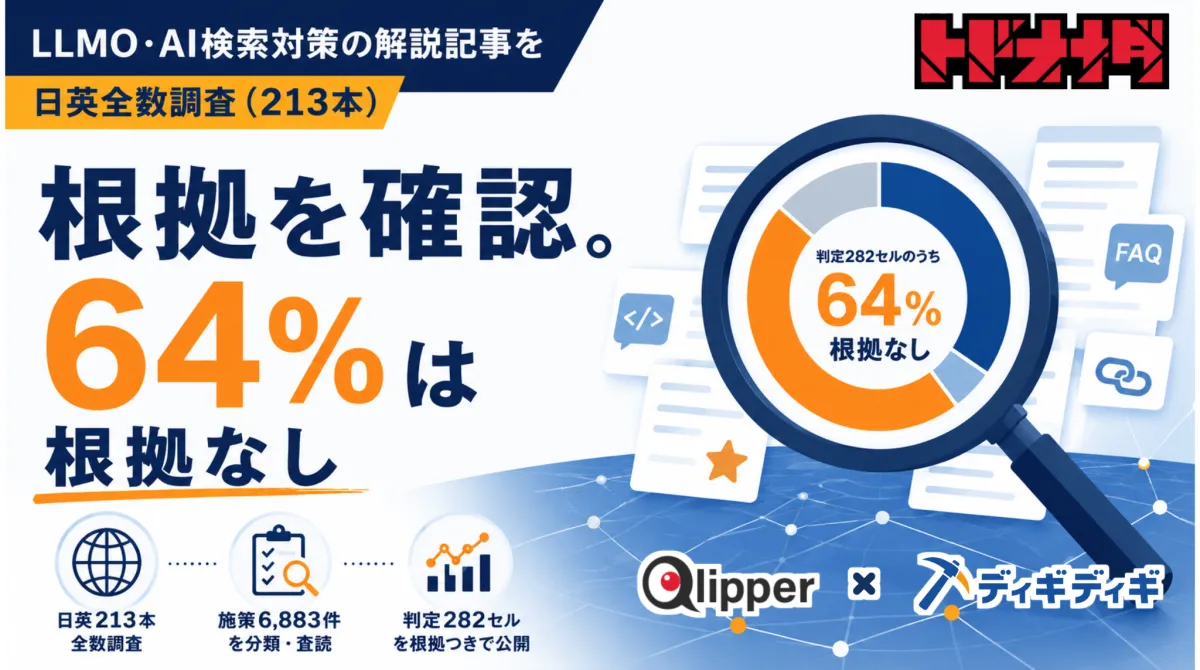
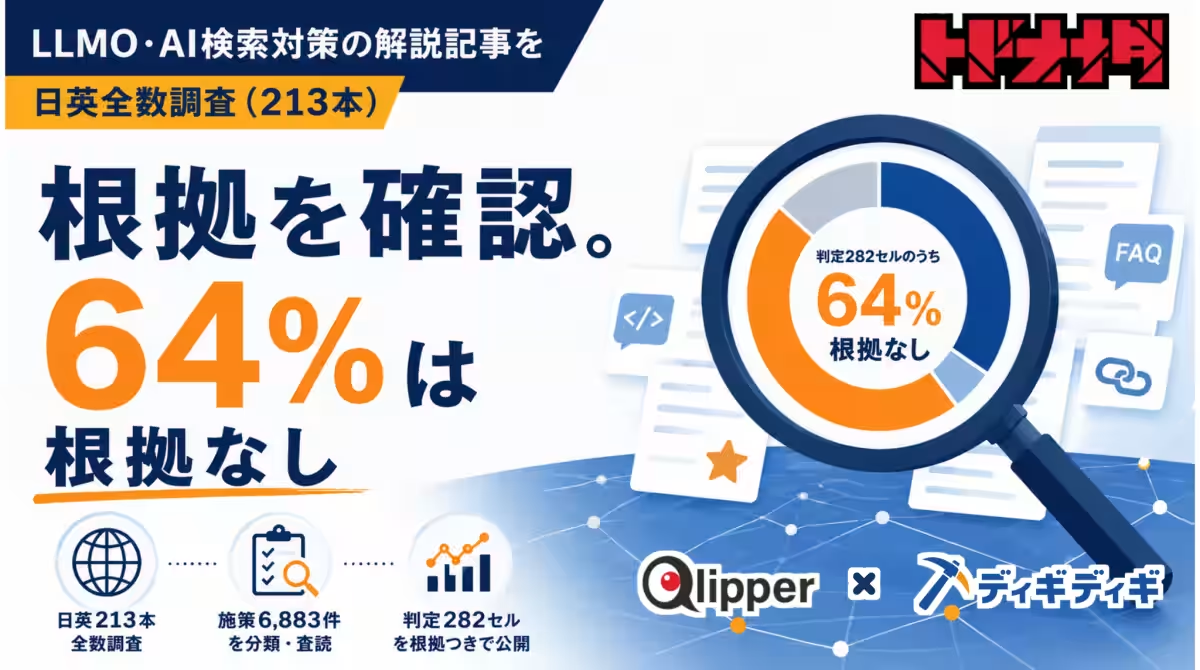
In a recent investigation conducted by Todo-O-Nada, a company headquartered in Taito, Tokyo, significant disparities have emerged between LLM strategies in Japanese and English-speaking regions. This analysis centers on comparing 213 articles discussing LLMO (Large Language Model Optimization) and AI search measures, identifying 6,883 recommended actions categorized for effectiveness evaluation against published literature, including peer-reviewed machine learning papers, official documents from various AI companies, and large-scale practical assessments by third parties.
Key Findings
General Structure
The overarching structure of the recommended strategies remains largely consistent across both language zones, with approximately 60% of suggested measures relating to "Content/PR on Distribution Side" in both regions, and only 1-2% linked to "Learning Data/Technical Implementation," resulting in a maximum variance of 1.3 percentage points.
Specific Actions
However, the details reveal stark contrasts:
- - In the Japanese market, 51.7% of articles reference llms.txt, contrasting sharply with only 7.2% in English articles.
- - A significant 38.8% of Japanese articles recommend including "Expert Review Comments," a guideline absent in the English-speaking counterpart.
- - An intriguing finding is the design strategy based on "actual questions being asked," which was noted in 39.2% of English articles but had no corresponding mention in Japanese articles.
Moreover, 64% of the proposals, amounting to 282 assessment cells, failed to be backed by supportive literature. Notably, structured data implementation (recommended by 78.4% of Japanese articles) and FAQ improvement (62.1% of Japanese articles) lacked effective supportive documentation in peer-reviewed sources, while third-party media mentions (44.8% of Japanese articles) did correlate with supporting research.
Absence of Measurement Solutions
An alarming revelation is that while 21.6% of the Japanese articles note the lack of adequate direct measurement methods for AI selection rates, there were no proposed methods identified among 1,556 measurement approaches in either language for confirming the innate knowledge of models under none UI conditions.
Methodology of the Research
The study involved analyzing search queries related to LLMO and AI search countermeasures in both Japanese and English, resulting in 238 articles, of which 213 were successfully processed (116 Japanese and 97 English). The extraction was carried out utilizing the Brave Search API, ensuring a reproducibility focus by analyzing all available candidates to prevent arbitrary exclusions.
Extraction
All recommended actions and measurement methods were extracted verbatim, leading to classifications into 913 clusters (549 in Japanese and 364 in English).
Reviewing Sources
A bidirectional exploration of literature supporting or disputing the principal measures was conducted, segregating sources into four categories: peer-reviewed papers, vendor official documents, statements from related parties, and third-party assessments. If no literature was found, it was marked accordingly.
Findings
Alignment Across Regions
Predominantly, the general premise of proposed strategies aligns well between the Japanese and English contexts. However, when broken down further, the exact recommendations show clear asymmetries. For example, while 51.7% of Japanese articles mention acknowledging llms.txt, only 7.2% of English articles discuss it at all. This disparity indicates a potential gap in how different language speakers access and interpret the same AI resources.
Misalignment in Approaches
It became apparent that misconceptions could arise from the contradiction in recommendations, with eight axes of opposing recommendations found in Japanese articles, compared to 35 in English articles, illustrating a divergence that could confuse both consumers and strategists.
The Need for Reliable Measurement Tools
Given the obvious gaps and inconsistencies in the proposed strategies and their backing, our analysis highlights the urgent requirement for reliable tools that can adequately measure the effectiveness of these actions. With no current means of validating the proposed LLM countermeasures, it remains difficult for practitioners to ascertain what genuinely drives success in the market.
Conclusion
The results of this study are not intended to undermine specific measures or their proponents. Instead, they emphasize the necessity for all practitioners, regardless of language, to critically evaluate the effectiveness of LLM strategies through credible resources. The establishment of a grounded assessment tool, like the forthcoming LLMO Checksheet, will provide transparency and enhance the understanding of which strategies are efficacious across varied linguistic contexts.
For more information or to access the LLMO Checksheet, visit here.
About Digidigi
Digidigi offers innovative measurement tools tailored for analyzing how LLMs perceive and mention brands without active search functionalities. It aims to fill the gaps highlighted in this study by providing real measurement options for evaluating learned knowledge.
If you have inquiries regarding this research or our company, feel free to contact us at Todo-O-Nada, located at 302 Yahiko Building, 7-11-13 Ueno, Taito, Tokyo, or call us at 03-6453-6886.

Topics Business Technology)
【About Using Articles】
You can freely use the title and article content by linking to the page where the article is posted.
※ Images cannot be used.
【About Links】
Links are free to use.