



BitTrade's Monthly Market Report for May 2026 Highlights Shifts in the Cryptocurrency Landscape
May 2026 Market Report: Transformative Trends in the Cryptocurrency Sector
BitTrade, Inc. has launched its much-anticipated 'Monthly Market Report for May 2026,' analyzing critical developments within the cryptocurrency landscape. This edition, spearheaded by spokesman Toru Bito, presents a structured overview of notable events from the past month, focusing on four key areas: the Bitcoin-led market, regulatory advancements in the U.S., Real World Assets (RWA), and the innovations surrounding stablecoins and payment infrastructure.
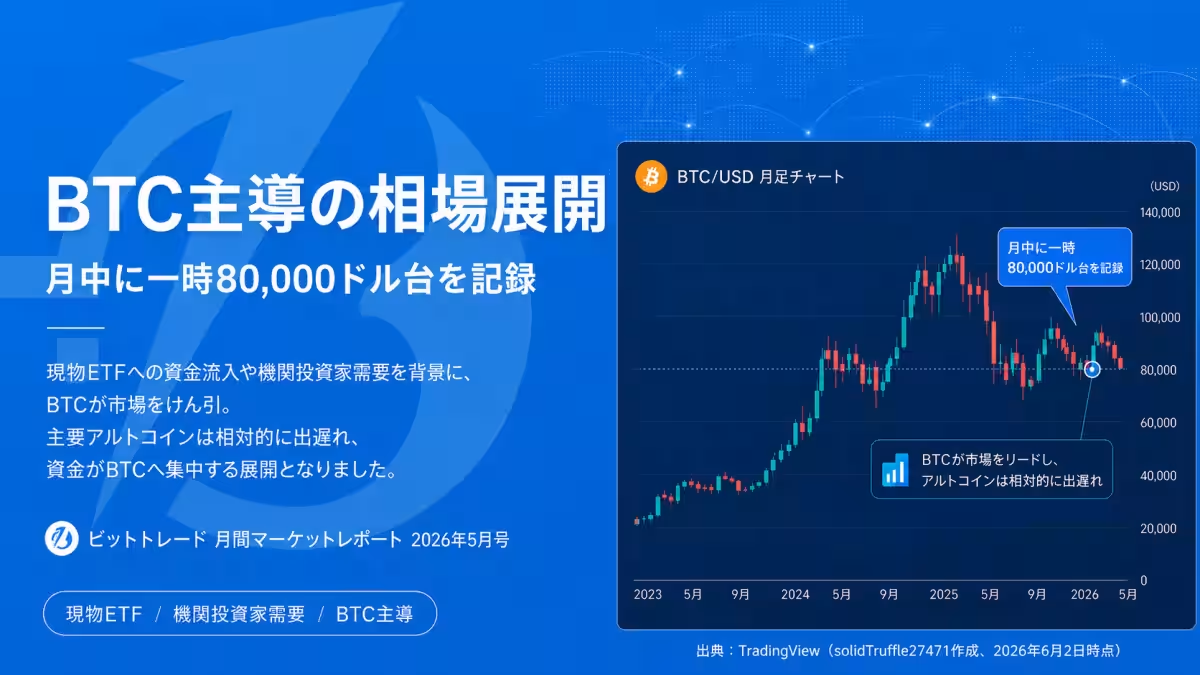
In May, Bitcoin (BTC) captured significant attention, briefly surpassing the $80,000 mark, fueled largely by inflows from Spot ETFs and institutional demand, reinforcing its position as the market leader. However, shifts in the cryptocurrency market were not limited to Bitcoin, reflecting broader trends in regulations and practical applications within the financial ecosystem.
Market Overview: Regulatory Adaptations and Real-World Asset (RWA) Integration
The cryptocurrency market in May 2026 exhibited a landscape marked by both price developments and a strong emphasis on regulatory frameworks and real-world applications. Bitcoin's price surge served as a reminder of its bifurcated market impact, where price action is just one aspect of a more complex narrative.
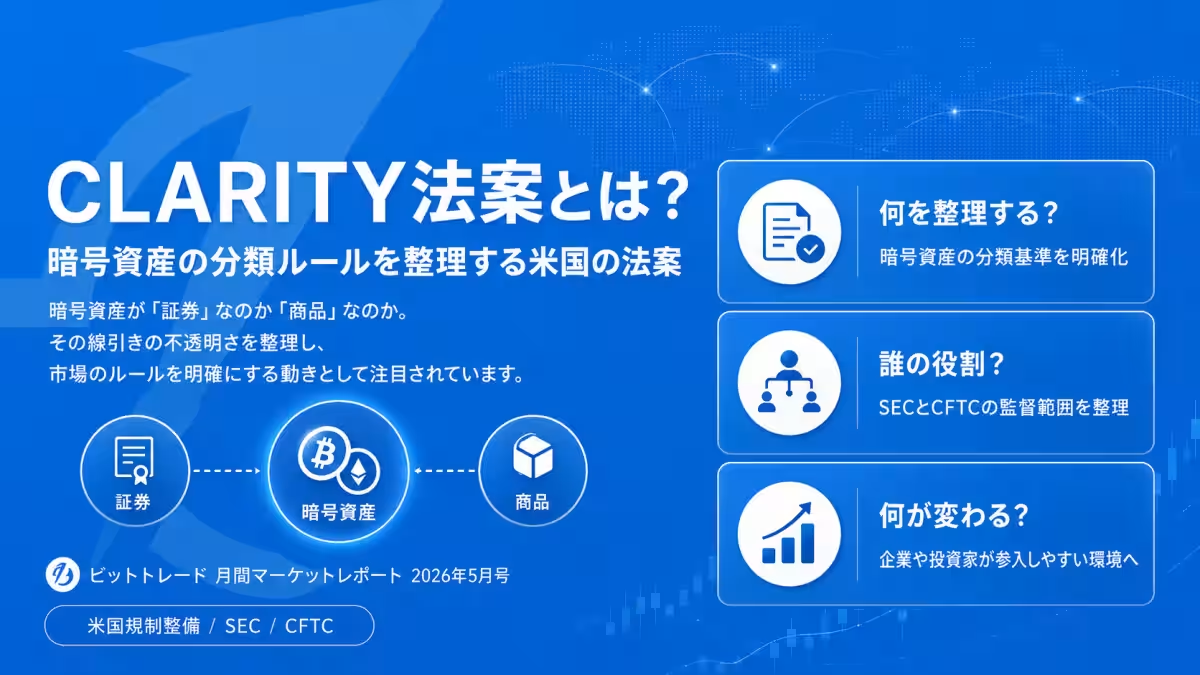
One of the most pressing themes emerging from the report was the ongoing discussions around regulatory measures in the U.S. centered on the Clarity Bill. This legislation aims to clarify the classification of cryptocurrencies, addressing the long-standing debate of whether a cryptocurrency qualifies as a security or a commodity. Such regulatory clarity is essential as institutional investors and major corporations increasingly seek to navigate the market.
The RWA market is also garnering attention, expanding beyond tokenized U.S. Treasuries to include various assets such as commodities, equities, ETFs, and precious metals. This evolution paves the way for greater integration of traditional financial instruments and cryptocurrencies, compelling industry participants to reassess how these assets are utilized.
As the narrative unfolds, trends in stablecoin settlements, predictions markets, and AI wallets illustrate the growing ambition of cryptocurrencies to serve as the backbone of next-generation financial infrastructures.
Key Observation #1: BTC as the Market Driver
The standout takeaway of the month was Bitcoin's robust performance, which was underpinned by significant institutional buy-ins and Spot ETF inflows. This indicates a shifting sentiment among large-scale investors who view Bitcoin as a more accessible digital asset compared to altcoins like ETH and SOL, which largely trailed in comparison.
The stabilization provided by institutional demand is noteworthy, especially given the prevailing geopolitical tensions. Crypto markets previously reacted sharply to sudden market shocks. However, BTC's resilience amidst uncertainty suggests a maturing asset class driven by deeper market integrations and institutional strategies.
Key Observation #2: Regulatory Milestones Culminating with the Clarity Bill
The Clarity Bill's progression highlights a potential inflection point for cryptocurrency regulations in the U.S. Regulatory clarity not only mitigates market uncertainties but also fosters confidence among institutional investors. Stakeholders are eager to understand which regulatory bodies oversee the crypto landscape and what rules dictate asset classifications.
As the crypto market strives to reposition itself from a speculative domain to a legitimate space inviting institutional participation, it becomes increasingly essential to establish structured regulatory frameworks.
Key Observation #3: Expansion of RWA Markets
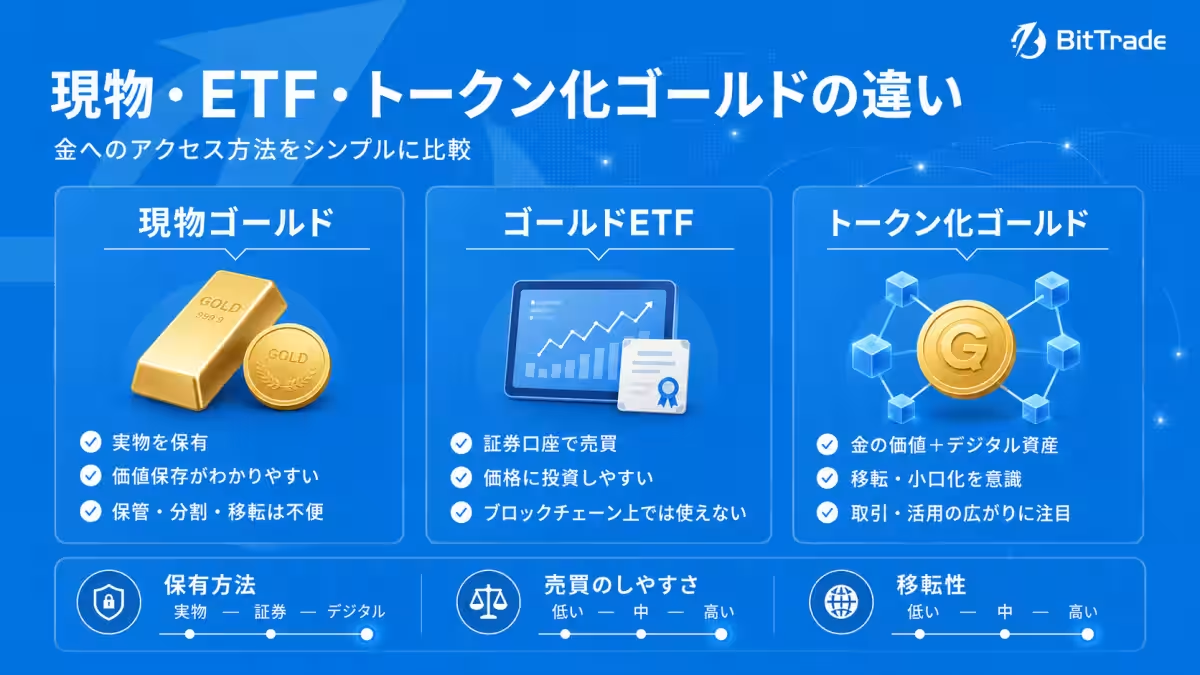
A pronounced focus of this report was the evolving landscape of RWAs, which increasingly encompass a more diverse array of assets. Historically centered on government securities, the market now embraces commodities, stocks, ETFs, and precious metals like gold and silver.
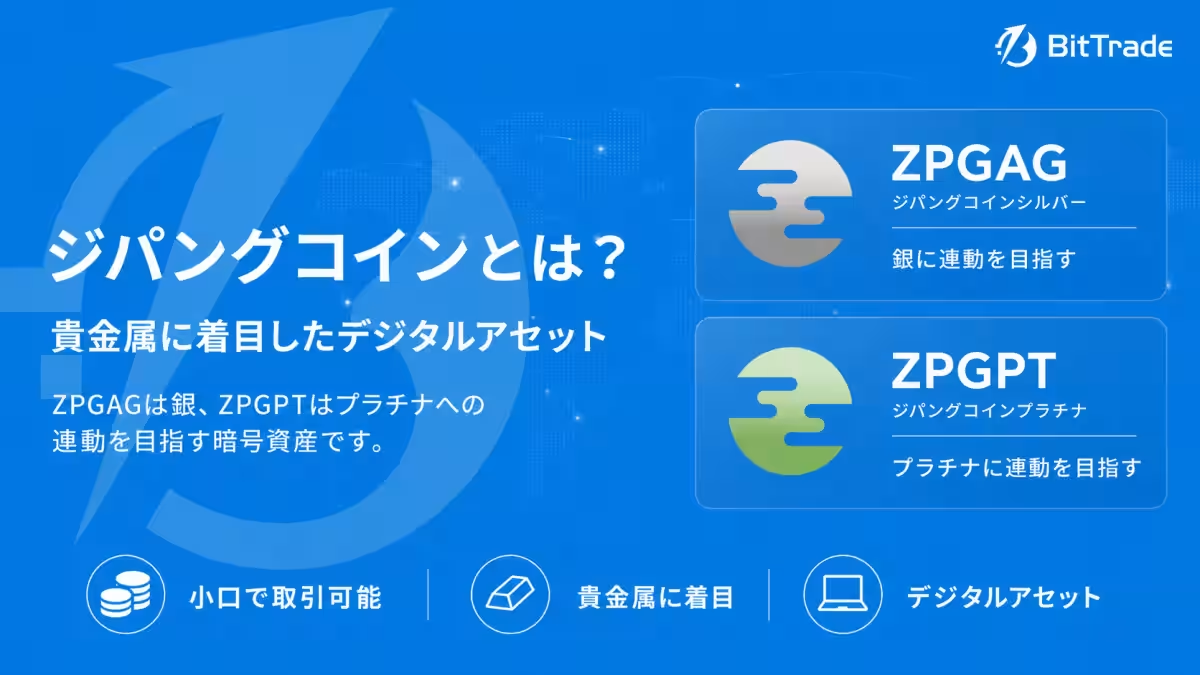
BitTrade has taken strides in this area by announcing the introduction of Zipangcoin Silver (ZPGAG) and Zipangcoin Platinum (ZPGPT), digital assets linked to physical precious metals, aligning with the growing interest in tangible investment assets within the RWA space.
Key Observation #4: The Rise of Stablecoins and Financial Infrastructure
May also showcased significant movements in stablecoin settlements and payment frameworks. The narrative surrounding cryptocurrencies is no longer limited to trading on price volatility. Stakeholders are actively utilizing these technologies to solve longstanding challenges in financial services, such as cross-border payment efficiencies and transactional transparency.
BitTrade's recent collaboration with JETRO exemplifies this trend, enhancing global business operations with blockchain technology by improving payment mechanisms and information logistics.
Conclusion: Redefining Cryptocurrency's Role in Financial Systems
Reflecting on the dynamics of May 2026, it is evident that cryptocurrency is transitioning from a speculative investment to a formidable component of financial infrastructure. With key developments in regulation, the integration of RWAs, and stabilized innovations in stablecoins and payment systems, the future landscape of the cryptocurrency market promises both opportunities and challenges. BitTrade remains committed to delivering insightful market reports, reinforcing community knowledge, and bridging the gap between cryptocurrency and practical financial use.
Through ongoing engagement with investors and stakeholders, BitTrade aims to elucidate the complex and evolving narrative of the cryptocurrency market.

Topics Business Technology)
【About Using Articles】
You can freely use the title and article content by linking to the page where the article is posted.
※ Images cannot be used.
【About Links】
Links are free to use.