



Sofaida's Journey: A Beacon of Hope in a Refugee Camp
Sofaida's Journey: A Beacon of Hope in a Refugee Camp
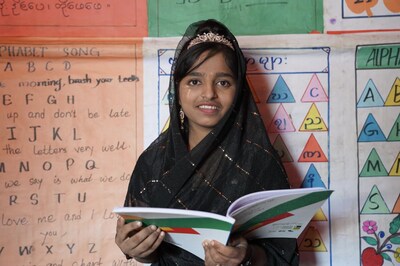
In the heart of Cox’s Bazar, Bangladesh, where hope flickers in a precarious environment, a 14-year-old named Sofaida embodies resilience and determination. Each morning, as the sun rises over the refugee camp, she begins her day, navigating a world that has tested her strength since her family fled Myanmar in 2017. Sofaida, the seventh of ten children, faced marked challenges due to her physical disability, which made daily activities, including attending school, an uphill battle for her.
Upon her arrival to Bangladesh, the overwhelming uncertainty of life in a refugee camp loomed large. Communal living conditions offered little solace, particularly for Sofaida, who relied heavily on family support to engage in education; her father would carry her to a learning center. However, cultural traditions and the impacts of the COVID-19 pandemic caused a significant setback in her educational journey. With classes disrupted, Sofaida found herself distanced from the learning she cherished.
Fortunately, in 2022, a lifeline appeared in the form of Save the Children’s Community-Based Learning Centers. Supported by Education Cannot Wait (ECW), these centers are dedicated solely to girls, creating a comfortable and secure learning environment close to their homes. This innovative approach aimed to dismantle the barriers that often prevented young girls from accessing education. It was here that Sofaida re-discovered her love for learning. “I enjoy coming here. After enrolling, I learned poetry, how to make words, the alphabet, and many other things,” she expressed with enthusiasm.
The unique structure of the Community-Based Learning Centers, staffed by both Bangladeshis and Rohingyas, reassured families of their daughters’ safety. This setting not only opened doors for education but also fostered friendships among young learners. For Sofaida, social connections blossomed alongside academic growth; she mentioned, “I study and play with my two good friends.”
Recognizing her limitations in mobility, the inclusion team engaged with Sofaida and provided tailored support. With a commitment to her exercises and rehabilitation, she has made remarkable progress. “Now I can walk quite well,” she proudly stated, highlighting her newfound independence.
Sofaida's teacher, Kulsoma, noted the positive transformation she has witnessed in Sofaida and her peers. The local culture imposes strict norms on Rohingya girls, often restricting their movement and education, but the environment within the Community-Based Learning Centers offers an oasis of empowerment. “Parents are grateful for the efforts made to provide education to their daughters without exposing them to risks linked to traditional schooling,” Kulsoma added.
ECW has played a pivotal role in addressing educational disparities faced by the Rohingya community, collaborating with various partners to secure safe learning spaces. Despite the challenges of overcrowding, natural disasters, and ongoing violence, these educational initiatives have proven crucial in delivering hope.
Sofaida’s journey represents a narrative of possibility. With the right resources and support, communities can cultivate environments where young girls can thrive, dream big, and write their own stories. The impact of these Community-Based Learning Centers stands as a powerful testament to the change that can occur through collective effort and determination. Empowering girls like Sofaida ensures that they not only claim their education but also illuminate the path for others in a similar plight. Each child holds immense potential, waiting to be nurtured, illustrating the importance of sustained commitment to educational initiatives in refugee settings.
*The name has been changed to protect her identity.
Topics Other)
【About Using Articles】
You can freely use the title and article content by linking to the page where the article is posted.
※ Images cannot be used.
【About Links】
Links are free to use.