



Round Table Discusses Consent-less Acquisitions Amidst Shareholder Activism
Event Recap: MNTSQ and Mori Hamada Host a Significant Roundtable
On March 3, 2026, MNTSQ, a pioneering startup based in Tokyo, Japan, recognized for its vision of ensuring fairness in all agreements, partnered with the Mori Hamada Law Firm to celebrate a new capital and business alliance through a collaborative roundtable event. This gathering brought together corporate legal professionals and featured esteemed lawyers from Mori Hamada as speakers, providing vital insights into the increasing concern of consent-less acquisitions and shareholder activism in the Japanese market.
Opening Remarks
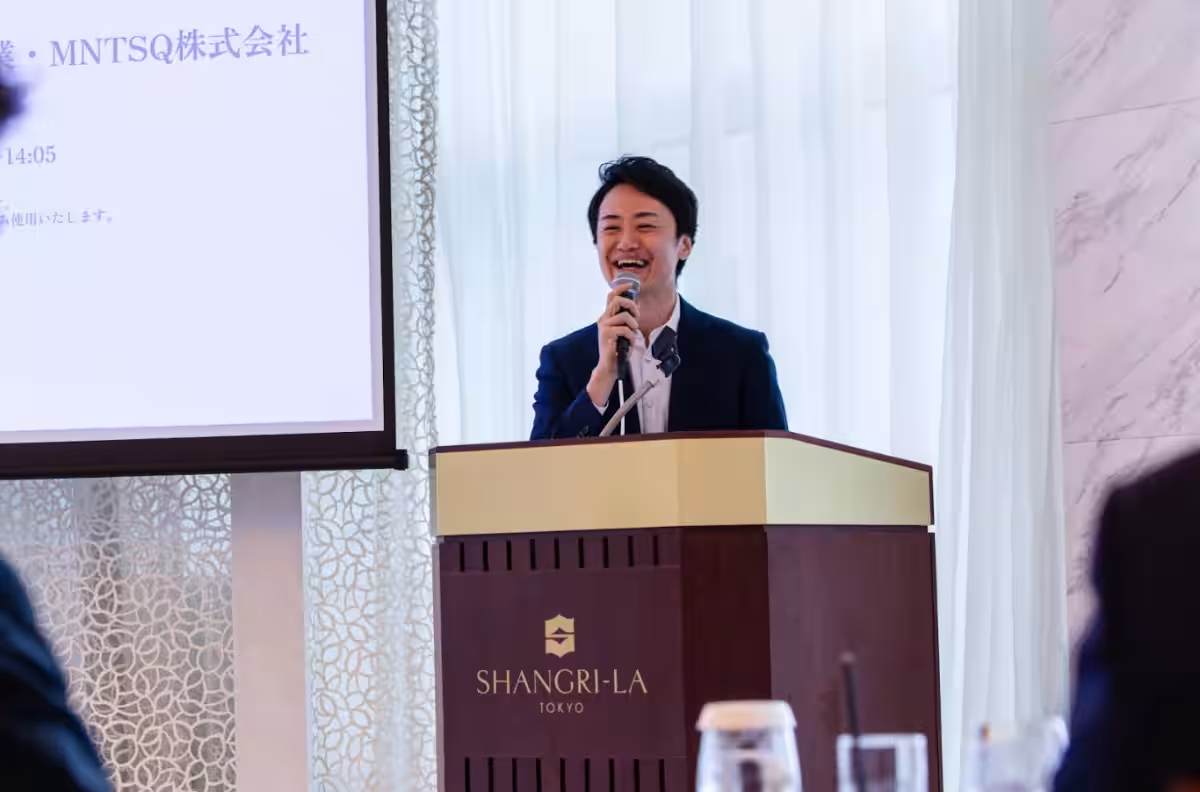
The event commenced with a welcoming speech by Ruhei Itaya, the CEO of MNTSQ. He expressed gratitude to all attendees for joining the inaugural collaborative event with Mori Hamada. Emphasizing the timeliness of the topics addressed—consent-less acquisitions and shareholder activism—Itaya encouraged participants to take home practical insights from the sessions led by distinguished legal experts. He conveyed a hopeful message that this roundtable would pave the way for innovative strategies for various companies in an era where the integration of technology and legal frameworks is essential.
Session 1: Guidelines for Corporate Acquisition Behavior
The first session was conducted by Manabu Ishikawa, managing partner and attorney at Mori Hamada. He unpacked the corporate acquisition behavior guidelines established by Japan's Ministry of Economy, Trade and Industry, focusing on criteria companies should consider when faced with unexpected acquisition proposals. Ishikawa noted a shift in the perception of acquisition proposals that lack management approval, previously seen as hostile. Recently, companies are evaluating these proposals based on their potential to enhance corporate value, which fundamentally changes the assessment framework.
Ishikawa emphasized that when a sincere acquisition proposal is presented, while the board must seriously evaluate it, they are not obliged to accept it. He urged companies to prepare to articulate their corporate value numerically, drawing comparisons between the acquisition proposal and the company’s growth strategy. This comprehensive analytical approach should guide corporate governance during this new era of guidelines.
Session 2: Latest Trends in Acquisition Response Policies and Countermeasures
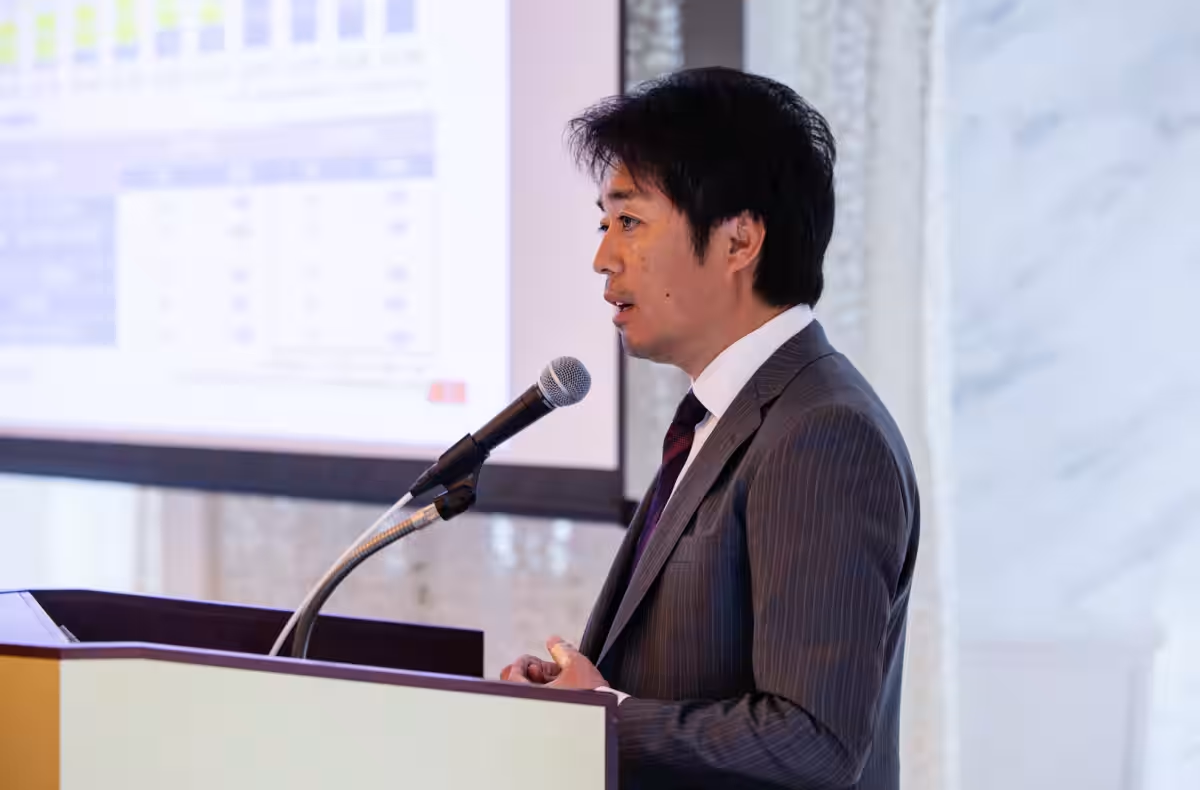
The second session, led by Ken Matsushita from Mori Hamada, examined the latest trends in defensive and countermeasures companies can adopt when facing acquisition threats. Highlighting a drastic reduction in the previously popular pre-warning acquisition defense strategies, Matsushita pointed to the rising instances of consent-less acquisitions and activist shareholders acquiring substantial stock. This has resulted in an increased focus among publicly traded companies on emergency measures against acquisitions.
Matsushita noted that more recent defensive strategies are designed to safeguard both corporate value and shareholders' collective interests. Existing approaches are evolving to include time-sensitive strategies that allow companies to seek better acquisition terms from alternative partners, such as White Knights. He elaborated on the implications of recent court cases and industry trends to evaluate the effectiveness of emergency response policies in acquisitions.
Session 3: Shareholder Activism and Corporate Preparedness
The third presentation featured Kohei Morita, a partner at Mori Hamada, discussing the importance of being prepared to address shareholder activism. He observed that modern activism is often articulated through logical and persuasive arguments, targeting governance weaknesses and allocation inefficiencies within companies, rather than being perceived as aggressive or unilateral actions.
In light of this evolving landscape, Morita advised companies against reflexively countering such activism with blanket denials. Instead, he stressed the necessity for firms to calmly analyze how investors perceive them, noting areas for improvement. Developing a corporate preparedness strategy allows companies to engage with investors meaningfully and constructively, which is key to building a resilient corporate culture that thrives amidst challenges posed by shareholder activism.
Conclusion and Future Directions
Concluding the program, Manabu Ishikawa shared insights on the future of legal affairs emphasized by legal tech advancements. He noted that many lawyers in his firm, both young and experienced, actively use AI tools, which not only enhance efficiency but also elevate professional capabilities. Ishikawa firmly stated that collaborative efforts between MNTSQ and Mori Hamada aim to shape the future of legal practices for upcoming generations.
Participant Feedback
Participants shared positive feedback on the event, highlighting the valuable clarity brought to complex topics and expressing intentions to create manuals for handling acquisition proposals. The consensus recognized the importance of aligning daily contract operations with strategic resources, which the insights from the roundtable greatly facilitated.
About MNTSQ
Founded on November 14, 2018, MNTSQ is a startup committed to ensuring fairness in agreements, creatively merging legal expertise with cutting-edge AI technology. With partnerships with top law firms, MNTSQ offers services like MNTSQ CLM (Contract Lifecycle Management), transforming corporate legal practices for enhanced efficiency and governance.
For more information, visit MNTSQ.


Topics Business Technology)
【About Using Articles】
You can freely use the title and article content by linking to the page where the article is posted.
※ Images cannot be used.
【About Links】
Links are free to use.