



Takumi by GMO's Guard Achieves Over 20 Million Daily Downloads
Takumi by GMO: Revolutionizing Software Security with Guard Feature
In an age where software supply chain attacks are escalating, the introduction of the Guard feature by Takumi by GMO has marked a significant milestone in cybersecurity for developers. Launched on March 2026, Takumi — developed by GMO Flatt Security — has captured the attention of the tech community as it recorded an astonishing 20 million downloads in a single day on May 19, 2026.
What's the Guard Feature?
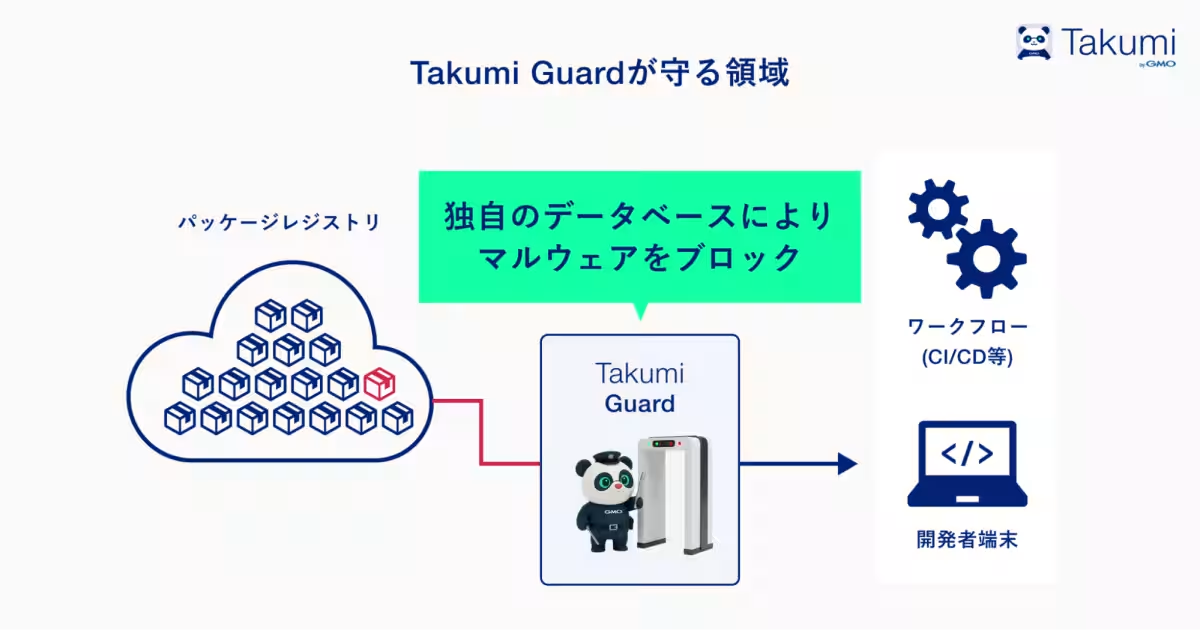
The essence of the Guard feature lies in its ability to intercept and block malicious packages before they can infiltrate a developer's environment. Acting as a proxy between the package registry and the developer's workspace, it verifies packages in real-time during the download process. If a package is deemed harmful, the system automatically blocks it from reaching developer devices or CI/CD environments. The beauty of this system is that it does not require any changes to existing code or workflows. With just a single command in the terminal, installation can be completed almost effortlessly.
Previously, security tools like SBOMs (Software Bill of Materials) could only scan already installed packages, failing to prevent malware from entering systems in the first place. A glaring example of this was the axios compromise in March 2026, where a malicious version of this widely used HTTP client library was available on npm for only about three hours, leading to significant damage to various development environments. In contrast, the Guard feature proactively prevents such malicious packages from penetrating systems.
With support not only for npm, but also PyPI and RubyGems, Takumi ensures robust defense across major package ecosystems. Whether for individual developers or larger organizations, the Guard feature is available for free, also offering a paid bulk setup option for corporate customers wishing to implement it organization-wide.
For more details, visit the following Guard feature website.
The Surge: Awareness of Software Supply Chain Threats
The rapid adoption of the Guard feature can largely be attributed to the rise of software supply chain attacks in 2026. In late March, the axios library was breached due to a social engineering attack on a single maintainer, exposing a vulnerability that affected countless systems. This incident underscored a critical issue: a single compromise in prominent packages can create widespread risks globally.
The Role of AI in Modern Development
The proliferation of coding agents that utilize AI has further amplified the risks associated with software development. While AI can autonomously install packages, the accountability for validating security ultimately falls on developers. This structural problem has become apparent with the rise of
Topics Business Technology)
【About Using Articles】
You can freely use the title and article content by linking to the page where the article is posted.
※ Images cannot be used.
【About Links】
Links are free to use.