




Revolutionary AI Tool for Rectovaginal Fistula Surgery by Nagaokakyo Hospital
Nagaokakyo Hospital Develops AI Tool for Rectovaginal Fistula Repair
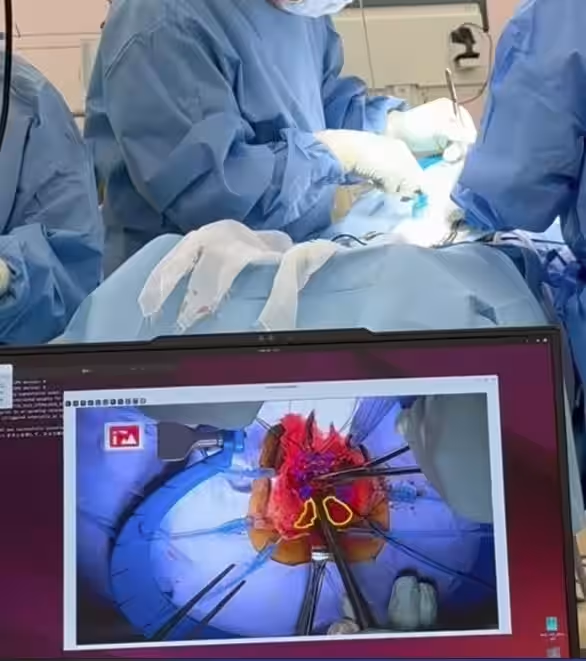
Nagaokakyo Hospital, in collaboration with Professor Tatsushi Fukuka's team from the Fukuoka Institute of Technology, has recently made headlines by publishing a research paper on an innovative AI-driven educational tool for rectovaginal fistula surgery. This groundbreaking development aims to enhance the learning experience for medical professionals and ultimately improve patient outcomes for this rare condition.
What is Rectovaginal Fistula?
Rectovaginal fistula is an extremely rare obstetric complication, often resulting from perineal tears during vaginal delivery. Such injuries may lead to the destruction of the perineal body, allowing a pathological connection between the rectum and vagina. Patients suffering from this condition experience a range of distressing symptoms, including gas and fecal incontinence, chronic vaginal infections, and difficulties during sexual activity, severely impacting their quality of life (QOL).
The Challenges of Treatment
Despite being a recognized health issue, the treatment of rectovaginal fistula faces significant obstacles. Unlike more common conditions, there has yet to be a standardized treatment protocol established. Many patients have been told that their condition is untreatable or directed towards suboptimal procedures, such as the construction of a colostomy. The key challenge in repairing this complex issue lies in accurately identifying the perineal body, a task that requires extensive surgical experience. Attempts to use AI for training in this context have been limited due to the scarcity of available cases for machine learning.
The Research Overview
Between September 2024 and May 2025, Nagaokakyo Hospital aims to develop an automated tool for identifying the anatomical landmarks crucial for rectovaginal fistula repair surgery. This will be accomplished using anonymized surgical images from past patients, integrating advanced semantic segmentation techniques that allow for high-precision learning despite limited sample sizes. Prior to the tool’s implementation, the study will assess surgical durations, blood loss, and the volume and quality of interactions between trainees and instructors in five cases each, both before and after using the new AI system. Initial findings from these pilot studies suggest a trend toward reduced blood loss and increased engagement during instructional sessions, indicating promising educational benefits.
Significance of the Research
The potential implications of this research extend beyond academic curiosity. By enabling wider access to surgical techniques currently only available in specialized centers like Nagaokakyo Hospital, more patients may find effective treatment options close to their homes. Those previously deemed 'untreatable' now have a chance for improved QOL through professional surgical intervention. The research team is committed to refining this educational tool further and expanding its trials in diverse clinical settings to enhance its reliability.
Call to Action for Healthcare Providers
Although rectovaginal fistula is rare, healthcare providers encountering similar cases are encouraged to consider referring patients to specialized facilities for advanced treatment options.
Recommendations for Patients and Families
For individuals or families dealing with symptoms arising from perineal damage post-vaginal delivery, seeking consultation from specialized medical facilities is highly recommended.
Published Research Information
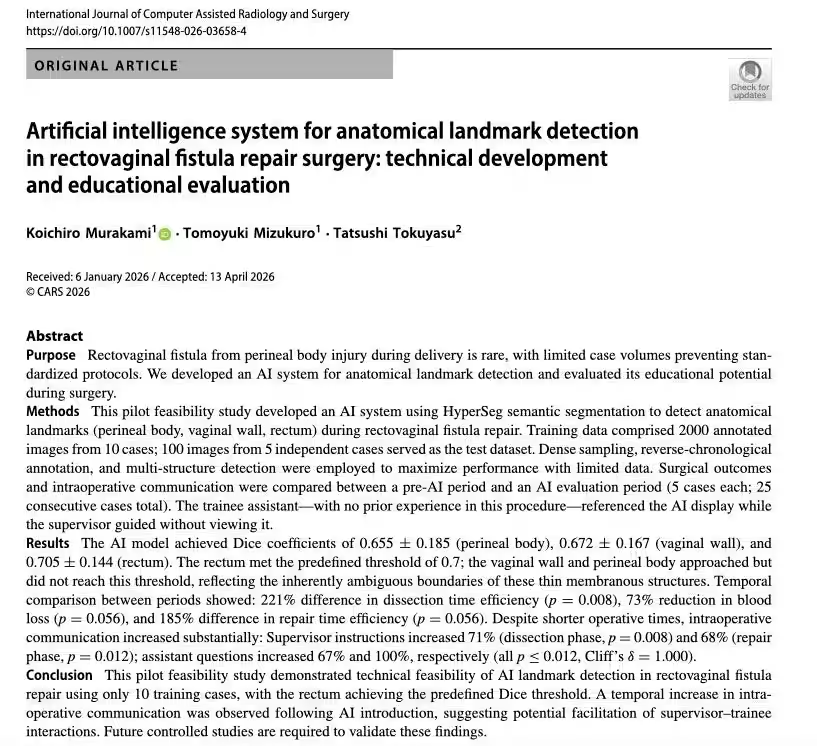
The research paper titled "Artificial Intelligence System for Anatomical Landmark Detection in Rectovaginal Fistula Repair Surgery: Technical Development and Educational Evaluation" features contributions from Koichiro Murakami and Tomoyuki Mizukuro from Nagaokakyo Hospital and Tatsushi Fukuka from the Fukuoka Institute of Technology. It was published online on June 5, 2026, in the prestigious journal IJCARS: International Journal of Computer Assisted Radiology and Surgery.
For those interested in a deeper dive into the findings and methodology of this study, you can access the full article here.
The team also plans to present their findings at the CARS International Conference taking place on July 3, 2026, at Nagoya University.
Conclusion
In summary, the collaborative efforts between Nagaokakyo Hospital and Fukuoka Institute of Technology showcase the innovative intersection of AI and healthcare. As they work to refine the technology and distribute their findings, a new horizon in the treatment and understanding of rectovaginal fistula surgeries awaits both healthcare professionals and patients facing this challenging condition.

Topics Health)
【About Using Articles】
You can freely use the title and article content by linking to the page where the article is posted.
※ Images cannot be used.
【About Links】
Links are free to use.