



Myth Busting: Daily Yogurt Consumption and Its Impact on Weight Loss
Debunking the Yogurt Diet Myth
As summer approaches, many are starting to focus on their body lines and weight management. Yogurt is often hailed as a key player in any successful diet plan, but recent analysis from SheepMedical's “菌ドック” (Bacteria Dock) raises questions about this widely held belief. Their extensive study on gut health found that yogurt consumption doesn’t statistically correlate with Body Mass Index (BMI) among women, suggesting that the popular notion of "yogurt for weight loss" might be more myth than fact.
The Findings
Imagine being part of a research initiative analyzing the gut microbiome of approximately 20,000 individuals. The “菌ドック” service utilizes advanced next-generation sequencing technology to scrutinize gut bacteria. Among these participants, specifically targeting over 13,493 women aged 20 and older, the findings revealed no meaningful relationship between the frequency of yogurt consumption and BMI. This contradicts the long-standing belief that intake of yogurt can lead to weight loss or reduce the likelihood of gaining weight.
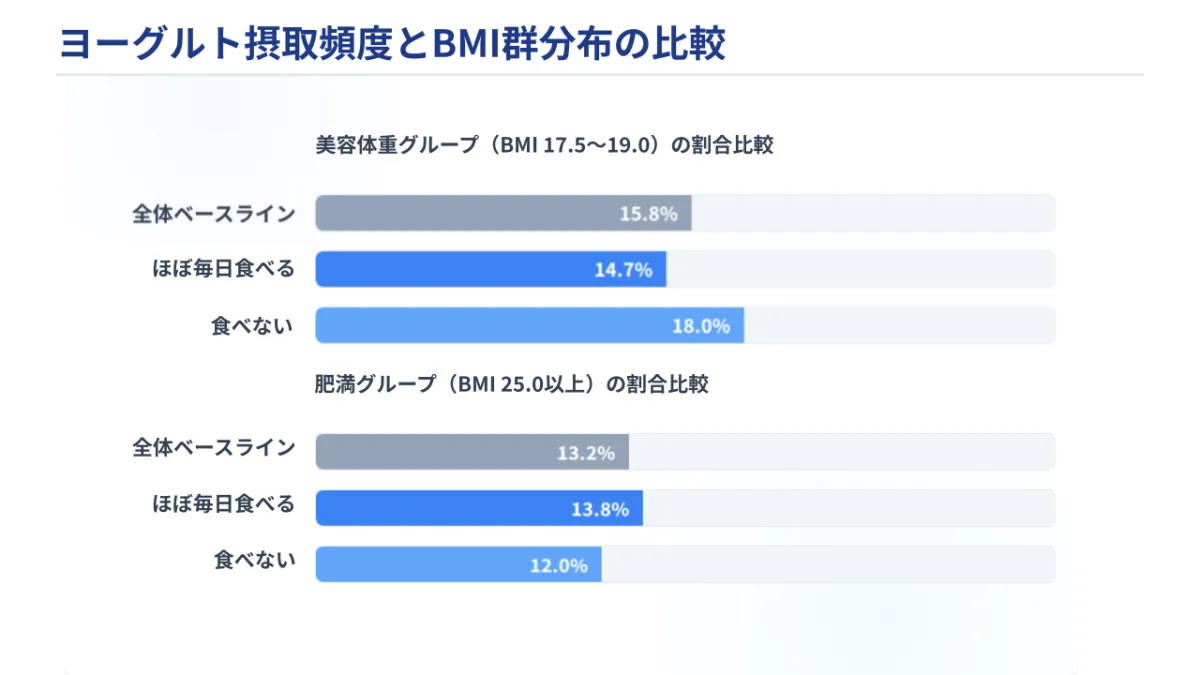
This analysis involved categorizing participants into two groups based on their BMI: the beauty weight group (BMI 17.5–19.0) and the obesity group (BMI 25.0 and above). The data indicated that changes in yogurt consumption frequency did not significantly influence the proportion of individuals in either group. Essentially, the baseline figure for yogurt consumption remained consistent across BMI classifications, leading researchers to conclude that there is no statistically significant relationship between the two.
Unexpected Trends
When scrutinizing the data further, it became evident that those in the beauty weight group consumed yogurt and dairy at a slightly lower frequency compared to the general population, while those in the obesity group exhibited a marginally higher frequency. Thus, contrary to the assumption that higher yogurt consumption correlates with lower weight, the reverse trend appeared.
The Role of Lactobacillus Gasseri
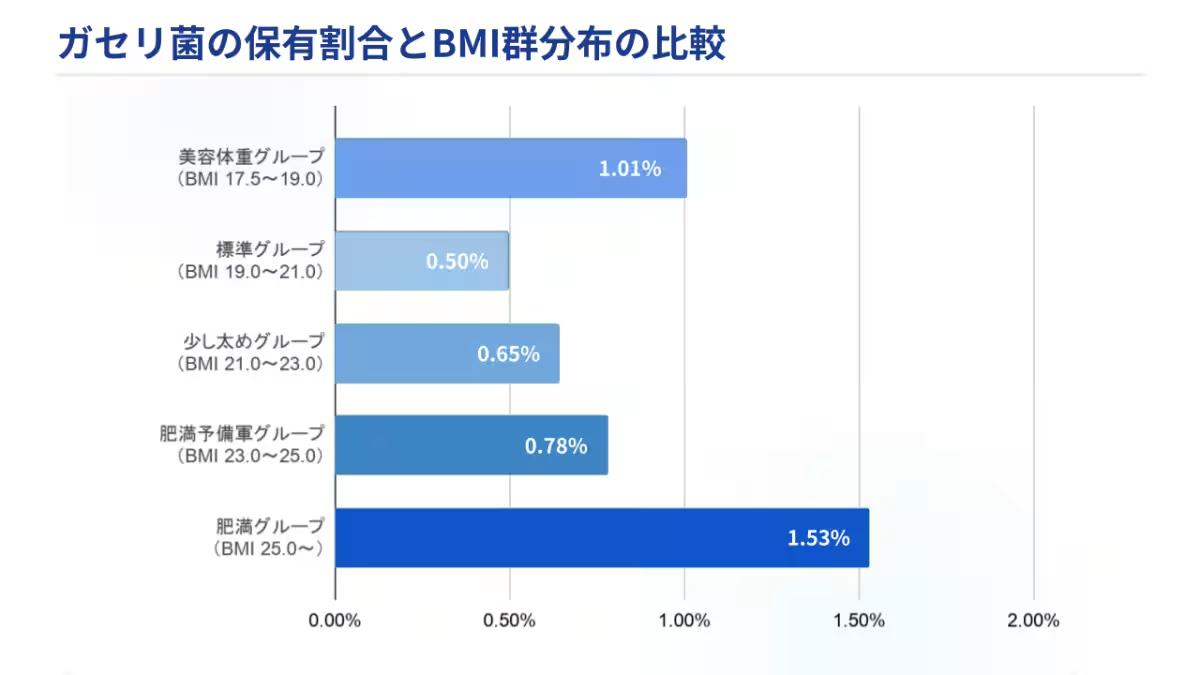
The study also probed the relationship between the presence of the well-known probiotic, Lactobacillus gasseri, and BMI. While it’s commonly believed that gasseri aids in reducing visceral fat, an analysis again revealed surprising results. The U-shaped distribution showed lower gasseri prevalence in the standard BMI range (19.0–21.0), whereas the beauty weight and obesity groups displayed higher levels than the average.
Digging deeper, it turned out that those in the obesity group had a 1.5 times higher rate of gasseri compared to their beauty weight counterparts. This finding contradicts the popular mantra linking higher gasseri presence directly with weight loss.
The Explanations
So, what could account for these surprising correlations? The researchers proposed two main factors:
1. Causation Reversal: Individuals concerned about their weight might be more inclined to consume products containing gasseri and yogurt for perceived health benefits, creating a reverse causation scenario where the act of consuming these products is an attempt to counteract an already established weight issue rather than being a preventative measure against weight gain.
2. Digestive Dynamics: The human digestive tract absorbs most fats in the small intestine, where the presence of gasseri, which primarily resides in the large intestine, doesn't directly influence the absorption of calories or fats consumed beforehand. Hence, mere presence of gasseri doesn’t guarantee weight loss or a lower BMI.
Interestingly, while some studies have recorded gasseri's impact on weight loss, these effects are contingent upon specific factors rather than universally applying to all cases.
The Real Culprits of Obesity
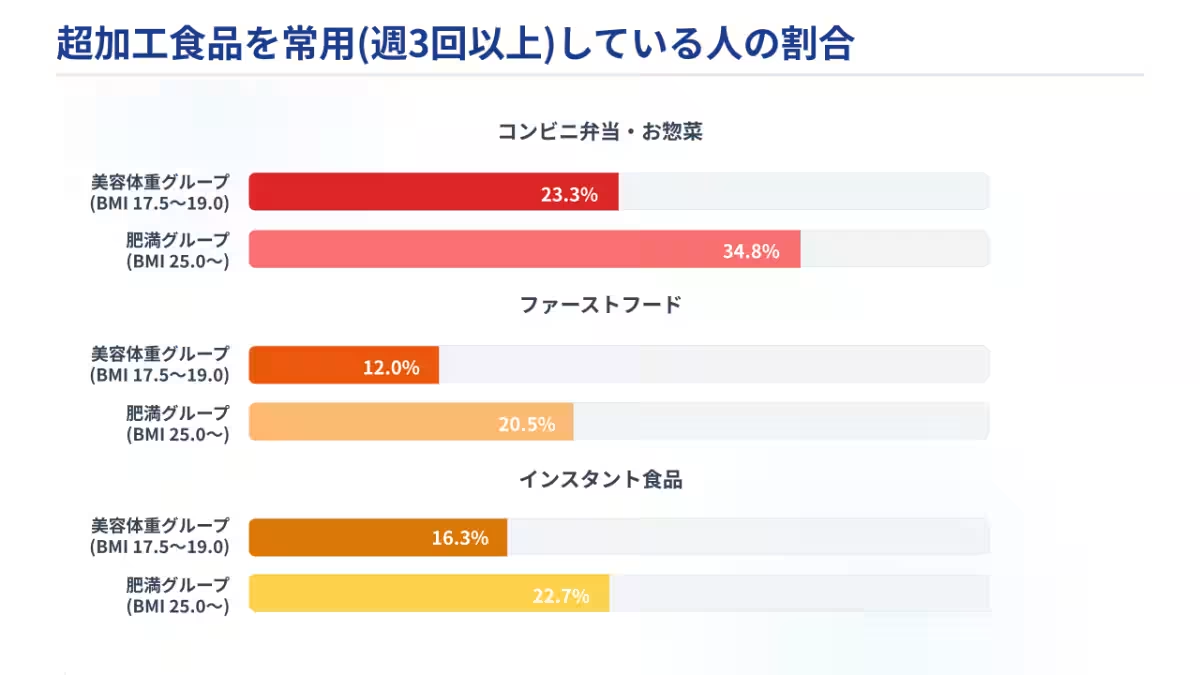
The most robust correlation with higher BMI (over 25.0) was found with convenience foods. Data demonstrated that 34.8% of the obesity group frequently consumed convenience store meals, 20.5% ate fast food, and 22.7% opted for instant foods at least three times a week. These trends reveal that an over-reliance on ultra-processed foods rather than the absence of yogurt or probiotic-rich foods may drive obesity rates.
Conclusion
Ultimately, this research underscores the necessity for a holistic approach to dietary habits. The notion that merely consuming yogurt or gasseri entitles one to a slimmer figure appears unfounded. Therefore, participants would benefit more from eliminating ultra-processed foods rather than seeking solace in trending health products.
Practical Recommendations
- - Avoid relying on “health foods” as a shield: It's essential not to succumb to the belief that consuming yogurt is a ticket to health without evaluating caloric and nutritional balance in one's entire diet.
- - Reduce the frequency of ultra-processed food intake: While complete elimination may be unrealistic, decreasing their consumption and substituting them with simple home-cooked meals can benefit overall health.
- - Focus on minimally processed foods: Making food choices that retain the integrity and form of original ingredients, such as vegetables, meats, fish, and grains, promotes better eating habits.
The foundation of a healthy body begins with reassessing everyday dietary choices rather than chasing after quick fixes. As SheepMedical moves forward, we remain committed to providing accurate data grounded in reality, aiding your genuine journey toward health.
Topics Health)
【About Using Articles】
You can freely use the title and article content by linking to the page where the article is posted.
※ Images cannot be used.
【About Links】
Links are free to use.