




Exploring the Challenges of Continuous Self-Investment Among Adults
Understanding Adult Self-Investment Challenges
In a world where lifelong learning and self-improvement are increasingly valued, adults face unique challenges in investing in themselves. A recent survey conducted by For-it Co., Ltd., the operator of the affiliate platform 'afb', shed light on these challenges among 500 participants aged teens through sixties across Japan.
Survey Background
In recent years, there has been a surge of interest in reskilling, acquiring certifications, and adopting healthier habits. However, many individuals grapple with the anxiety of not being able to sustain their new endeavors. Understanding the barriers that hinder persistent engagement is crucial, especially as self-investments like education or hobbies yield results only through consistent effort. Thus, the survey aimed to identify the primary anxieties surrounding continued self-investment.
Survey Overview
- - Participants: 500 men and women aged 10s to 60s nationwide
- - Method: Online research
- - Date of Survey: March 2, 2026
Key Findings: Major Concerns About Continuation
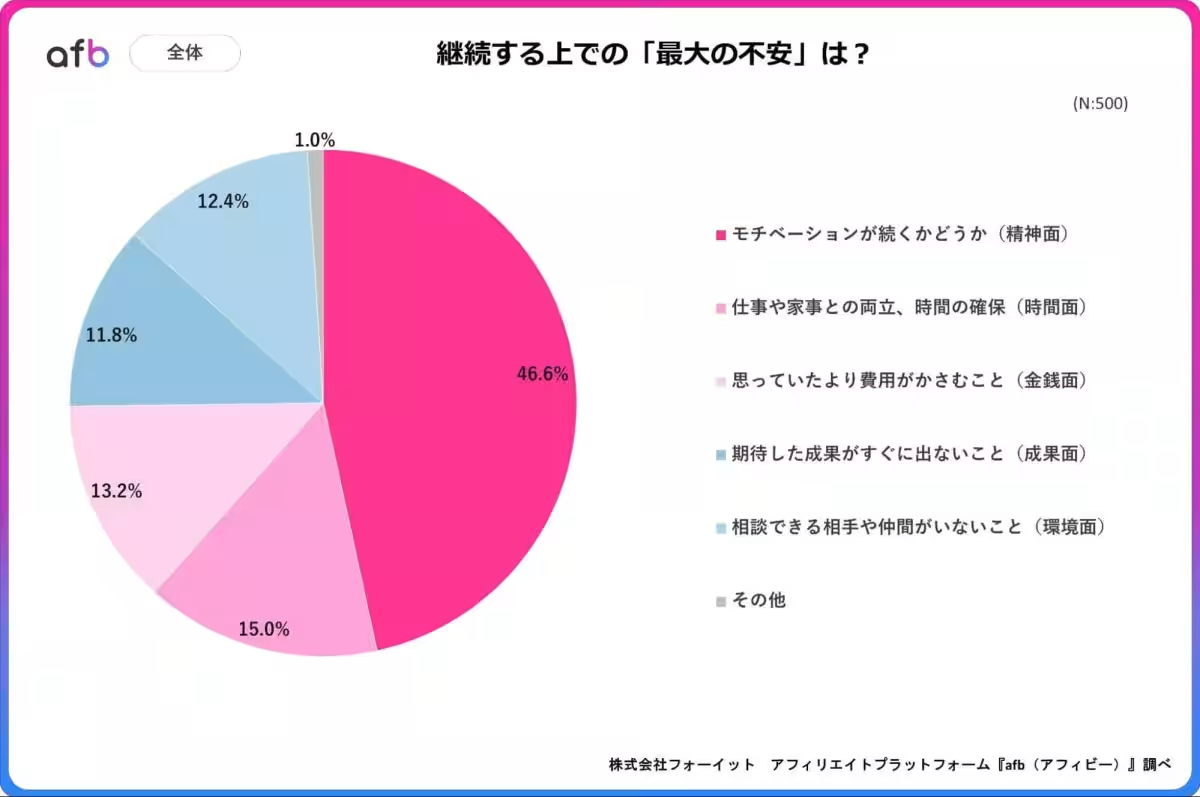
When asked, 'What is your greatest fear about maintaining your self-investment?', a striking 46.0% of respondents cited 'the challenge of maintaining motivation (mental aspect)' as their prime concern. This was followed by:
- - 15.0% for 'balancing work and household responsibilities (time aspect)',
- - 13.2% for 'higher costs than expected (financial aspect)'.
Age-Related Insights
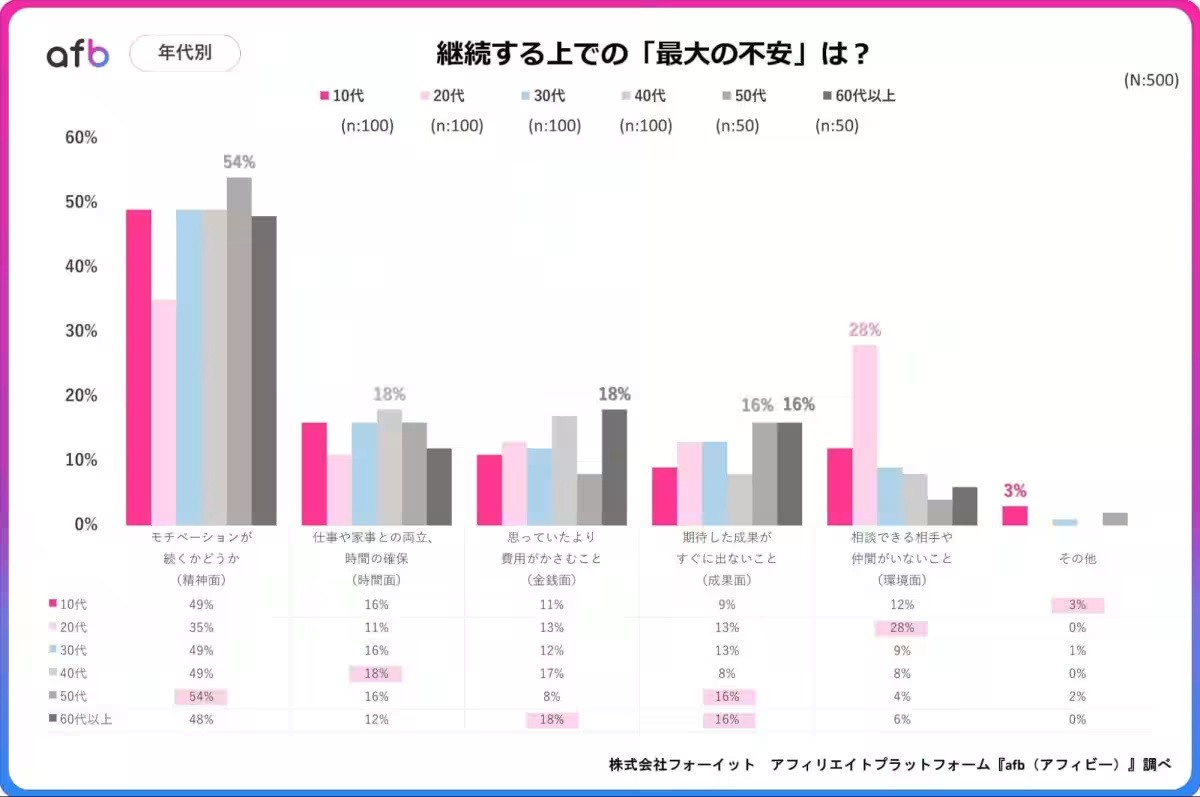
The responses revealed an interesting generational pattern. Consistently, the anxiety regarding 'motivation sustainability' appeared across all age groups. However, 54.0% of those in their fifties expressed the highest concern, highlighting a prevalent feeling of insufficient confidence to maintain new challenges. It appears that as people age, their daily routines and mindsets become more rigid, increasing the barriers to forming new habits.
In contrast, respondents over age 60 showed significant concern about financial outlay, with 18.0% worrying about unexpected costs while 16.0% were anxious about not seeing desired results quickly. This illustrates an awareness of the need to manage limited time and financial resources cautiously. Notably, individuals in their twenties stand out, with 28.0% expressing worries about lacking companionship or mentors in their journeys, indicating a pronounced sense of isolation.
Differences in Unmarried vs. Married Respondents
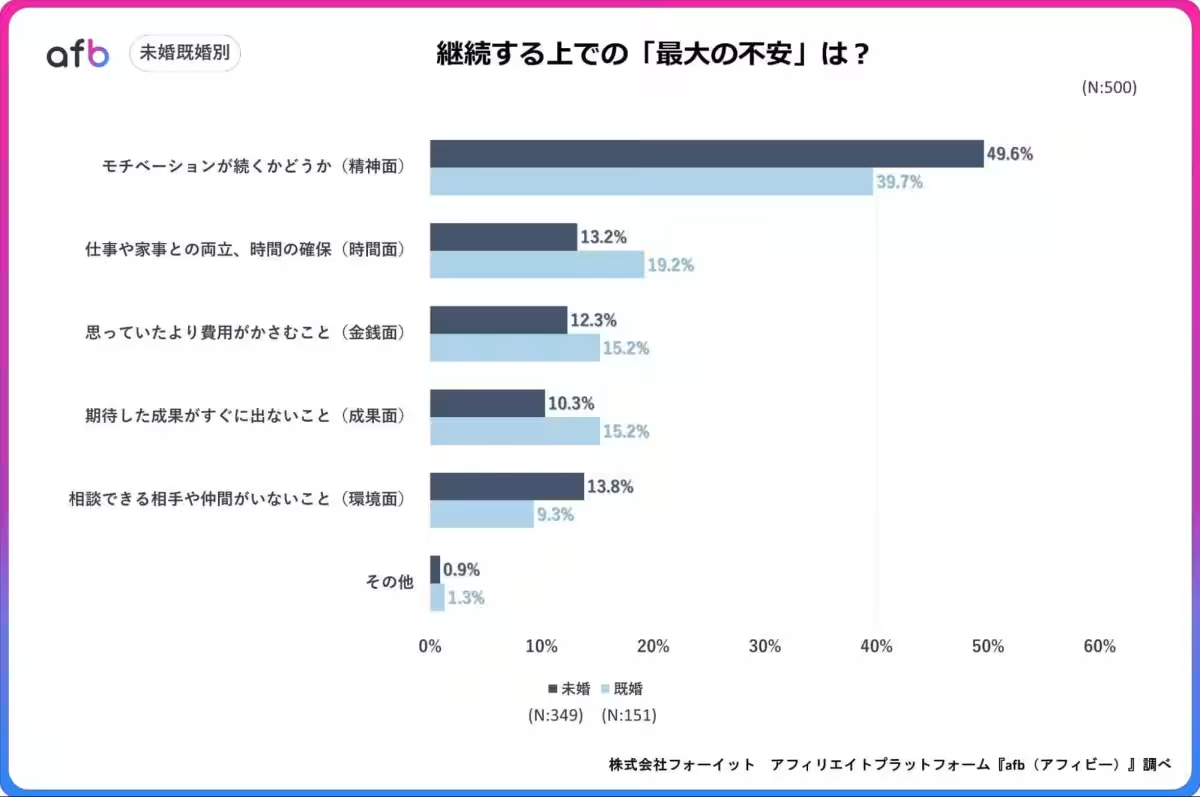
When examining responses from unmarrieds and marrieds, motivational continuity remained the dominant concern. Yet, 49.6% of unmarrieds feared commitment, compared to 39.7% of marrieds. While unmarrieds enjoy more freedom, they may struggle with the absence of structured support systems, making self-management difficult. Meanwhile, married individuals feel increased pressure from family obligations, reflected in the 19.2% who noted challenges in balancing time.
This implies that while unmarrieds face emotional hurdles, marrieds grapple with practical barriers.
Professional Impact on Continuity Challenges
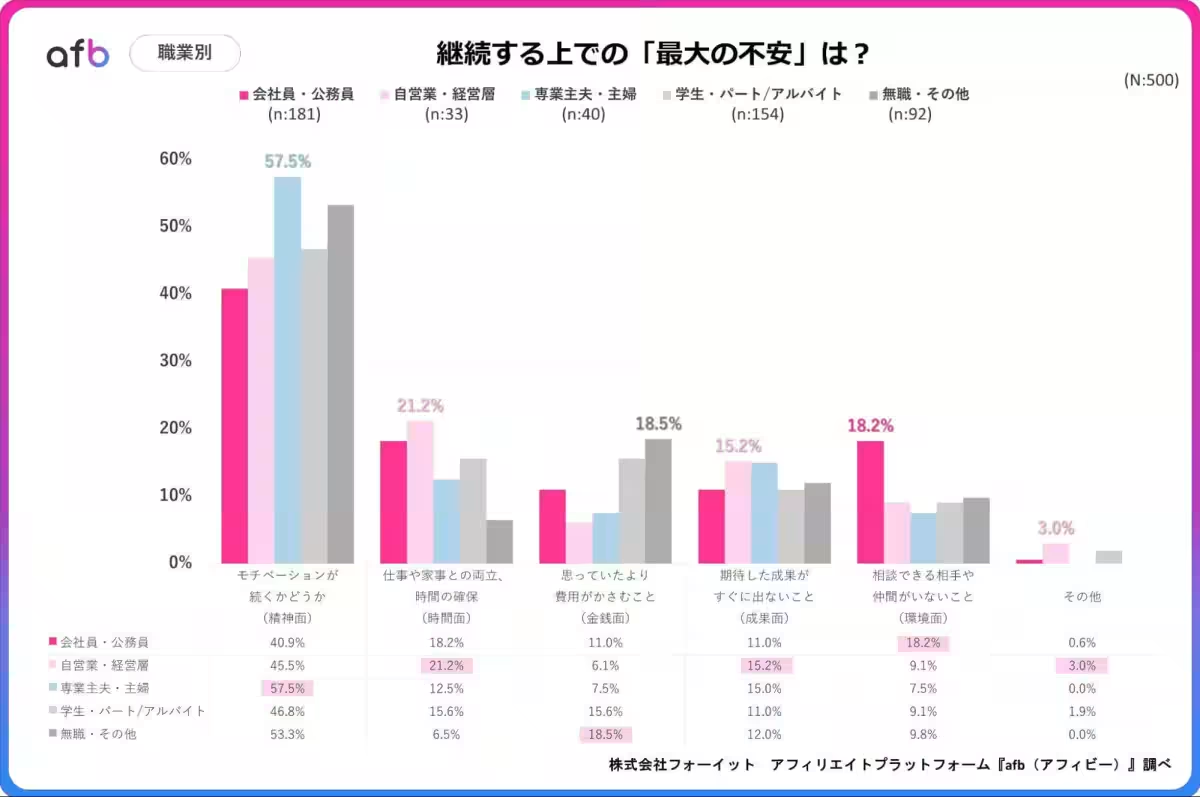
Professionally, concerns about maintaining motivation were uniform across various occupations, affirming that maintaining willpower is the central barrier to continuity. Notably, stay-at-home parents indicated the highest concerns, at 57.5%, likely due to prioritizing responsibilities over personal pursuits. The absence of clear deadlines or evaluations compounds their challenge. Conversely, employees and public servants reported notable feelings of isolation from peers while pursuing self-improvement, indicating a lack of community engagement.
For freelancers and entrepreneurs, time constraints stood out, as their blurred work-life boundaries can complicate the allocation of uninterrupted time for self-investment activities. On the other hand, students and part-timers frequently cited cost as a significant barrier, indicating that unstable income can present challenges to their ability to sustain investments.
Conclusion
In summary, the results of the For-it's survey have underscored that while the difficulty of maintaining motivation appears to be a common thread, the specifics of obstacles differ significantly between age, marital status, and profession. Addressing these challenges may require tailored strategies that rightfully consider various demographic signatures. As we move forward in an increasingly competitive and challenging world, continuous self-improvement remains a valued investment that should not be overshadowed by the barriers faced in its pursuit.


Topics People & Culture)
【About Using Articles】
You can freely use the title and article content by linking to the page where the article is posted.
※ Images cannot be used.
【About Links】
Links are free to use.