



Exploring Patient Centricity: Importance, Trends, and Challenges in Healthcare
Understanding Patient Centricity: A Comprehensive Study
In the evolving landscape of healthcare, the concept of Patient Centricity has gained prominence. Seed Planning, a company based in Bunkyo-ku, Tokyo, recently conducted a study that delves into the essence of Patient Centricity. This study aims to highlight the growing importance of incorporating patient perspectives into medical and pharmaceutical practices.
Background and Purpose of the Study
The complexity and individualization of diseases have made it imperative for healthcare providers to adopt a patient-centric approach that prioritizes the experiences and decision-making processes of the patients. Patients today expect not only effective treatments but also support that aligns with their values, backgrounds, and lifestyles. Consequently, marketing strategies and information dissemination within healthcare and pharmaceutical companies must be rooted in a profound understanding of patients’ needs.
As more companies embrace the ethos of Patient Centricity, there remains a gap in sharing necessary research methodologies and expertise. Companies often grapple with the challenge of translating patient feedback into strategic actions, particularly in the realm of Patient Journey studies. These studies, while increasingly adopted, sometimes fail to serve their purpose—translating insights into actionable decision-making.
To address these challenges, Seed Planning’s research systematically organizes the fundamental concepts of Patient Centricity, alongside the various investigative methods relevant to this area. Moreover, the study features interviews with practitioners, illuminating the realizations and challenges that arise in the course of implementing patient-centered practices. This research seeks to provide practical insights on how to translate principles into work practices effectively, thereby enhancing corporate value through a patient-centric approach.
Key Findings from the Research
- - A clear and practical organization of the fundamental concepts and latest trends in Patient Centricity.
- - Interviews with diverse practitioners within the healthcare sector, showcasing their experiences, hurdles, and methods of application.
- - An analysis of the growing contract business market influenced by advancements in regenerative medicine and cell therapy.
- - A guide designed for a broad audience—from novices to department heads and executive management—designed to bridge understanding and practice.
The Scope of Patient Centricity Research
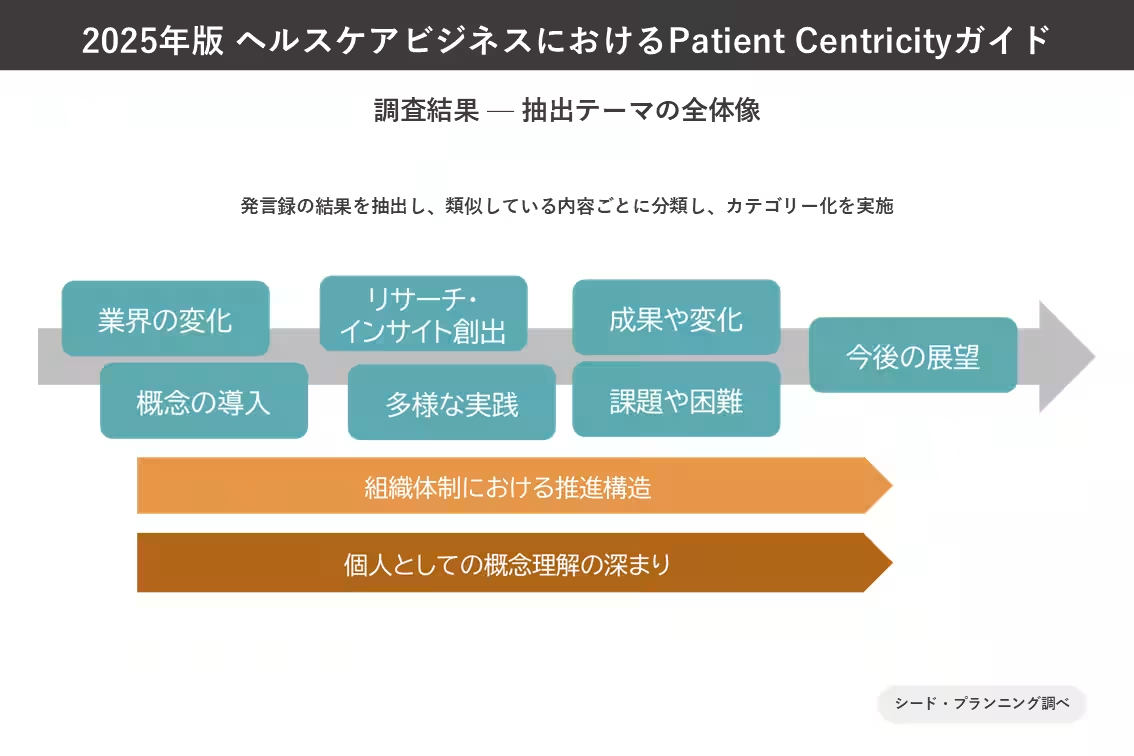
The study categorizes insights from interviews conducted with marketing, business development, and corporate planning professionals involved in the promotion and practice of Patient Centricity into nine thematic areas. These themes include:
- - Industry Changes and Concept Introduction
- - Research and Insight Generation, alongside Diverse Practices
- - Achievements and Changes, as well as Challenges and Difficulties
- - Future Outlook
- - Organizational Structures for Promotion
- - Deepening Personal Understanding of the Concept
By organizing these themes, the study presents a multifaceted overview of Patient Centricity as articulated by practitioners.
Research Details
- - Target Participants: Eight healthcare professionals with experience related to Patient Centricity.
- - Research Methodology: In-depth interviews conducted either face-to-face or through online platforms, supplemented by information gathered from various texts and websites.
- - Research Focus Areas: The understanding of Patient Centricity, practical examples, lessons learned, changes observed, and future perspectives.
- - Research Duration: From June 2025 to October 2025.
Conclusion
In understanding Patient Centricity, Seed Planning's latest research not only compiles significant trends and insights but serves as a pivotal guide for healthcare organizations aiming to align their strategies with patient needs strategically. For those interested in exploring the full findings and implications of this study, additional details can be found on Seed Planning's official website.
For inquiries regarding this research, please contact:
Seed Planning Public Relations
Email: [email protected]
Topics Health)

【About Using Articles】
You can freely use the title and article content by linking to the page where the article is posted.
※ Images cannot be used.
【About Links】
Links are free to use.