



Helical Fusion Receives Tokyo's Funding to Promote Zero-Emission Innovations
Helical Fusion Secures Funding for Cutting-Edge Innovations
Introduction
Helical Fusion, based in Tokyo, is making strides toward the practical application of fusion energy—a next-generation clean energy source. Recently, the company has been selected for Tokyo's innovation promotion project aimed at achieving Zero Emission Tokyo. This initiative will provide financial support over three years to develop products and services that contribute to sustainability.
The Grant and Its Significance
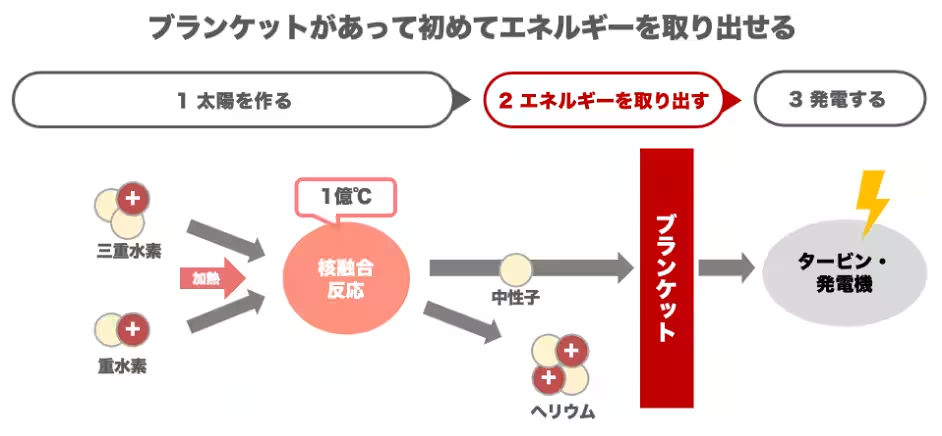
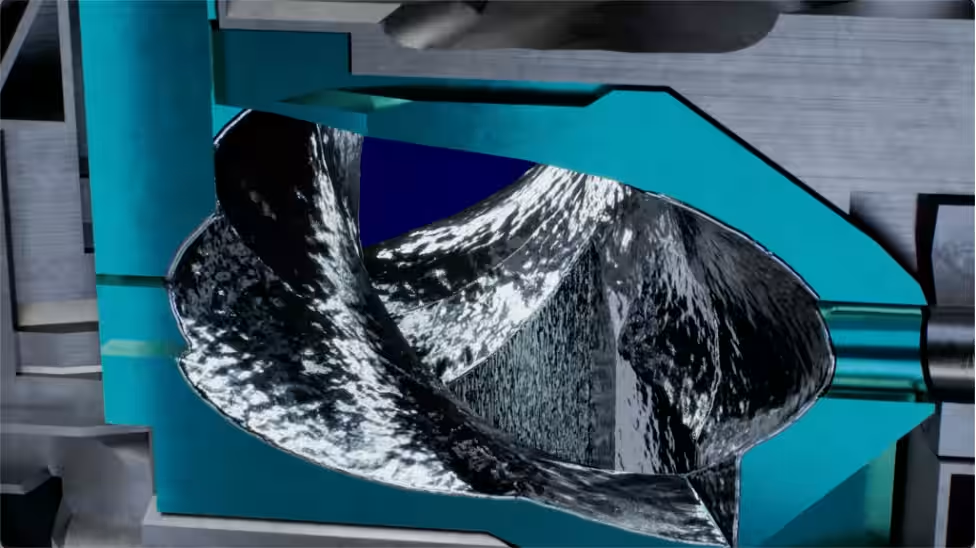
This funding, which could reach up to 10 billion yen, targets ventures and small businesses within Tokyo. The primary focus of Helical Fusion’s project is to develop a new liquid metal wall designed to enhance the lifespan of fusion power plants. This innovative design will utilize liquid metal as a core component, known as the “blanket,” that harnesses energy generated from fusion reactions. As fusion energy is lauded for its potential to generate electricity without CO₂ emissions, the new blanket design aims to balance efficiency and durability in power generation.
Understanding Fusion Energy
Fusion energy operates on the same principles as the sun, promising a clean and abundant energy source. It employs hydrogen-derived fuels from oceans, ensuring a safer production process without the risk of runaway reactions. This technology could fundamentally resolve the global energy crisis by offering a sustainable solution to increasing energy demands.
The Role of the Blanket
Within a fusion power plant, the blanket faces extreme thermal loads due to contact with high-temperature plasma. To maintain stable operations over time, efficient mechanisms to continuously extract heat while minimizing impacts on surrounding components are essential. Currently, there is no universally established method for this. The newly proposed liquid metal wall aims to provide a groundbreaking approach to this challenge by integrating dynamic systems that overcome the limitations of traditional solid material blankets. This will improve maintenance, efficiency, and the plant’s operational lifespan.
Collaborative Ventures to Drive Innovation
Helical Fusion is committed to fostering partnerships with domestic manufacturers, universities, and research institutes to consolidate expertise in material science, mechanical engineering, and heat control technologies. Collaborative development is already underway with companies like Ryokiko Mold Industry in Aichi and Sugikawa Electric Industry in Ibaraki, as well as academic institutions including Aoyama Gakuin University. By combining Japan's advanced manufacturing capabilities and research foundations, the project aims to leverage Tokyo's support effectively, propelling the development of practical fusion energy solutions.
The Importance of Collaboration
The CEO of Helical Fusion, Takashi Taguchi, emphasizes that the implementation of fusion energy cannot succeed in isolation. It requires the collaboration of diverse entities, including businesses, research institutions, and government bodies. With the recent funding selection, Helical Fusion aims to create new industries from Tokyo, aspiring to establish fusion energy as a major power source alongside renewables in the future.
The Helix Program
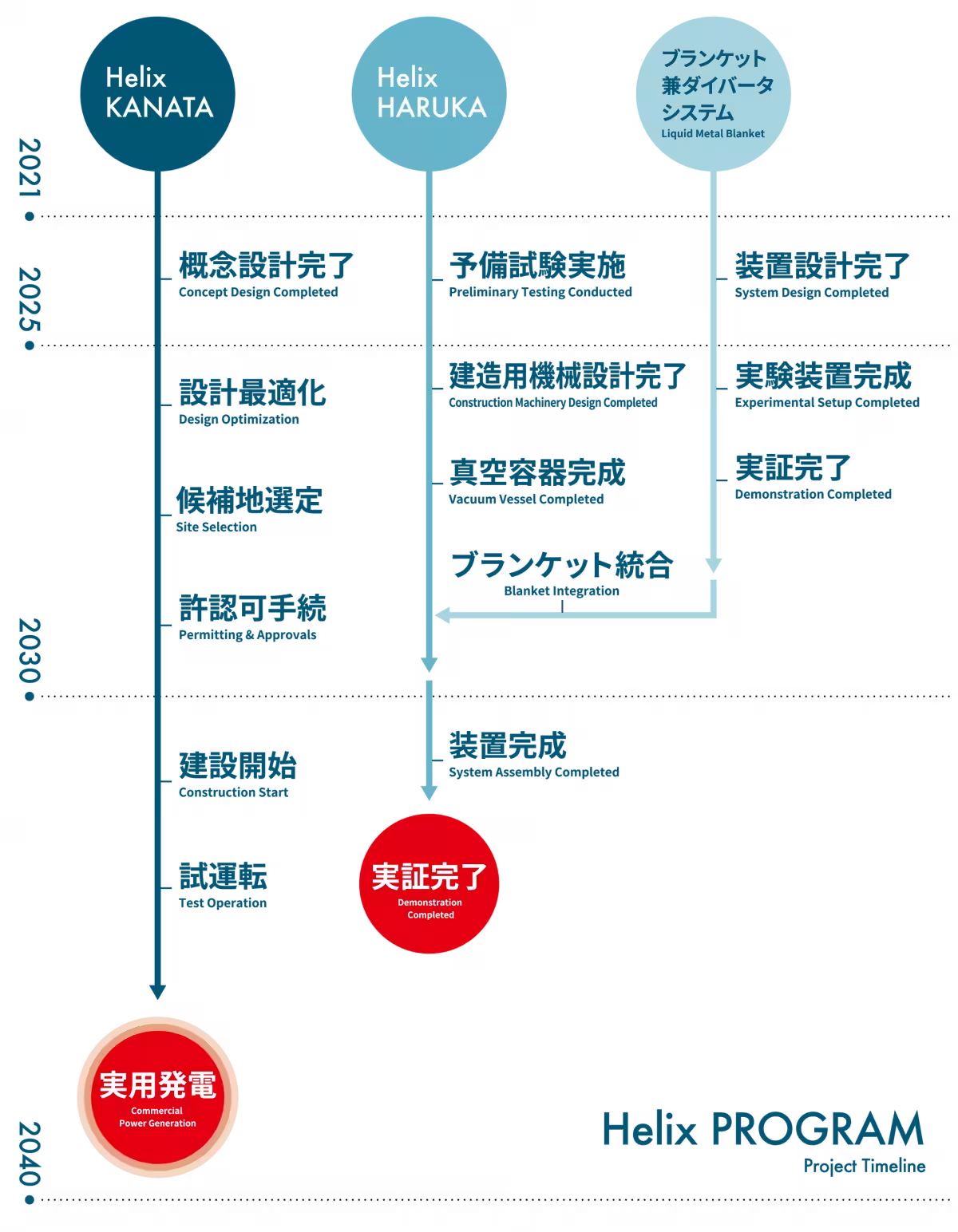
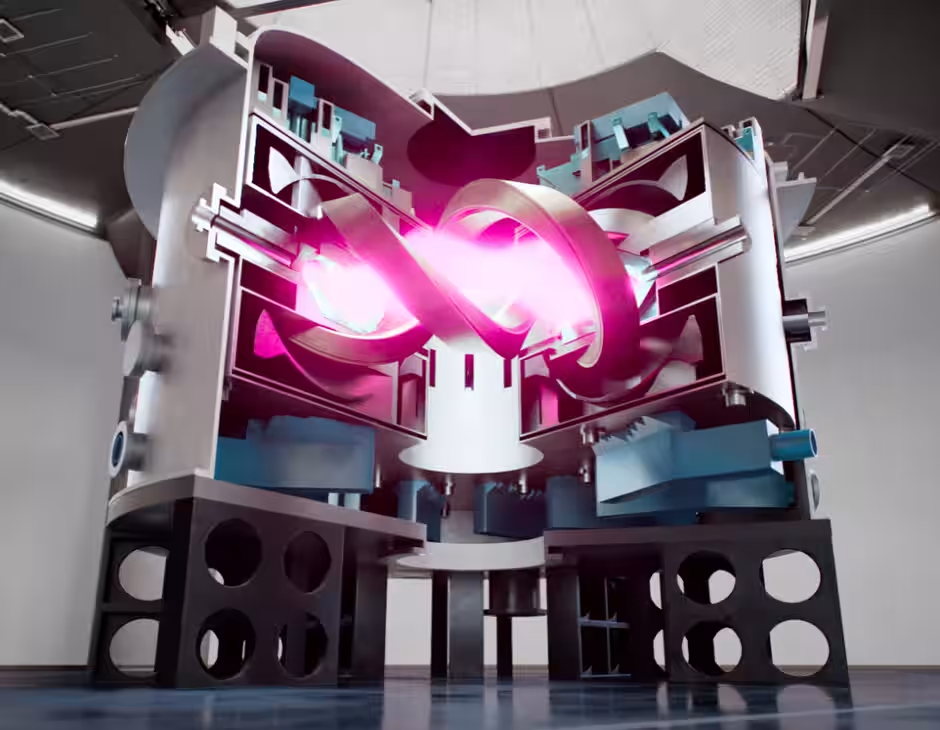
Helical Fusion is one of the few private companies focusing on utilizing knowledge from decades of research in heliacal-type fusion reactors developed through national universities and research institutions. The Helix Program, their roadmap for achieving practical power generation, anticipates completing individual verifications of essential components like high-temperature superconducting magnets and blankets by the mid-2020s. By the 2030s, the ultimate demonstration facility,

Topics Other)


【About Using Articles】
You can freely use the title and article content by linking to the page where the article is posted.
※ Images cannot be used.
【About Links】
Links are free to use.