



Analysis of Job Preferences in Nursing Care by Age Group Highlights Shift from Commute Times to Salary Expectations
Understanding Job Selection Criteria in Nursing Care by Age
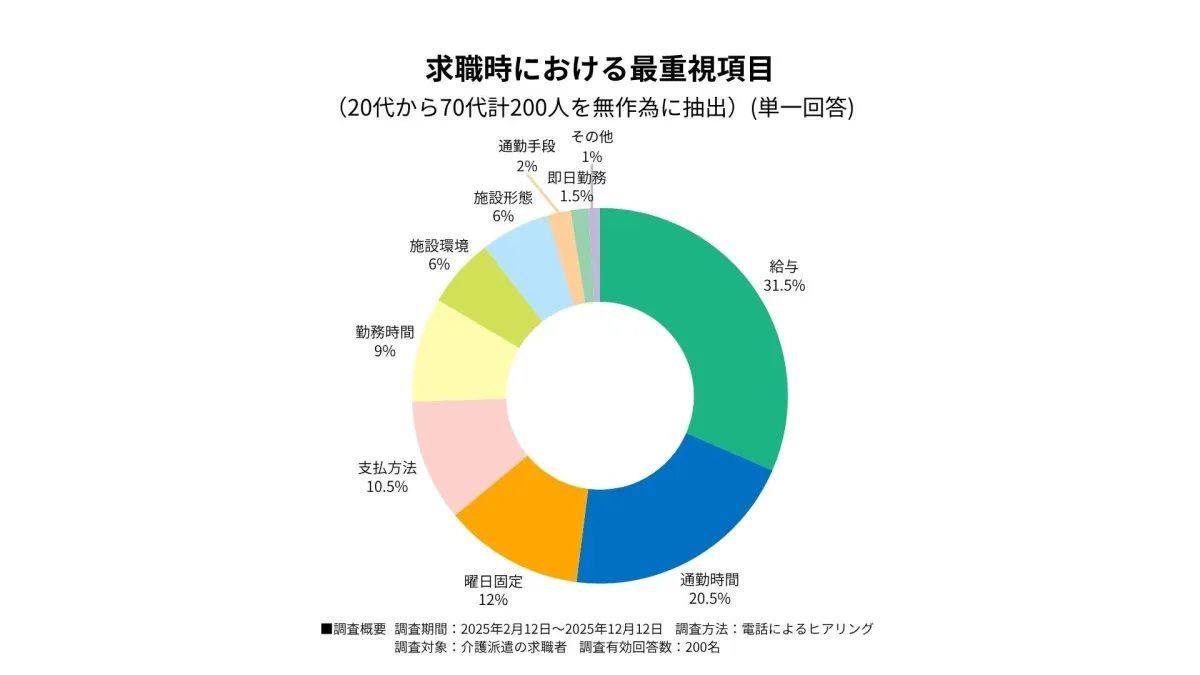
In a recent survey conducted by DYM Group, significant insights into job selection preferences for nursing care workers were revealed, highlighting distinct attitudes across different age groups. The survey, targeting 200 job seekers registered with DYM's nursing care dispatch service, was conducted between February 12, 2025, and December 12, 2025. The results showcase a clear divide in priorities when choosing employment based on age.
Key Findings
The findings show that across all age brackets, both salary and commute time emerge as the paramount considerations in job selection. However, a noteworthy differentiation arises when assessing these factors by age group:
20s: Mobility is King
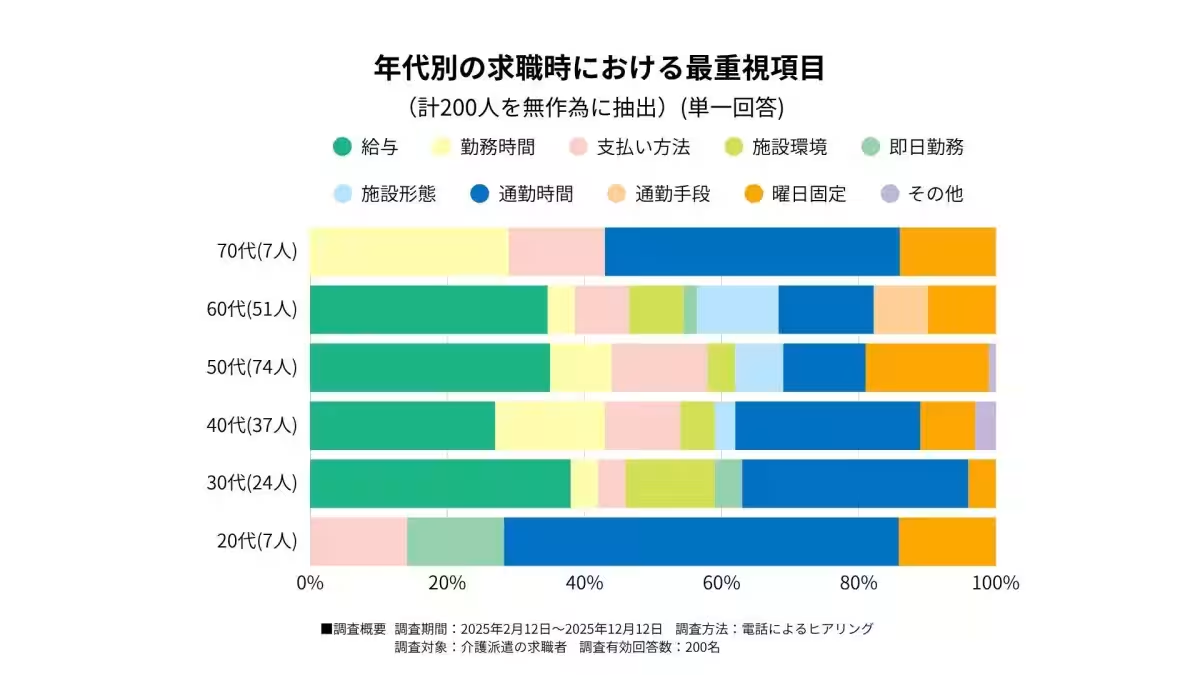
Among individuals in their 20s, a remarkable 57% prioritize commute times over salary, emphasizing the need for flexibility and immediate job availability. Young adults are keen on roles that allow them to start working quickly and with minimal travel stress. This demographic's preference underscores a generational shift towards balancing work with life, indicating that commute times significantly impact their employment choices.
30s: Balancing Act
The 30s demographic exhibits a more balanced approach, with 38% prioritizing salary closely followed by 33% valuing commute times. This suggests a transitional phase where job seekers are beginning to weigh the financial aspects of their roles equally with logistical considerations.
40s: Comprehensive Consideration
For those in their 40s, both salary and commute times are critical, along with the importance of work hours. These individuals seek to ensure that their work commitments do not interfere with their personal lives, thus demonstrating a nuanced understanding of work-life balance.
50s and 60s: Stability Over Mobility
As the age increases to the 50s and 60s, salary becomes the most vital factor, with around 35% of respondents in their 50s highlighting this aspect. Additionally, fixed workdays (14%) and set working hours (5.5%) become increasingly important as stability takes precedence. Those above 60 focus not only on salary but also on the work environment and commute, indicating further prioritization of convenience and comfort.
70s: Lower Burden Preference
In their 70s, individuals favor reducing burdens, prioritizing commute (43%) and working hours (29%). This demographic shift reflects a need for less stressful job conditions, aligning with their life stage.
Implications and Observations
The survey results highlight that in the nursing care sector, job selection is not solely driven by salary but resonates with the broader themes of commute and working conditions. Younger generations emphasize quick access to employment, while older candidates move towards stability, showcasing how life stages significantly influence career choices.
With the ongoing challenges of securing qualified nursing care personnel, organizations must adapt to the varying needs based on age demographics and tailor their recruitment strategies accordingly. Acknowledging these shifting priorities will be essential in creating a balanced workforce that can thrive amid the industry's evolving landscape.
Background of the Survey
The impetus for this survey arises from the pressing labor shortages in the nursing care sector, creating significant discrepancies between what potential employees seek and what employers offer. DYM Group aims to address this misalignment by not only sharing job openings but also informing job seekers about workplace conditions, employment practices, and career paths.
Through this proactive approach, DYM intends to ensure that job seekers find environments that align with their expectations and life circumstances, ultimately fostering a better match.
Future Initiatives
In light of the survey findings, DYM Group will enhance its job proposals to cater to the unique needs of different age cohorts. Particular attention will be paid to commute times and working conditions, supporting candidates in seeking roles that resonate with their lifestyle choices. DYM envisions reducing mismatches and improving retention rates post-hire by fostering a nuanced understanding of its job seekers.p
Additionally, DYM seeks to provide valuable insights to both job seekers and healthcare facilities through its comprehensive media platform, aiding in the industry’s efforts to address personnel shortages.
As society continues to age and the landscape of healthcare evolves, DYM Group is committed to being a reputable bridge between job seekers and healthcare opportunities, facilitating impactful connections in the nursing care sector.
Topics Business Technology)
【About Using Articles】
You can freely use the title and article content by linking to the page where the article is posted.
※ Images cannot be used.
【About Links】
Links are free to use.