



Revised Drug Compensation Scheme for 2026: Scope and Implications for Pharmacies
Introduction
With the upcoming 2026 drug compensation revision, Mii Company, based in Minato, Tokyo, has made significant updates to its pharmacy strategy dataset within the SCUEL database. This revamp includes the addition of vital insights such as "Pharmacy Group Information" and "Location Data" to better assist pharmacies in adapting to the forthcoming changes.
Overview of the 2026 Compensation Revision
The 2026 changes in the compensation scheme signal a clear shift in the revenue structure for pharmacies, moving away from a reliance on the number of prescriptions multiplied by location. Key highlights from this revision include:
- - The introduction of a reduction scheme for pharmacies located in medical malls and adjacent to clinics.
- - A review of the method for calculating concentration ratios.
- - The abolishment of the requirement that a pharmacy group must have at least 300 stores.
- - The actualization of electronic prescriptions in the medical DX bonus.
- - The establishment of a new bonus for regional support and drug supply systems.
Impact on Pharmacies
The implications for pharmacies that depend on proximity to medical facilities, such as those in medical malls, could be significant due to the new reduction strategies and the updated concentration ratio requirements. This shift emphasizes the need for pharmacies to transition from a location-based advantage to focusing on performance, supply systems, and interpersonal services.
Enhancements to the SCUEL Pharmacy Strategy Package
In response to the changing landscape, SCUEL has bolstered its data capabilities to include detailed analyses of pharmacy groups and their locations. Key updates within the SCUEL dataset involve:
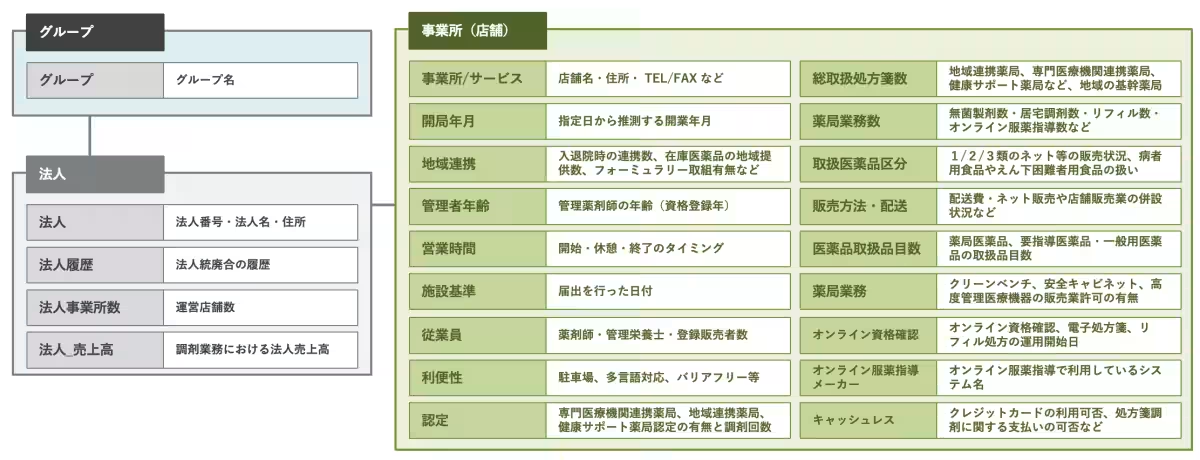
- - Enhanced Pharmacy Group Information: A structured collection of data on 168 major pharmacy groups and approximately 14,000 entries for smaller corporations.
- - Added Location Data: Classifications based on latitude and longitude that segment pharmacies into categories such as Medical Mall Type, Adjacent Clinic Type, Site-Type, and One-on-One Type, enabling targeted strategies against chains and organizations likely to be affected by new reductions.
Linking with Nearby Medical Institutions
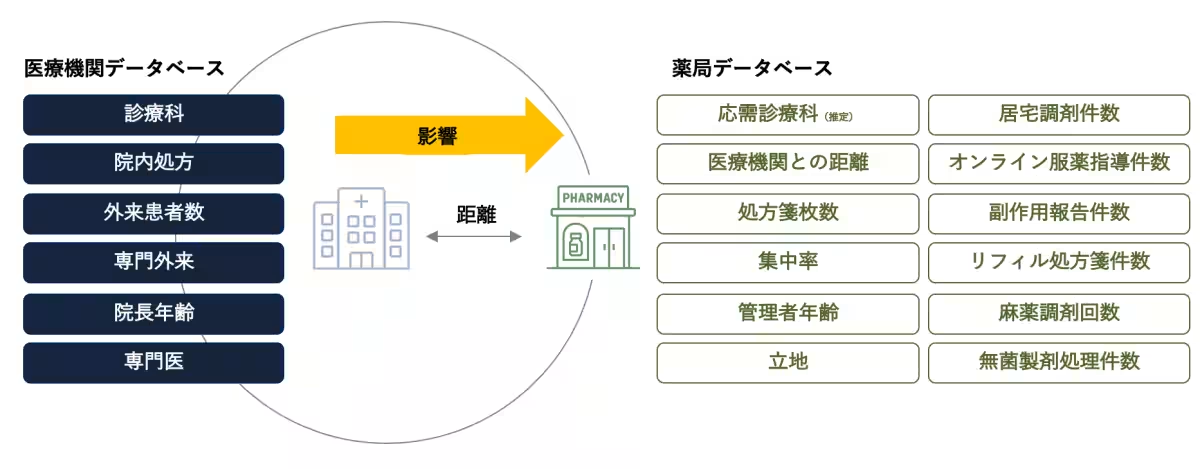
An advanced capability of the SCUEL database includes an analysis of neighboring medical institutions, considering factors such as bed size, specialty makeup, estimated demanding specialties, outpatient numbers, and proximity to pharmacies. This facilitates a deeper understanding of regional prescription structure trends, assessing dependencies and changes involving specific specialties.
Utilizing the Pharmacy Strategy Dataset
The pharmacy strategy dataset provides insights that are not visible through mere interpretation of institutional changes, effectively visualizing the underlying structures through data. Alongside static data, year-over-year and month-over-month trend analyses empower pharmacies to approach their marketing and operational strategies at opportune times.
- - Specialty-focused analysis, such as the frequency of dermatology facilities and their correlations with pharmacies.
- - Tracking electronic prescription adoption and DX bonus acquisition.
- - Monitoring local support bonus attainment rates.
- - Estimating prescription volumes using machine learning models.
- - Analyzing trends around representative changes and new registrations on a monthly basis.
Who Should Consider This Dataset?
This updated dataset suits a variety of companies:
- - Businesses providing products and services for pharmacies.
- - Entities aiming to identify pharmacies impacted by the revisions.
- - Companies seeking to develop sales strategies considering M&A activities and reorganizations.
- - Organizations looking to extract active firms that are aggressively investing in DX.
Conclusion
The revisions to the pharmacy adjustment mechanism underscore a pivotal shift in the pharmacy market in Japan, as captured by Mii Company’s SCUEL dataset. Offering comprehensive insights into both corporate and store levels, this information can strategically benefit companies in planning product implementation, formulating sales strategies, and comprehending the regional medical supply system.
Upcoming Online Seminar Announcement
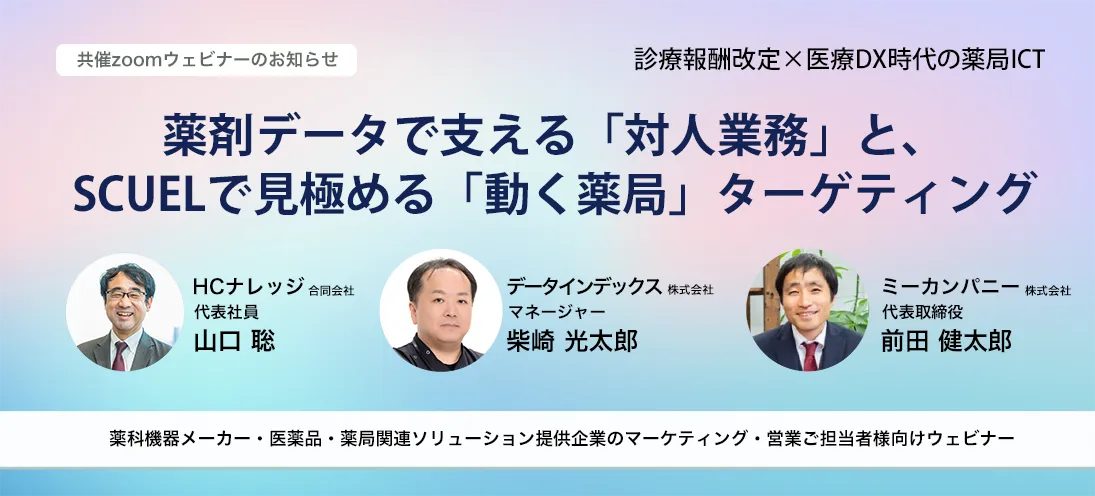
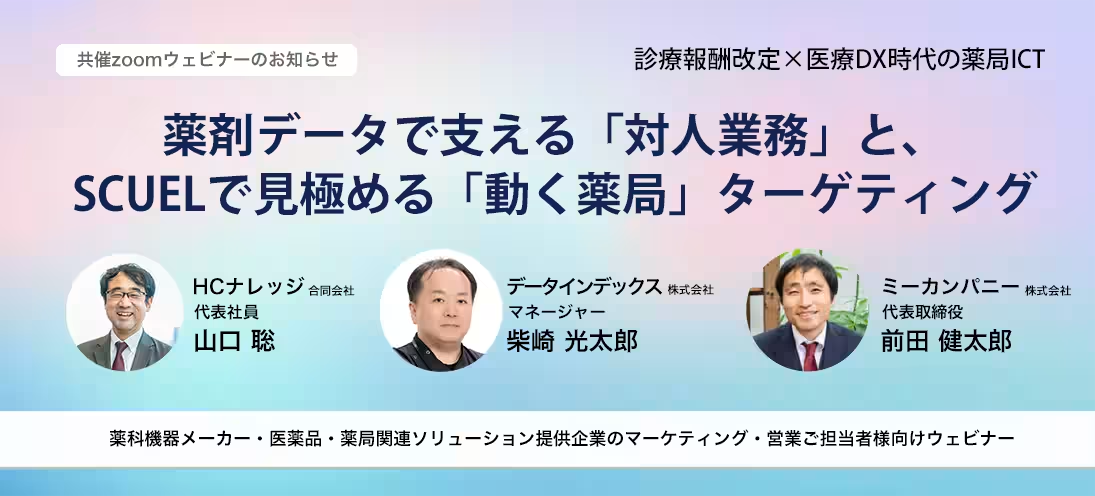
To complement this press release, an online seminar will be held featuring detailed explanations of the compensation revisions and demonstrations of practical data usage through videos (webinar format). This seminar will include presentations from Mii Company, HC Knowledge, and Data Index, each providing unique perspectives on analysis and strategic utilization.
- - Format: Online (compatible with web conferencing tools)
- - Registration Deadline: February 27, Friday
- - Broadcast Period: March 2, Monday - March 6, Friday
- - Participation Fee: Free (registration required)
For registration, please visit the website detailing the on-demand distribution of the webinar on the intersection of compensation revisions and the era of medical DX.
About Mii Company
Since its establishment in 2010, Mii Company has aimed to support the future of healthcare in Japan with a robust database, SCUEL®, offering precise, up-to-date information in healthcare, pharmacy, and welfare sectors. The company is committed to addressing industry challenges and facilitating value creation through comprehensive data solutions that connect people, ground realities, issues, and solutions.
Topics Health)
【About Using Articles】
You can freely use the title and article content by linking to the page where the article is posted.
※ Images cannot be used.
【About Links】
Links are free to use.