




Addressing the Succession Crisis: The Importance of People and Organization in Business Continuity
Addressing Japan's Succession Crisis
Japan's small and medium enterprises (SMEs) are confronting a significant challenge today, often referred to as the "Big Failure Era". This term encapsulates the unprecedented crisis caused by the aging of business owners and the severe shortage of successors. According to a survey by Tokyo Shoko Research, the number of firms expected to close or dissolve by 2025 is projected to reach 67,210 — the highest recorded number in history. Alarmingly, data indicates that over 50% of companies in the nation are grappling with the issue of succession.
While SMEs may focus on financial logistics such as equity transfers and tax responsibilities during business succession, many fail to resolve the human relationships that can obstruct smooth transitions. This presents a unique opportunity for consulting firms like Pro-D-use, based in Shinjuku, Tokyo, which has provided consultancy services for over 300 cases focusing on the interplay between human factors and organizational continuity during succession.
The Acceleration of the "Big Failure Era"
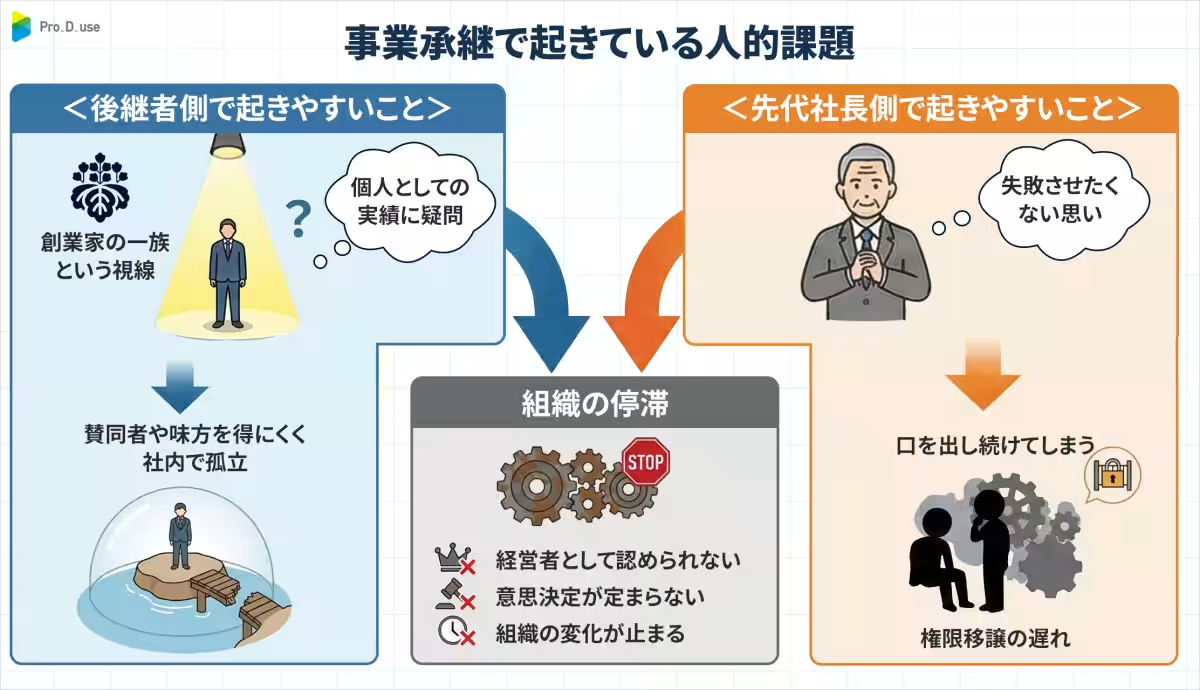
As we delve deeper into this crisis, it becomes apparent that merely focusing on financial procedures is insufficient for ensuring stability post-succession. Many companies find themselves encountering organizational stagnation after transitioning leadership. The challenges backtrack to the relationships that exist between the outgoing and incoming leaders, often exacerbated by the emotional ties and loyalties established over years of shared experiences.
For instance, successors may struggle to assert themselves within the legacy framework established by previous leadership. Common issues include family expectations overshadowing individual accomplishments, leading to inadequate recognition of new ideas proposed by the successor. Similarly, outgoing leaders may grapple with the instinct to maintain control, inadvertently delaying the transfer of authority and complicating decision-making processes.
The Human Element in Succession
The reality within Japanese SMEs highlights that not all organizational conflicts arise from financial instruments. Instead, conflicts often emerge from the inherent complexities of human relationships. After corporate structures are technically redefined, successors can find themselves facing the dilemma of being perceived merely as "the heir" rather than as an equal leader. This lack of recognition can hinder cohesive corporate growth and innovation.
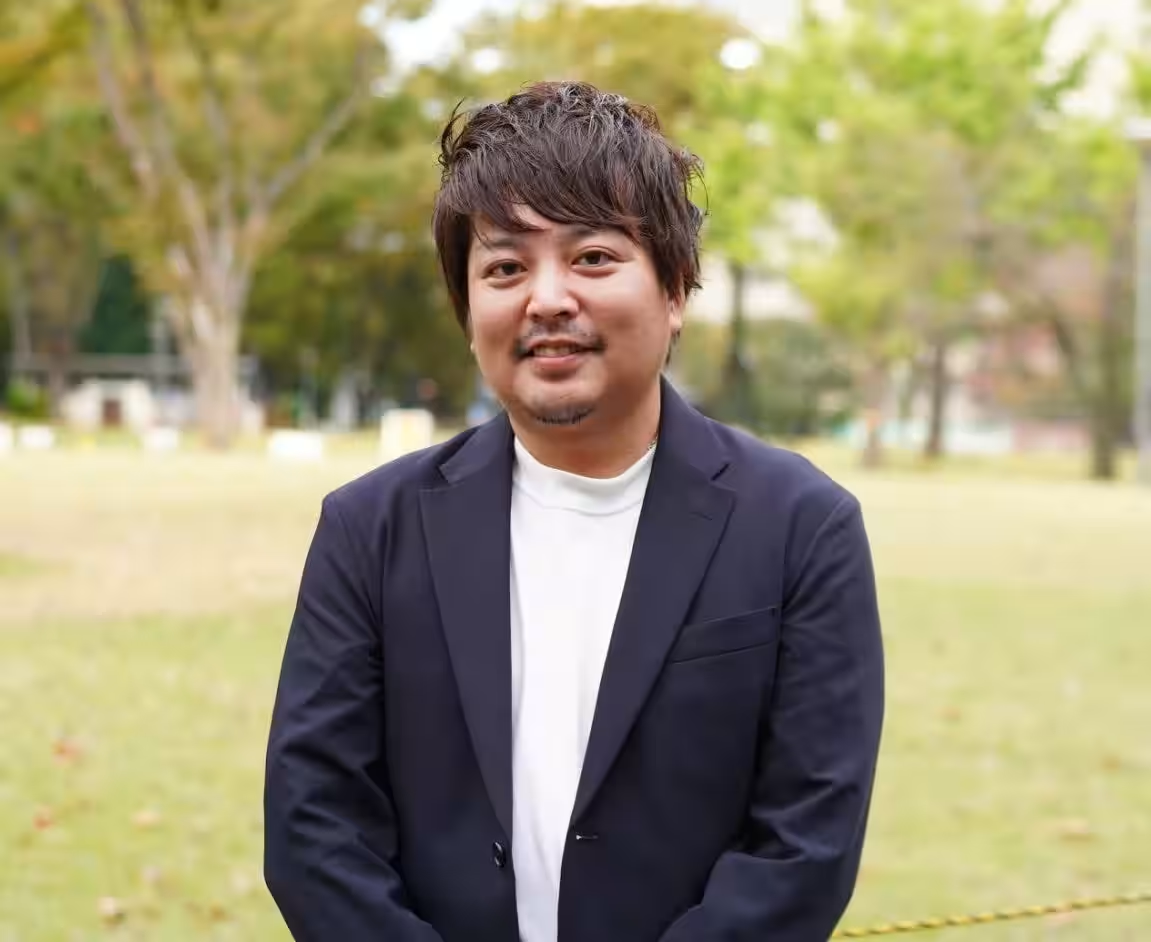
Pro-D-use's founder, Ryota Ogasawara, emphasizes the importance of addressing these humanistic concerns: "The challenge in succession is not only a matter of legalities and taxes; it fundamentally revolves around the continuity of human relationships and organizational frameworks. We've witnessed firsthand how familial and historical connections can ironically become burdens for successors, leading to a stifling environment for business growth."
Breaking Organizational Stagnation: Real-World Examples
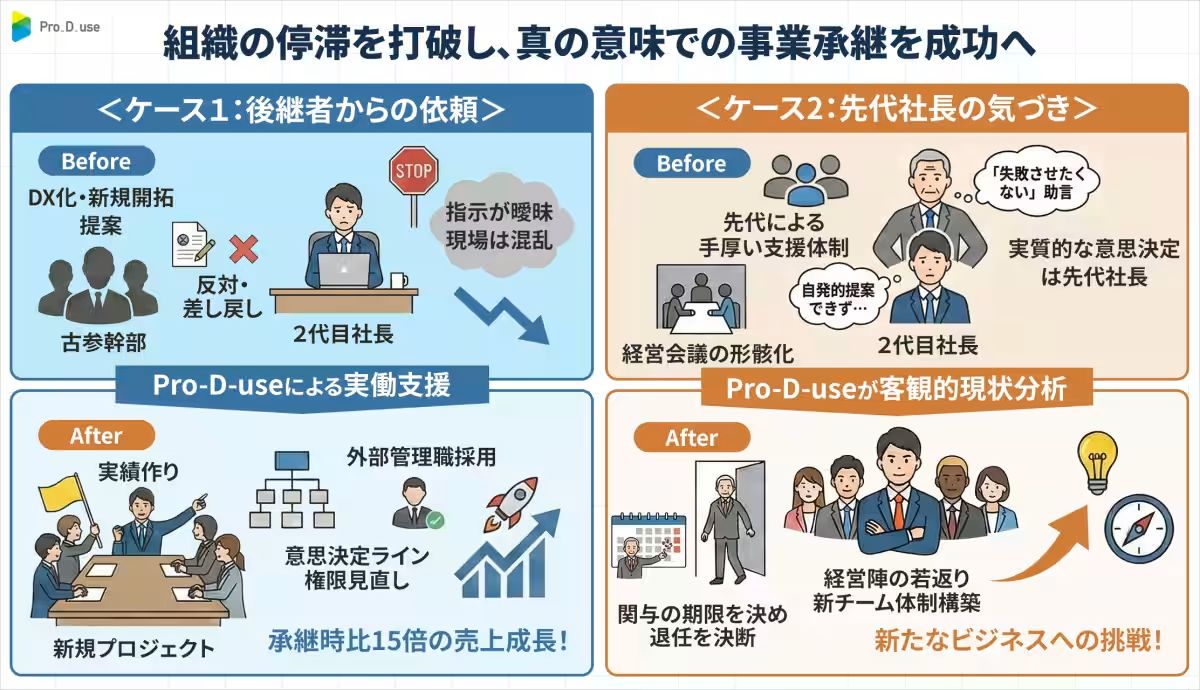
To illustrate the impact of collaborative support, let’s look at two success stories facilitated by Pro-D-use:
Case Study 1: Enhancing Decision-Making Processes
In one instance, a second-generation president of a manufacturing company struggled with decision-making paralysis during the first few years of office. The existing corporate culture was slow to adapt to his proposals for digital transformation (DX) and new market explorations. Pro-D-use stepped in to help create a arena where the successor could build credibility through early successes in low-conflict projects. By reworking decision-making channels and clarifying roles, the organization experienced a renewed momentum, escalating revenues to 15 times their original amounts during the succession.
Case Study 2: True Leadership Transition
Conversely, another case involved a founder who had difficulty repurposing leadership roles, clinging to traditional practices in a bid to protect his successor's journey. After Pro-D-use's analysis revealed that this protecting instinct was inadvertently hindering growth, the founder decided to clearly delineate a timeline for his involvement, facilitating a necessary recalibration within the management team. The newfound autonomy given to the successor allowed them to forge ahead with unmatched vigor, breaking free from the constraints of legacy.
Final Thoughts
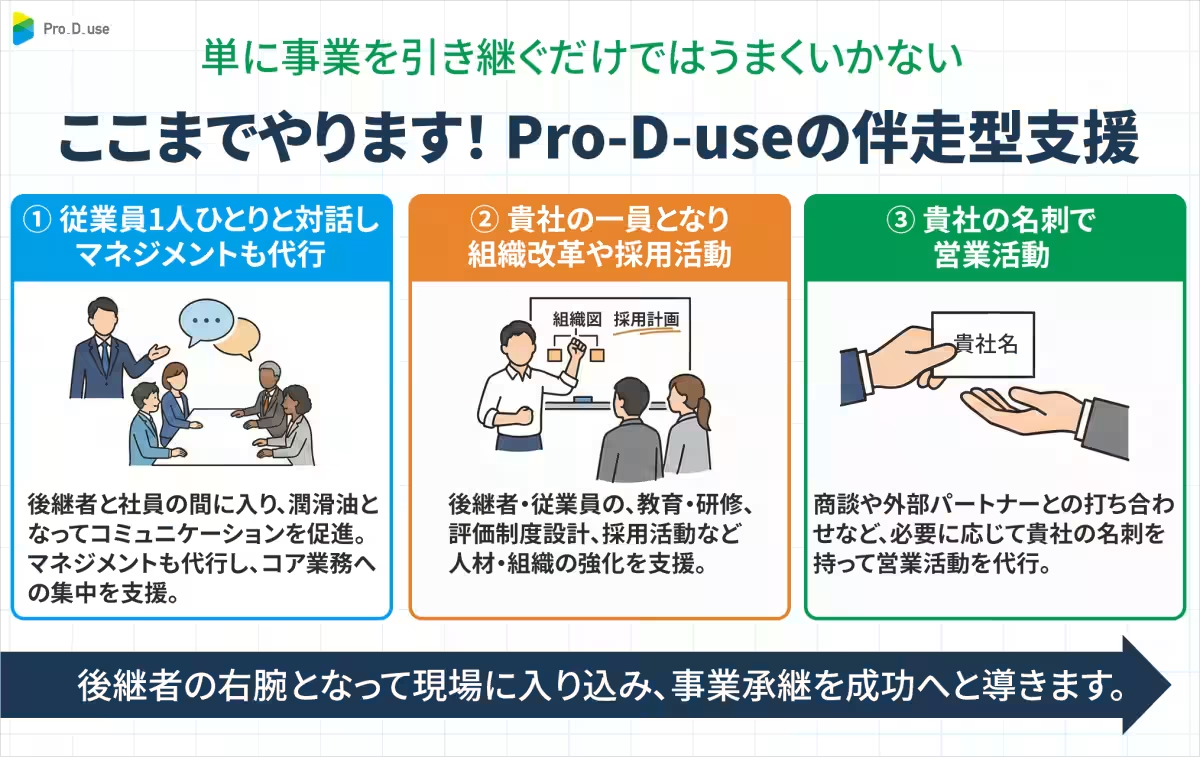
These examples underline the critical role of bespoke, collaborative support in fostering a healthy transition for SMEs. Pro-D-use thrives on being the supportive entity that absorbs the friction of negotiations, ensuring successors can confidently execute their vision. As they aptly put it, "Our goal is to enable successors to claim their enterprises with pride, creating a fertile ground for innovation and growth." Through engaging deeply with organizations, Pro-D-use stands as a beacon for many companies on the cusp of significant change.

Topics Business Technology)
【About Using Articles】
You can freely use the title and article content by linking to the page where the article is posted.
※ Images cannot be used.
【About Links】
Links are free to use.