



MOL Establishes Dynamic Positioning Training Facility in the Philippines for Maritime Workforce Development
Introduction
In a significant initiative aimed at enhancing maritime skills, Mitsui O.S.K. Lines, Ltd. (MOL), led by President Takeshi Hashimoto, is establishing a Dynamic Positioning (DP) training facility in the Philippines. This project, executed through MOL's subsidiary MOL Maritime Technology (MOLMAT), in collaboration with the Maritime Academy of Asia and the Pacific (MAAP) and Magsaysay Group's Magsaysay Training Center (MTC), is set to serve as a cornerstone for training maritime professionals in dynamic positioning, particularly in the context of offshore renewable energy and maritime development.
Formation of Important Partnerships
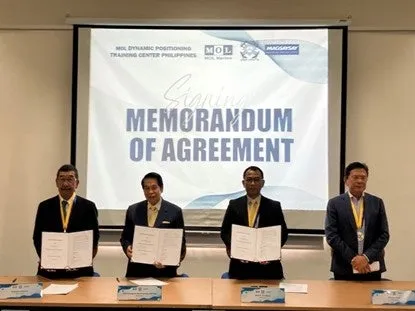
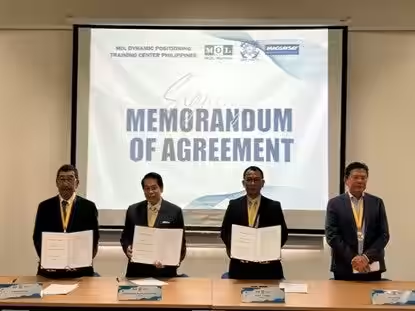
On July 29th, a formal agreement was signed at MAAP's campus in Bataan, signaling the official commencement of this training facility. This collaborative effort brings together industry leaders, including President Katsuhiko Kikuchi of MOLMAT, VADM Eduardo Santos, MAAP's President, and Captain Alex M. Enriquez from MTC, reflecting a unified approach towards enhancing workforce capabilities in the maritime sector.
Purpose and Structure of the Training Facility
The newly established training facility will utilize DP simulators already employed on unique vessels operated by MOL. This setup allows for real-world training experiences for maritime personnel and engineers, focusing specifically on the skills necessary for managing offshore wind power operations and specialized maritime projects under conditions simulating actual working environments.
The training center will offer a total of six distinct courses, all of which hold certification from The Nautical Institute (NI), a globally recognized body for maritime training. This endorsement ensures that participants acquire internationally acknowledged competencies essential in their professional development.
Course Offerings
The comprehensive course structure includes:
1. DP Induction Course: A fundamental program designed to introduce basic concepts, operating principles, and risk management in DP operations.
2. DP Simulator Course: An advanced training course utilizing the simulation of DP systems to sharpen operational skills and troubleshooting abilities.
3. DP Sea Time Reduction Course: This course assists participants in shortening required sea-time through simulator training, effectively compensating for hands-on experience.
4. DP Revalidation Course: Tailored for DPOs seeking to renew or revalidate their qualifications, focusing on revisiting critical knowledge and skills after an absence from DP operations.
5. DP Vessel Maintainer Course: Directed at technical personnel responsible for the maintenance and upkeep of DP systems, covering machinery structure, functions, and maintenance protocols.
Meeting Industry Demands
With an escalating demand for trained DP operators across the Philippines and Asia, this training facility seeks to address the urgent need for skilled professionals in the maritime industry. MOL aims not only to foster quality training but also to contribute to the growth of the offshore renewable energy sector, thereby supporting sustainable human resource development in the region.
The partnership between MOL, MAAP, and MTC plays a vital role in continuously nurturing skilled professionals poised to respond effectively to international maritime industry demands, enhancing the capacity of the Philippine workforce.
Commitment to Excellence
MOL is dedicated to training Filipino seafarers continually, aiding in the establishment of a safe and reliable maritime operation. This initiative aligns with broader sustainability objectives, emphasizing community development through the creation of employment opportunities for local seafarers.
As MOL expands its commitment to quality seafarer training, the company promises to enhance maritime infrastructure while ensuring safe operations that support everyday life across global waters. The establishment of this training center marks a pivotal step towards meeting the increasing global maritime challenges and securing a sustainable future for the maritime workforce.
Conclusion
In conclusion, the opening of the Dynamic Positioning training facility in the Philippines not only addresses the skill gap in the maritime sector but also strengthens the collaborative efforts among industry leaders, fostering an environment of learning and professional growth. As MOL continues to develop skilled seafarers, the future of maritime operations looks promising for the Philippines.
Topics Other)
【About Using Articles】
You can freely use the title and article content by linking to the page where the article is posted.
※ Images cannot be used.
【About Links】
Links are free to use.