



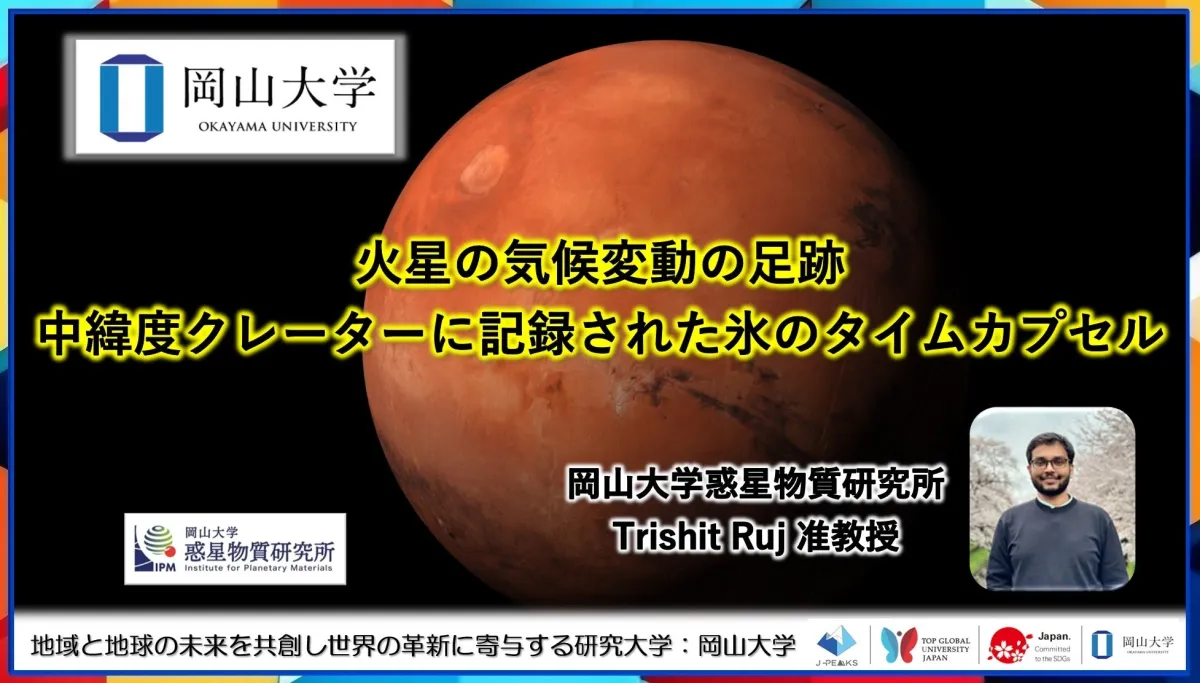
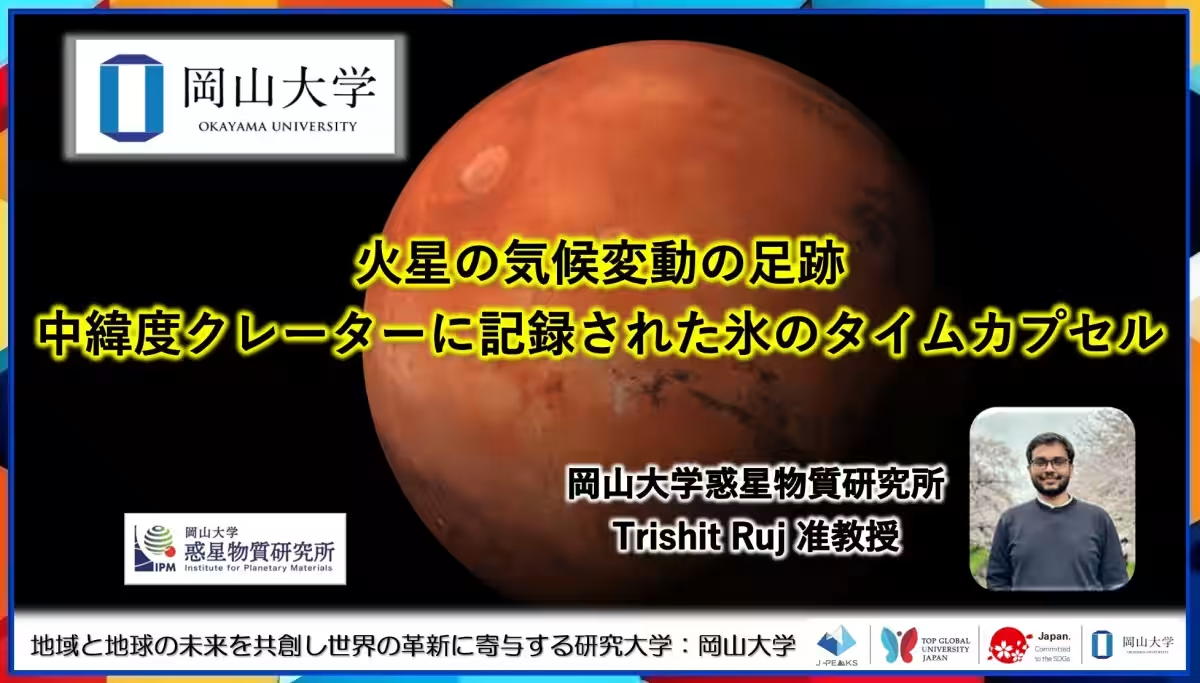
Understanding Mars' Climate through Ice Accumulation in Mid-Latitude Craters
Exploring Mars' Climate Through Ice
Recent research led by Trishit Ruj, an associate professor at Okayama University, has unveiled crucial insights into the historical climate of Mars. By analyzing high-resolution images from NASA's HiRISE and CTX cameras, a team from Okayama University, in collaboration with Japan Agency for Marine-Earth Science and Technology (JAMSTEC), Kochi University, and the University of Tokyo, studied over 750 mid-latitude craters of Mars.
Key Findings
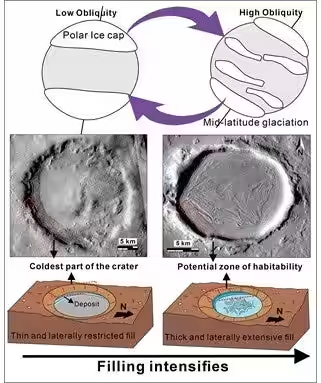
The study reveals that there have been multiple ice accumulation events during Mars' Amazonian epoch, particularly emphasizing a trend of accumulation towards the southwest of the craters. This accumulation can largely be attributed to decreased solar radiation and the effects of shadowing creating what is known as a ‘cold trap’. The detailed integration of observational data with climate modeling further suggests that the amount of ice on Mars was historically greater than it is today, indicating significant climate evolution and aiding in understanding the stability of Martian ice.
Historically, about 640 million years ago, thick deposits of ice were prevalent, but these have significantly decreased over time. The last significant accumulation event roughly 98 million years ago displayed a restricted distribution, indicating a transition from a wetter climate to an increasingly dry and cold environment. These findings not only provide a historical context for Mars' climate shifts but also offer prospects for future exploration concerning potential water resources on the planet.
Importance of the Research
Understanding the ice accumulation and distribution on Mars is crucial as it provides essential clues about its climatic history which is largely unknown. The international collaborative effort, involving institutions across Japan and Italy, indicates the importance of global scientific partnerships in uncovering the mysteries of our neighboring planet. This research marks a significant step forward in our comprehension of Martian geology and climate dynamics.
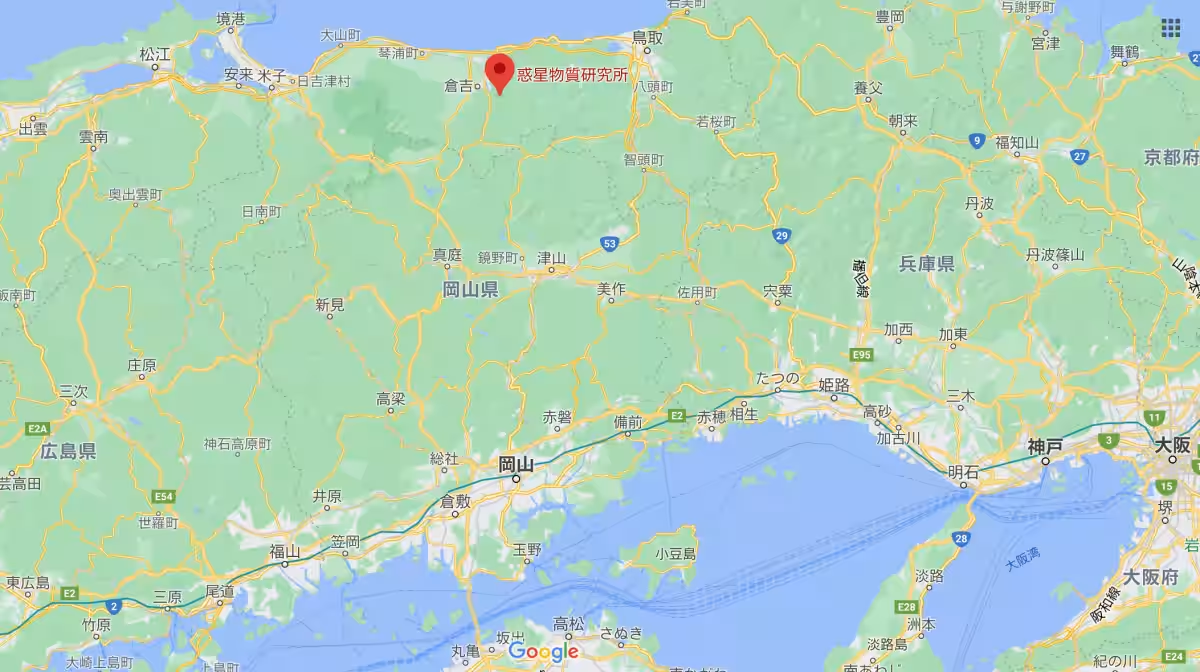
According to Ruj, leveraging advanced imaging techniques from NASA alongside analytical methods from the Okayama University Planetary Materials Research Institute paves the way for not only deeper insights into Mars’ icy past but also considerations for future landing sites in exploration missions.
Conclusion
Published on September 3, 2025, in the international journal 'Geology', this pivotal study illuminates the dual impacts of climatic evolution and ice stability on Mars. As researchers continue to unlock the secrets of this distant world, the prospect of utilizing Martian water resources becomes increasingly tangible, paving the way for what may be humanity's next giant leap in space exploration. For further details, refer to the original publication here.






Topics Other)
【About Using Articles】
You can freely use the title and article content by linking to the page where the article is posted.
※ Images cannot be used.
【About Links】
Links are free to use.