



Exploring Changes in Women's Skincare and Makeup Behavior from 2015 to 2025
Analyzing the Evolution of Skincare and Makeup Among Women in Japan
The Pola Cultural Institute, part of Pola Orbis Holdings, released a new report analyzing the shifts in skincare and makeup behaviors among women aged 15 to 74. This study reflects on the results of surveys conducted over several years: 2015, 2018, 2022, and a forecast into 2025. The findings showcase how women's attitudes towards beauty and personal care have transformed over this decade.
Key Findings in Skincare Frequency
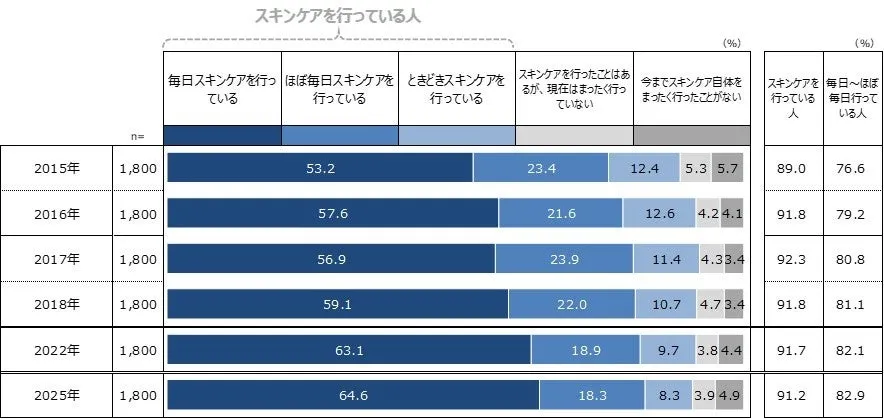
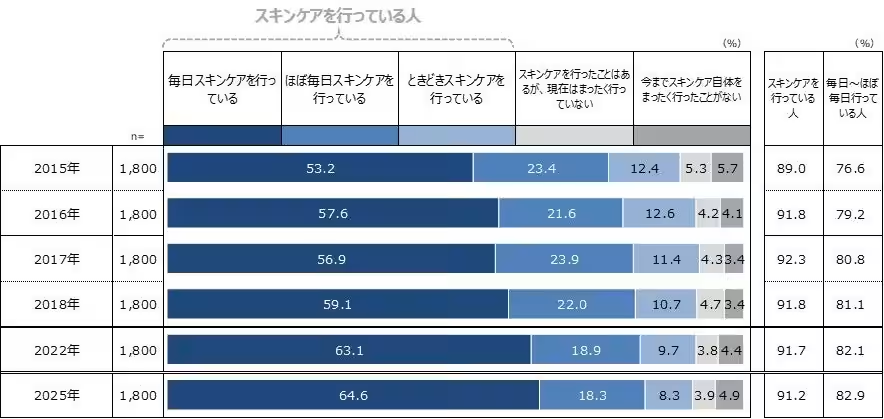
The report indicates a consistently high participation rate in skincare routines, with nearly 90% of women confirming their engagement with daily skincare practices. Specifically, the percentage has slightly fluctuated yet remained stable:
- - 2015: 89%
- - 2016: 92%
- - 2017: 92%
- - 2018: 92%
- - 2022: 92%
- - 2025: 91%
Interestingly, the frequency of daily skincare has shown a gradual increase from 53% in 2015 to 65% in 2025, indicating a rise in commitment to skincare among Japanese women. This progressive trend highlights the growing awareness and investment in skincare regimes, possibly driven by increased access to information and products.
Trends in Makeup Behavior
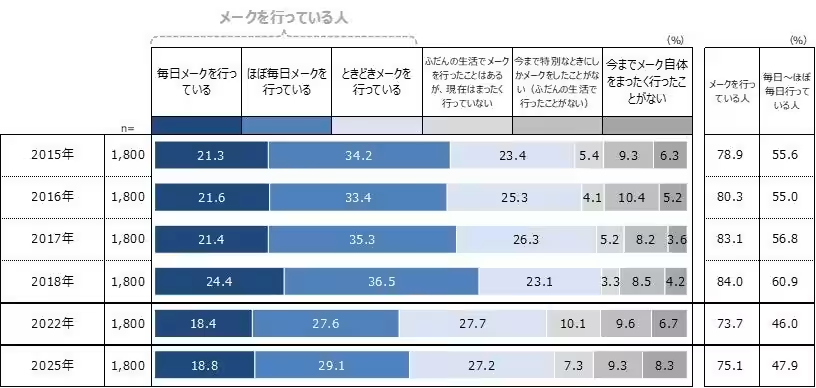
On the other hand, the pattern of makeup usage has experienced a decline over the years. Though there was a steady increase in makeup practices from 2015 to 2018, with levels reaching 84% in 2018, this was followed by a notable drop to 74% in 2022. By 2025, this figure slightly rebounded to 75%. This fluctuation suggests changing attitudes towards makeup, possibly influenced by evolving societal norms and lifestyle choices.
Most Popular Skincare Products
The survey also examined the most frequently used skincare products, revealing that the top four items have remained unchanged over the years:
1. Facial cleansers
2. Toners
3. Cleansing items
4. Sunscreens
However, it is worth noting that from 2018 to 2022, there was a 10% decrease in the usage rates for these items, but a resurgence was observed as makeup items like lipsticks, lip gloss, and blush saw increased popularity in the 2025 data.
Sources of Information for Product Purchases
Another important aspect tackled in the report was where women gather information regarding skincare and makeup products before making purchases. The leading source has consistently been the physical product available at stores. However, social media and video content emerged as significantly increasing influences in recent years, especially between 2018 and 2025.
- - Use of social media as an information source has become more prevalent, reflecting the impact of digital marketing on consumer behavior in the beauty sector.
- - Consistent with previous years, drugstores remain the primary channel for cosmetic purchases.
Average Makeup Time
The average time spent on makeup by those who do wear it has risen over the years. From 2015 to 2025, women typically spent an additional 2.64 minutes on makeup, indicating a growing interest in enhancing their appearance. Notably, this average time among younger women (ages 15-19) increased dramatically, with a rise of nearly 11 minutes reported compared to five years prior.
About Pola Cultural Institute
Established in 1976, the Pola Cultural Institute focuses on the cultural significance of makeup and conducts extensive research to academically explore beauty practices within both Japanese and Western contexts. The Institute engages in various projects, including exhibitions at domestic and international museums, and publishes ongoing studies about contemporary makeup culture and lifestyle choices.
For those interested in detailing the changing beauty norms among women, the complete report available on the Pola Cultural Institute website provides an extensive overview of all findings.
Topics Consumer Products & Retail)
【About Using Articles】
You can freely use the title and article content by linking to the page where the article is posted.
※ Images cannot be used.
【About Links】
Links are free to use.