




Ureru Net Advertising Group Launches Agentic Commerce Plans to Optimize AI Purchases
New Era in Digital Commerce: Agentic Commerce Plans
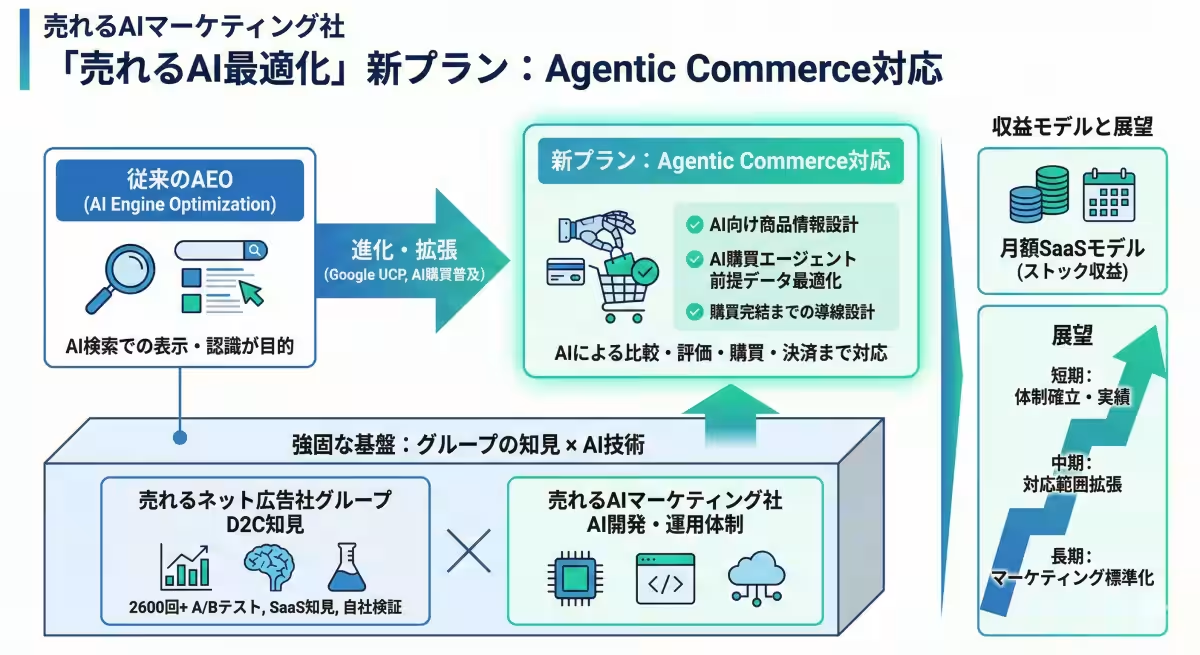
Ureru Net Advertising Group, based in Fukuoka, is leading the charge in AI-optimized marketing with the launch of its new service plan designed for Agentic Commerce—a cutting-edge response to a rapidly evolving digital shopping landscape. This initiative comes as AI-enabled searches and purchasing experiences become more mainstream, particularly in light of the Universal Commerce Protocol (UCP) recently announced by Google. Through this protocol and the Gemini application, it is anticipated that AI will assume responsibility for everything from product selection to checkout, creating a seamless purchasing journey for consumers.
Transition from AEO to Agentic Commerce
Traditionally focused on AI Engine Optimization (AEO), which ensured that products and services were correctly identified and displayed during AI searches, the landscape is shifting. Agentic Commerce introduces a more complex model where AI not only identifies products but also compares and evaluates them, ultimately making purchase decisions and facilitating transactions. This evolution requires a paradigm shift in how product data is structured and optimized.
The new plan addresses these changes by providing support in several key areas:
- - Designing product information that is easily understood and assessed by AI.
- - Optimizing product data with the AI purchasing agent in mind.
- - Structuring pathways that take users from product selection to completion of purchase through AI.
Such holistic support aims to enhance opportunities for shopping facilitated through AI, thereby transforming how consumers interact with digital marketplaces.
Leveraging Extensive Expertise
The new plans are a result of combining the extensive knowledge acquired by Ureru over the years in D2C (Direct to Consumer) support with the specialized development and operational framework of the AI-focused Ureru AI Marketing Company. This approach harnesses data from over 2,600 A/B tests to generate insights into effective selling structures while utilizing operational knowledge gained through the SaaS product,


Topics Consumer Products & Retail)
【About Using Articles】
You can freely use the title and article content by linking to the page where the article is posted.
※ Images cannot be used.
【About Links】
Links are free to use.