



Revolutionizing Graphite Production: Pine Resin as a New Source of Precursor Materials
Revolutionizing Graphite Production: Pine Resin as a New Source of Precursor Materials
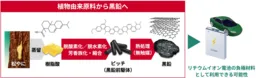
In a remarkable breakthrough, researchers at the National Institute of Advanced Industrial Science and Technology (AIST) have successfully synthesized a precursor material for graphite using resin acids found in pine resin. This innovative approach could revolutionize the graphite production process, which has traditionally relied on petroleum and coal-derived materials. As concerns over fossil fuel dependency and CO₂ emissions intensify, the need for alternative sourcing methods for artificial graphite has become more pressing than ever.
Graphite, a critical material in various applications including battery electrodes, electric furnace steelmaking, and semiconductor manufacturing, is indispensable in energy-related and advanced science fields. With rising demands for graphite, there is an increasing need for diversification in sourcing materials for synthetic graphite production. The traditional methods of producing synthetic graphite involve high-temperature thermal processing of petroleum or coal, which raises environmental and sustainability concerns. Therefore, exploring biomass and other non-fossil resources to produce graphite has gained momentum.
Historically, while biomass conversion into graphite has been explored, the resultant materials were limited in form and application. AIST's research group, led by Yuya Kado, along with researchers Masato Morimoto, Eri Fumoto, Satoshi Hosokai, and Yasushi Soneda, demonstrated the capability to convert resin acids from pine resin into pitch suitable for graphite synthesis. This achievement marks a significant advancement, showcasing the potential of using plant-derived molecules in graphite precursor design.
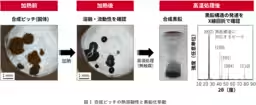
In their study, the researchers focused on resin acids abundant in pine resin, applying this innovative method to rosin, a mixture containing these acids. Their detailed molecular structure analysis confirmed that the synthesized pitch possesses reduced oxygen content and improved aromaticity, making it suitable for graphite formation. They performed catalytic-free thermal processing, demonstrating that the resulting pitch displayed the crystalline characteristics characteristic of graphite, making it a viable candidate for anodes in lithium-ion batteries (LIBs).
The new material aligns well with conventional industrial pitches and offers high versatility for shaping and processing, pointing to a broad range of applications. This research not only provides a foundational understanding for the development of sustainable graphite materials derived from biomass but also constructs a crucial step toward wider application, especially in lithium-ion batteries.
These findings are set to be published in Nature Communications on July 1, 2026, under the title “Graphitizable Pitch from Pine Resin Enables Bulk Graphite from Terpenes.” The paper is authored by a group of leading scientists in this innovative field, including Masato Morimoto and Yuya Kado.
As part of their ongoing research, AIST aims to continue refining the precursor material's characteristics, optimize the synthesis conditions, and explore the potential for practical applications in various carbon material fields. They are particularly focused on enhancing the battery characteristics of the synthesized graphite to meet the growing demands of the electronics and energy sectors.
Additionally, the methodology utilized in this research may have broader applications beyond pine resin, potentially extending to a variety of terpenes that plants produce, thereby opening pathways for new sustainable carbon material designs.
This research is supported by NEDO (New Energy and Industrial Technology Development Organization) and reflects a significant directional shift toward sustainable material production in the graphite industry. The industry's evolution towards less fossil fuel reliance coupled with innovative approaches to carbon material synthesis could redefine standards for future battery technologies and other industrial applications requiring stable and reliable carbon sources.
Conclusion
The development of graphite precursors from pine resin signifies a significant stride in sustainable material research, paving the way for environmentally friendly alternatives in various industries reliant on graphite and its derivatives. As this area of research continues to develop, it may lead to a sustainable future where the carbon material supply chain is diversified and less reliant on traditional fossil fuels.
Topics Consumer Products & Retail)
【About Using Articles】
You can freely use the title and article content by linking to the page where the article is posted.
※ Images cannot be used.
【About Links】
Links are free to use.