




Innovative Research into Biodegradable Plastics from Soy Sauce By-product Oil
Introduction
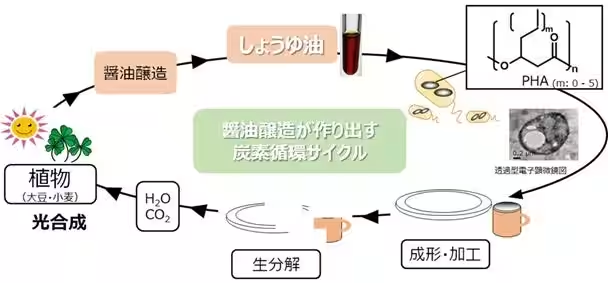
In a significant advancement in the realm of sustainable materials, Yamamori Co., Ltd., a leading food manufacturer based in Kuwana City, Mie Prefecture, Japan, has collaborated with researchers from Iwate University and Tokyo University of Agriculture to explore the potential of soy sauce oil as a raw material for synthesizing biodegradable plastics. Published on October 30, 2025, in the journal "Bioscience, Biotechnology, and Biochemistry," this study highlights the feasibility of using soy sauce oil, a by-product of the soy sauce production process, in the synthesis of polyhydroxyalkanoates (PHA).
Background of the Study
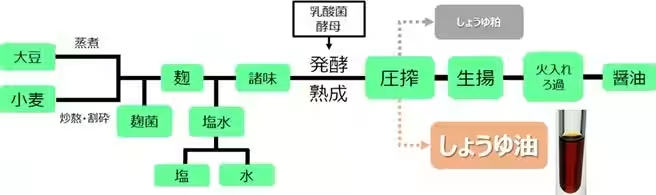
PHA is a biodegradable plastic produced through microbial processes, utilizing biomass-derived sugars and oils. Amidst growing environmental awareness, this research aims to capitalize on underutilized soy sauce oil, which is generated in vast quantities during soy sauce manufacturing. With approximately 3,000 tons of soy sauce oil produced annually, this study addresses the pressing need for effective waste management solutions in the food industry, transforming what was once regarded as waste into a valuable resource.
Research Highlights
The key achievements of this collaborative study are noteworthy:
- - This research marks the first report confirming the practicality of soy sauce oil as a raw material for PHA synthesis.
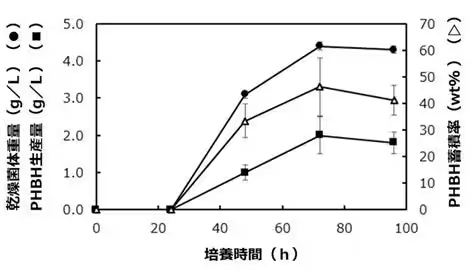
- - The productivity of PHA synthesized using soy sauce oil is comparable to that of traditional plant oils previously employed in PHA production.
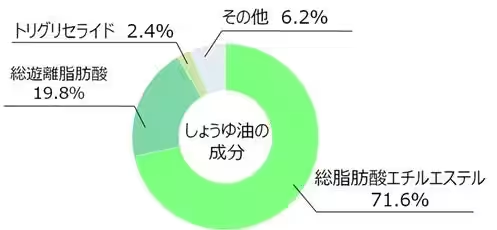
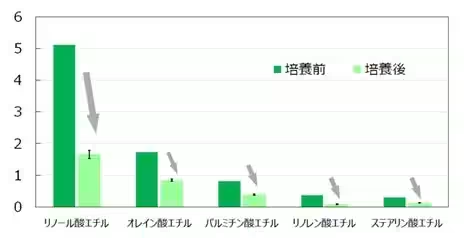
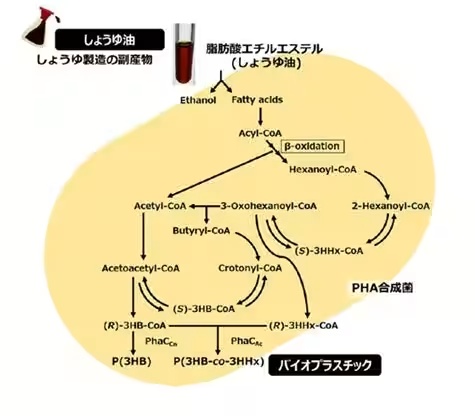
- - The main component of soy sauce oil, fatty acid ethyl esters, has not been widely recognized for its potential in PHA synthesis. This research establishes a clear metabolic pathway for the bacterium Cupriavidus necator to utilize soy sauce oil effectively.
- - The study demonstrates that high-quality PHA copolymers can be synthesized from soy sauce oil, similar to those produced from conventional plant oils.
Methodology
The study utilized microbial fermentation techniques, examining the metabolic pathways through which Cupriavidus necator converts soy sauce oil into PHA. Genetic modifications to enhance the bacterium's metabolic efficiency further enabled the production of poly(3-hydroxybutyrate-co-3-hydroxyhexanoate) (PHBH), a more versatile and process-friendly PHA variant. The results indicate that the incorporation of fatty acid ethyl esters from soy sauce oil is pivotal in the biosynthesis of both P(3HB) and PHBH, representing a novel approach in the realm of biodegradable plastics.
Implications of Findings
Given the rising demand for eco-friendly alternatives to petroleum-based plastics, this study illuminates how utilizing soy sauce oil not only contributes to waste reduction but also offers a cost-effective means to expand the raw material diversity for PHA production. This approach holds potential for driving down production costs while promoting sustainable practices within the food industry.
Future Directions
Building on these findings, the researchers plan to scale the production processes of PHA from soy sauce oil, optimizing fermentation conditions to enhance yield at an industrial level. Through continuous research, they aim to integrate this bioplastic production method into commercial practices, thus fostering a sustainable business model centered on waste valorization and eco-conscious innovation.
Conclusion
The collaborative efforts of Iwate University, Tokyo University of Agriculture, and Yamamori Co., Ltd. have paved the way for groundbreaking developments in the sustainable materials sector. By transforming soy sauce oil—a by-product of a traditional culinary ingredient—into a raw material for biodegradable plastics, this study exemplifies how innovative research can lead to sustainable resource management. As the world grapples with plastic pollution, such studies not only propose solutions but also inspire a new paradigm in material science, reflecting a commitment to environmental stewardship.
Acknowledgments
The research team acknowledges the contributions of key individuals from the collaborating institutions, emphasizing the importance of interdisciplinary cooperation in addressing global sustainability challenges.



Topics Consumer Products & Retail)
【About Using Articles】
You can freely use the title and article content by linking to the page where the article is posted.
※ Images cannot be used.
【About Links】
Links are free to use.