



The Strengths and Weaknesses of Used Car Purchase Satisfaction in Japan
Understanding Used Car Purchase Satisfaction in Japan
The used car market in Japan continues to thrive, playing a crucial role alongside the new car market in automotive distribution. A recent survey conducted by J.D. Power Japan, focusing on customer satisfaction in the used car sector for the year 2025, has unveiled significant insights into what influences buyer sentiment.
Key Findings of the Survey
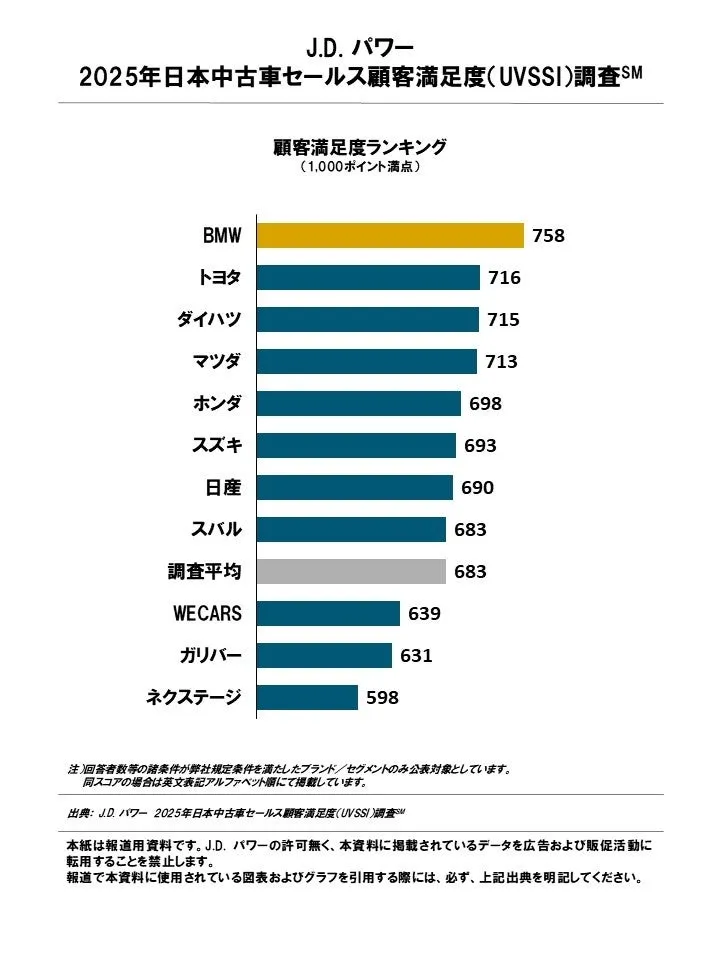
According to the survey, which captured responses from 3,660 users who purchased vehicles between 2 to 13 months prior, the overall customer satisfaction score averaged at 683 points out of 1,000, reflecting a 5-point increase from the previous year. Breaking down this score, the average satisfaction ratings were as follows:
- - Store Facilities and Support: 687 points
- - Contract Procedures: 685 points
- - Vehicle Delivery: 684 points
- - Negotiation Process: 681 points
Among the most notable points in the survey were the priorities that consumers held while considering a used car purchase. The top two factors were the car's purchase price (73%) and its condition (62%). Moreover, the characteristics that most influenced the decision included repair history (63%), exterior cleanliness (55%), and mileage (54%). This data highlights a clear trend: potential buyers are particularly focused on the car's price and condition during the consideration phase of their purchase journey.
Emphasizing Vehicle Appeal to Increase Customer Satisfaction
The drivers of satisfaction post-purchase were interestingly aligned with concerns raised during the consideration phase. Notably, buyers felt the vehicle’s condition (52%) and the purchase price (43%) were the top attributes that appealed to them. This indicates that the elements that sparked buyer interest were consistent even after their purchase decision was made. Conversely, other features such as fuel efficiency (30%), driving performance (25%), and the presence of advanced technology (18%) did not resonate as strongly with customers, suggesting that the communication of these features needs to be improved.
Surprisingly, the relationship between the number of appealing points a car has and customer satisfaction levels shows that having only one appealing feature results in a satisfaction score of 594 points, while two appealing features yield a score of 657 points—both of which are below the overall average of 681 points. However, when customers identified three to six appealing aspects, the satisfaction score surpassed the average level, and showcasing seven or more features resulted in a score exceeding the average by over 50 points. This correlation clearly illustrates that providing buyers with a well-rounded view of a car’s strengths can enhance their overall satisfaction and peace of mind.
Strategic Differentiation Through Comparison and Negotiation Skills
Furthermore, the survey delved into the preferences regarding store selection. More than half of the respondents (56%) reported visiting competing dealerships during their decision-making process. A significant portion of these individuals (62%) noted that they received detailed vehicle explanations at competing stores, emphasizing that productive negotiation processes are crucial not just at the final dealership, but across the board in influencing purchase choices.
Despite growth opportunities towards e-commerce integration, the traditional model of visiting dealerships remains predominant in the used car market. Customers are not only focusing on price and condition but also require comprehensive communication around the vehicle’s performance and features. For dealers, it is vital to enhance the quality of negotiations and provide a thorough understanding of a car’s multi-faceted appeal to effectively differentiate themselves from the competition.
Ranking of Customer Satisfaction Among Brands
The J.D. Power 2025 Used Car Sales Satisfaction Index (UVSSI) ranked eleven brands, with BMW achieving the highest overall satisfaction score of 758 points, thanks to its excellence in negotiation, contract procedures, and delivery process. Following BMW, Toyota took second place with 716 points, while Daihatsu secured third with a score of 715 points.
The insights from this survey reiterate the importance of understanding customer preferences and enhancing satisfaction in the used car purchasing process. As consumers become more discerning, dealerships that can effectively communicate both the strengths of specific vehicles and improve negotiation experience will likely stand out in the competitive Japanese market.
In conclusion, fostering a deeper understanding of customer expectations and effectively communicating a vehicle's appeal can significantly impact satisfaction levels in the vibrant used car market in Japan.


Topics Consumer Products & Retail)
【About Using Articles】
You can freely use the title and article content by linking to the page where the article is posted.
※ Images cannot be used.
【About Links】
Links are free to use.